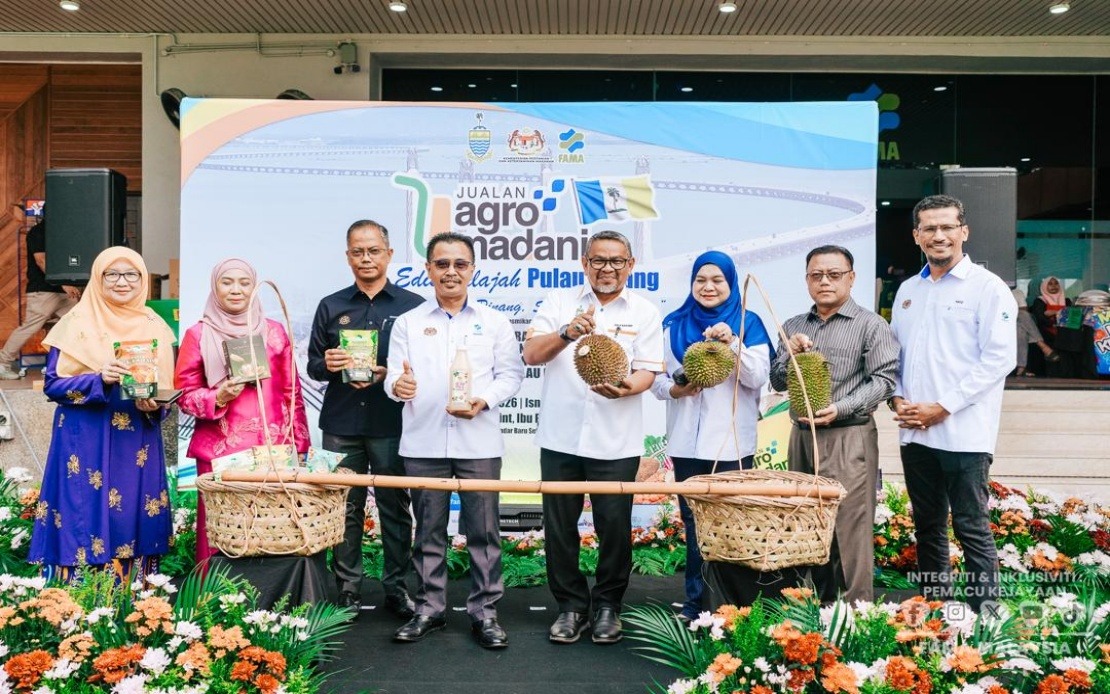
The Federal Agricultural Marketing Authority's Agro MADANI Sales programme has demonstrated considerable momentum, generating RM46.72 million across 1,833 nationwide events during the January to May period. This achievement underscores a strategic push to reshape Malaysia's agricultural distribution landscape by creating direct pathways between producers and consumers while simultaneously building sustainable market opportunities for small and medium-scale farming enterprises.
The initiative reflects a broader government commitment to modernising agri-food marketing infrastructure at a time when domestic producers face intensifying competition from regional suppliers. By establishing regular sales platforms, FAMA aims to address longstanding structural inefficiencies in agricultural supply chains that have historically squeezed farmer margins and limited consumer access to competitively priced fresh produce. The programme essentially functions as a market-making tool, removing traditional intermediaries and enabling growers to retain greater value from their output while simultaneously lowering prices for end consumers—a dual benefit that addresses cost-of-living pressures increasingly felt across Malaysian households.
Penang's inclusion in the initiative marks an important geographic expansion of the scheme. The Penang edition, held at FAMA's Selayang headquarters, constitutes the programme's third instalment in the Selangor area and was designed to accommodate approximately 2,000 visitors while targeting sales of RM100,000. Thirty Penang-based entrepreneurs received sales lots, reflecting deliberate efforts to integrate state-level agricultural sectors into a nationally coordinated marketplace. This federation of local suppliers with centralised distribution mechanisms creates a model potentially replicable across other Malaysian states, though execution will depend on consistent logistical support and marketing investment.
The collaboration between FAMA and the Penang state government, facilitated by the Penang Rural Development, Agrotechnology, Food Security and Cooperatives Committee alongside the Penang Bumiputera Development Council, illustrates how federal-state coordination can accelerate agricultural entrepreneurship. Such partnerships are particularly significant for supporting Bumiputera-owned agricultural enterprises, a demographic that frequently encounters barriers accessing premium retail channels and consumer information networks. By providing guaranteed marketplace access alongside promotional support, the programme reduces entry barriers and accelerates capital accumulation among these producers.
Penang's agricultural product portfolio demonstrates the diversity of value-added offerings now entering formal marketing channels. Premium durian varieties—including Balik Pulau, Black Thorn, Red Prawn, and Hor Lor cultivars alongside Cempedak King—represent high-margin specialty products that have traditionally relied on informal distribution networks or direct consumer relationships. By formalising these channels through structured sales events, producers can achieve predictable revenue streams while building brand recognition. This formalisation particularly benefits younger or newer agricultural entrepreneurs who lack established customer bases but produce quality output capable of commanding premium pricing.
The programme's broader economic significance extends beyond immediate sales figures. Each event generates marketing intelligence regarding consumer preferences, price elasticity, and emerging demand patterns—information that enables producers to make informed investment decisions regarding crop selection, production volumes, and value-addition strategies. Furthermore, the visibility provided by regular sales events creates opportunities for backward integration with retailers and foodservice operators seeking reliable supply relationships with quality-assured local producers. This networking dimension often proves as valuable as the direct-to-consumer sales component itself.
Consumer-facing benefits merit equal emphasis. The accessibility of fresh, reasonably priced agricultural products through structured marketplace events addresses persistent concerns regarding food security and cost-of-living pressures, particularly for urban and semi-urban Malaysian populations. Consumers gain transparency regarding product origins and production practices while supporting domestic agricultural sectors—a consideration increasingly important to environmentally conscious buyers concerned with food miles and supply chain sustainability. The integration of iconic Penang food items into the marketplace experience—nasi kandar, Penang laksa, char kuey teow, and other specialities—also positions agricultural products within broader cultural and culinary contexts, enhancing perceived value and consumer engagement.
The RM46.72 million aggregate across five months, if sustained and scaled, positions the Agro MADANI programme as a material contributor to agricultural sector revenue diversification. The trajectory suggests monthly sales averaging approximately RM9.3 million across the 1,833 events, indicating healthy unit economics and consumer demand. However, meaningful sector transformation will require scaling beyond current event frequency and geographic coverage. Southeast Asian comparisons reveal that successful direct-marketing programmes typically require critical mass in both event frequency and consumer awareness to achieve transformative market penetration.
Scalability presents both opportunity and challenge. Expansion to remaining Malaysian states could potentially double or triple current sales volumes while integrating marginal agricultural regions into national marketing networks. However, such expansion demands proportionate increases in logistical coordination, quality assurance mechanisms, and consumer education. The success of Penang's rollout will provide crucial data regarding regional adaptability and the optimal event frequency-to-location ratio that maximises sales while maintaining operational efficiency and producer quality standards.
Longer-term implications extend to agricultural supply chain resilience and regional food security. By strengthening producer-to-consumer relationships and reducing dependency on conventional retail distribution, the Agro MADANI programme contributes to domestic food system robustness. This decentralisation of agricultural marketing particularly benefits states like Penang, which possess significant agro-based production capacity but limited direct consumer access channels. The programme essentially unlocks latent productive capacity by removing marketing constraints rather than requiring agricultural investment or production expansion.

