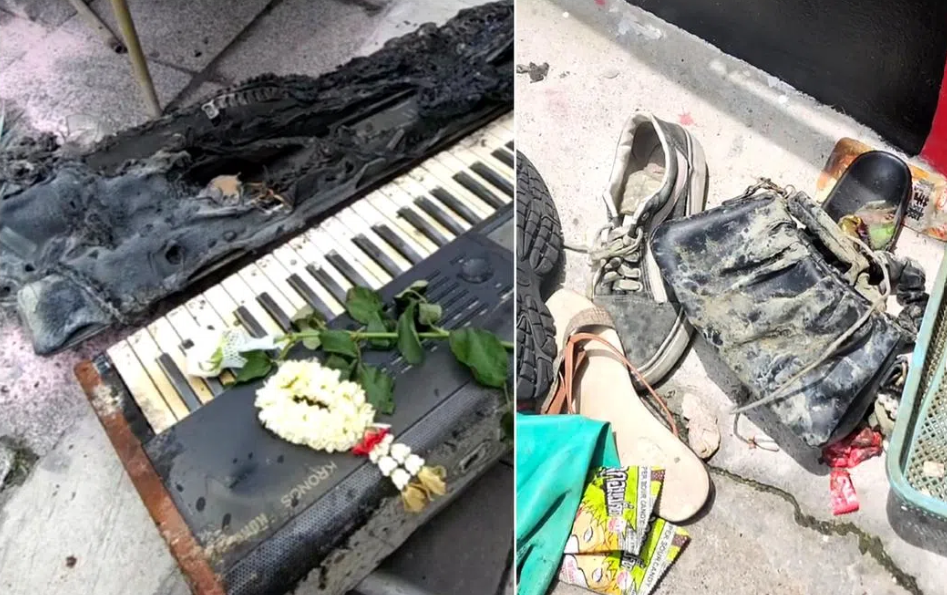
The moment Suwanna Saeteaw saw her sister's mobile phone displayed on a television news broadcast, all hope seemed to drain away. The 38-year-old mother instantly recognised the device belonging to Jarawee Sermsiri, her 25-year-old sibling, among the recovered belongings from the Rong Beer Na Lat Phrao bar and restaurant. The venue had erupted in flames near midnight on July 12, and when Suwanna dialled the number in desperation, a rescue worker answered instead. That single moment transformed her vigil from uncertainty into a grimmer reality, forcing her to confront the possibility that Jarawee had perished in the inferno.
The fire marked Thailand's deadliest blaze in nearly two decades, surpassing only the Santika club tragedy during New Year celebrations in 2009, which claimed 67 lives and injured more than 200. The death toll currently stands at 28, with over 70 injured, and families across Bangkok have spent the past day navigating between hospitals and forensic centres, searching survivor lists with mounting dread. Suwanna articulated the agony experienced by relatives across the capital when she told reporters of her devastation while simultaneously clinging to the possibility that Jarawee might be receiving treatment at an unidentified hospital. Authorities have begun collecting DNA samples to assist with identifying victims, though officials warned the process could take approximately three days—a timeline that feels interminable for families desperate for answers.
The investigation into the fire's cause has rapidly exposed potential safety violations at the single-storey concrete structure. Bangkok Governor Chadchart Sittipunt revealed that authorities are examining whether emergency exits were obstructed, whether combustible ceiling materials accelerated the blaze, and why occupants found escape so difficult. The venue had passed a safety inspection in April, yet when the fire broke out, approximately 300 customers were inside a building that typically accommodates between 600 and 700 patrons nightly. The governor noted that the fire spread with alarming speed to the ceiling, and that smoke inhalation was likely the primary cause of death, a detail that underscores how quickly conditions became lethal inside the structure.
National police chief Kitrat Panphet provided troubling details about how victims met their end. Most bodies were discovered in the toilet areas, suggesting that as panic overwhelmed patrons, they fled to these enclosed spaces seeking shelter from the advancing flames and suffocating smoke. The darkness within the facility exacerbated the chaos, as people stumbled blindly toward exits they could not locate. More disturbingly, investigators found evidence that one exit door was obstructed by a shelf, effectively creating a bottleneck where only one person could pass through at a time. This physical obstruction transformed what should have been an escape route into a fatal chokepoint, potentially accounting for several deaths as people queued desperately in the darkness.
The 50-year-old building's structural and decorative features appear to have played a critical role in the disaster's severity. Amorn Pimanmas, president of the Thailand Structural Engineers Association, inspected the charred venue and identified the combination of a low ceiling and polyurethane foam decorations as particularly lethal. These combustible materials, commonly used in bars and nightclubs for aesthetic purposes, released toxic smoke rapidly, creating a noxious environment that overcame patrons before they could reach safety. The structural engineers' president pointed to a troubling disconnect between Thailand's fire safety legislation and its enforcement, remarking that the nation possesses adequate laws but struggles to implement them consistently across entertainment venues.
Witness accounts reinforce concerns about the venue's fundamental safety deficiencies. Chaiyo Piwisol, a 30-year-old restaurant waiter who had visited the bar on three previous occasions, described it as perpetually cramped and crowded, with narrow doorways that made him uncomfortable even during normal operations. The abundance of decorations suspended from the ceiling—lights, ornaments, and various embellishments—created visual obstruction while introducing additional combustible material into the environment. His observations suggest that the venue operated with an inherent lack of spatial safety, a condition that becomes catastrophic when combined with rapid fire spread and inadequate emergency lighting.
Survivor Panathaporn Thongyord, only 19 years old, escaped the blaze but lost a close friend in the process. The teenager recalled her friend's final words telling her to flee without attempting a rescue, a selfless act that haunts her as she grapples with survivor's guilt and the loss of someone she had known for 14 years since childhood. Her anguished question about why the back door could not be opened reflects the larger investigation into structural and operational failures. Her plea for justice represents the collective grievance of survivors and bereaved families seeking accountability for what appears to be systemic negligence.
Prime Minister Anutin Charnvirakul visited the scene and acknowledged what he characterised as "blind spots" in the venue's layout, referring to areas without visible fire escape routes. His statement warned of zero tolerance for any violations of fire safety legislation, a firm pronouncement that carries weight given the tragic outcome. However, his cautionary note asking the public to await official findings suggests that the full scope of violations and negligence remains under investigation. The apparent contradiction between existing safety regulations and the venue's operational status raises questions about the adequacy of inspection protocols and enforcement mechanisms across Thailand's entertainment sector.
The tragedy has thrust Thailand's fire safety standards into the spotlight once more, following a series of deadly incidents at entertainment venues over recent years. This pattern suggests systemic issues rather than isolated failures, pointing toward insufficient enforcement of existing regulations, inadequate inspector training, or insufficient penalties for violations that fail to motivate compliance. The entertainment industry's apparent prioritisation of aesthetic appeal and customer capacity over safety infrastructure reflects a broader cultural and regulatory challenge. For Malaysia and other Southeast Asian nations, the Bangkok fire serves as a cautionary reminder that economic considerations frequently override safety protocols when enforcement mechanisms remain weak or inspection practices become perfunctory.
The investigation will likely reveal multiple failures working in concert to create the conditions for such rapid loss of life. Structural deficiencies, combustible materials, obstructed exits, inadequate emergency lighting, and overcrowding each contributed to the tragedy. Yet the fundamental question emerging from this disaster concerns whether Thailand's regulatory framework possesses sufficient enforcement capacity and punitive consequences to deter such violations. As rescue workers continue searching through the wreckage and families maintain their vigils at hospitals and morgues, the pressure intensifies on authorities to provide answers and implement meaningful reforms that prevent future tragedies.
For the families still searching, the anguish extends beyond the immediate loss. Suwanna Saeteaw's experience, moving between institutions in search of her sister while awaiting DNA results, encapsulates the prolonged trauma of uncertainty that compounds grief. The three-day timeline for identification results stretches an unbearable period, during which families must somehow function whilst contemplating worst possibilities. The sight of abandoned shoes and bags outside the charred venue serves as a stark physical reminder of the ordinary people who simply wanted to enjoy an evening out and instead encountered a preventable catastrophe born from negligence and regulatory failure.

