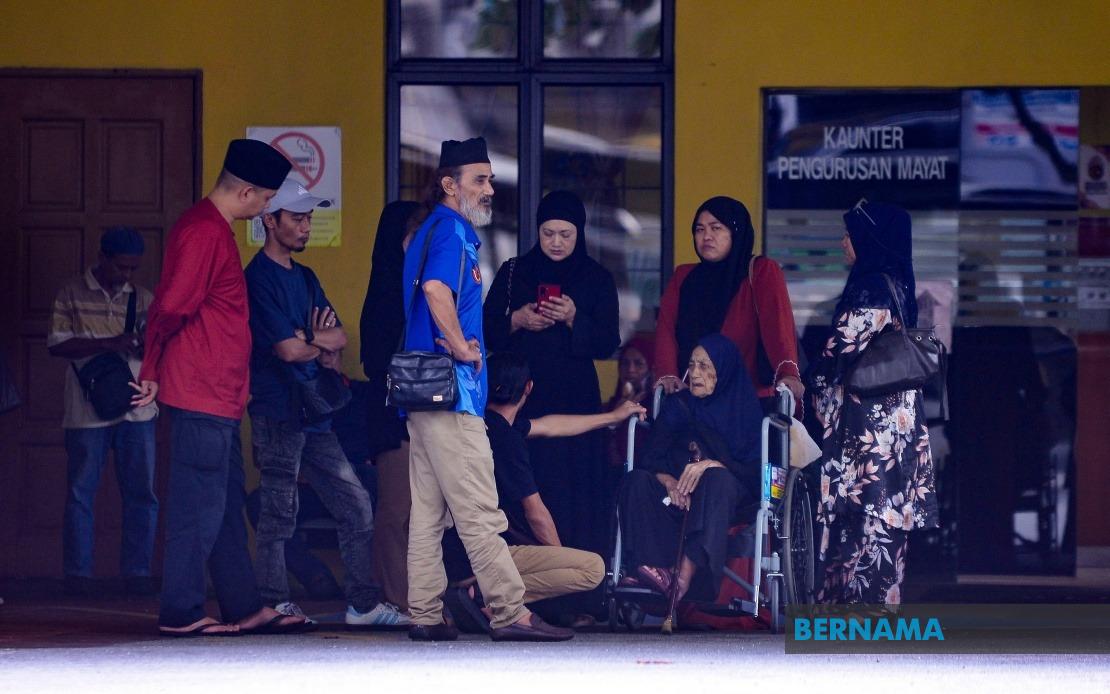
The fatal collision at Maju Junction has sparked calls for accountability from the bereaved family, who believe the tragedy was preventable. Around 1 am on the morning of the incident, an empty Isuzu Black Maria immigration lorry was en route from the Kuala Lumpur Immigration Office to Chow Kit, operating with its beacon lights and siren activated as part of an enforcement operation targeting undocumented migrants. According to eyewitness accounts and preliminary findings, the lorry entered the busy intersection while its traffic signal showed red, colliding with a Proton Saga that was lawfully proceeding on a green light through the same junction.
Mohd Nadzri Razali, 69, brother-in-law of one of the victims, expressed his family's determination to pursue justice through an exhaustive probe into the circumstances surrounding the crash. Speaking from his home in Taman Aman Fasa 2, Mambang Di Awam, Mohd Nadzri underscored the importance of investigating the apparent traffic light breach, which he believes may have contributed to the tragedy. The family's insistence on transparency reflects growing public concern about accountability when government vehicles are involved in serious road incidents, particularly when multiple fatalities result from alleged traffic violations.
The collision resulted in catastrophic consequences for the family traveling in the area. Shaik Mohd Firdaus Shaikh Yahya, aged 53, and his two daughters—Siti Nor Sazlin, 25, and Siti Darwisyah Auni, just 12 years old—were pronounced dead at the scene. The force of the impact was so severe that the lorry spun out of control and struck down all four family members before colliding with an Inokom Matrix multipurpose vehicle. The mother of the household, Norhayati Razali, 55, survived but remains hospitalized in critical condition at Kuala Lumpur Hospital's Intensive Care Unit.
Mohd Nadzri provided an update on his sister's medical status, noting that she has regained consciousness, though her exact prognosis remains uncertain. The family is exploring options to transfer her to a hospital closer to their home region, either in Ipoh or Teluk Intan, once she is deemed stable enough for relocation. The prospect of caring for a severely injured family member while simultaneously grieving the loss of three relatives has compounded the emotional and financial burden on the household.
The timing and circumstances of the tragedy have deepened the family's anguish. Mohd Nadzri revealed that his sister's household had only recently experienced another loss on May 30, making the loss of three family members in a single incident particularly devastating. He recalled seeing them just two weeks before the crash, when they had traveled together to Teluk Bakong in Ayer Tawar to maintain the graves of deceased relatives. The sudden and violent nature of the deaths stands in sharp contrast to the family's routine visit to honor their ancestors, underscoring the unpredictability of tragedy.
The decision regarding final arrangements reflects the family's dignity amid grief. All three deceased family members will be laid to rest in a single grave at the Muslim Cemetery in Kampung Air Hitam Labu in Kampar, allowing the family to mourn together at one location. This choice carries both practical and emotional significance for a family already overwhelmed by loss.
The collision itself involved a stark contrast between the movements of the two vehicles. The immigration lorry, operating in its official capacity with visual and auditory warning systems activated, proceeded against the traffic signal controlling its direction of travel. The Proton Saga, whose driver was following traffic regulations by proceeding on a green light, had no reasonable opportunity to avoid the oncoming lorry, leaving the occupants with mere seconds to react to the sudden threat. This sequence of events has prompted urgent questions about the operational protocols governing immigration enforcement vehicles and whether adequate safeguards exist to prevent similar incidents.
The incident has been formally registered as a traffic case under Section 41(1) of the Road Transport Act 1987, the relevant statute governing fatal road accidents in Malaysia. This classification indicates that authorities are treating it as a serious breach of traffic laws, though the full scope of the investigation remains to be disclosed publicly. The family's call for transparency suggests concern that official investigations into incidents involving government vehicles may be subject to institutional pressures that could compromise objectivity.
From a broader perspective, the Maju Junction collision raises important questions about institutional accountability and public safety that extend beyond this single family's tragedy. When government vehicles engaged in legitimate law enforcement operations cause fatalities through apparent traffic violations, the public interest demands not only that investigations occur but that their findings and any disciplinary consequences be communicated clearly to the bereaved families and the community. The family's insistence on transparency reflects a desire for reassurance that such incidents will prompt genuine review of operational procedures and training standards.
The incident also highlights the inherent risks associated with high-speed law enforcement operations in urban environments, even when undertaken with legitimate objectives. Immigration enforcement operations targeting undocumented migrants are important for border security, yet must be balanced against the safety of the general public sharing the roads. The Maju Junction tragedy suggests that current protocols may require review to ensure that the urgency of enforcement operations does not override fundamental traffic safety principles that protect all road users.
For the Malaysian public, particularly residents of the Klang Valley and commuters familiar with Maju Junction's heavy traffic patterns, the incident serves as a sobering reminder of the consequences when safety protocols fail. The intersection, known for its complexity and high vehicle volumes, becomes even more hazardous when major traffic rules are breached. The family's pursuit of justice through a transparent investigation represents not only a quest for answers about their loved ones' deaths but also an attempt to ensure that systemic vulnerabilities are addressed to prevent recurrence.

