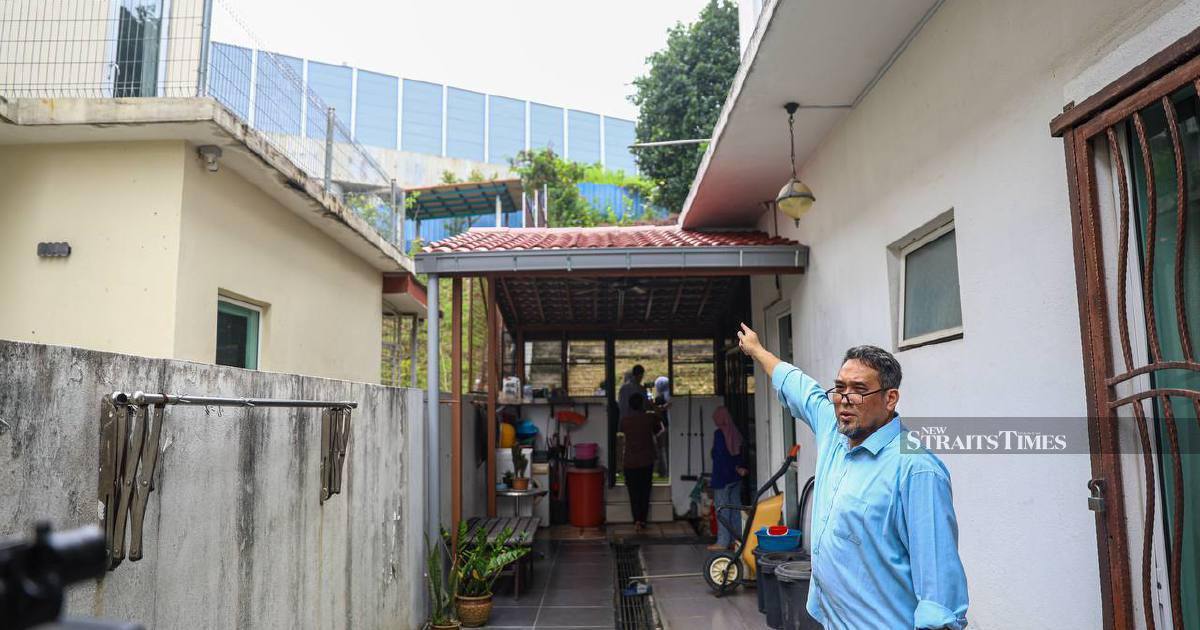
A household in the Kuala Lumpur area has initiated a substantial damages claim valued at RM1.33 million against three entities connected to Malaysia's East Coast Rail Link megaproject, asserting that ongoing construction operations have caused serious harm to their residential property. The legal action represents an emerging pattern of disputes between residents living adjacent to the ECRL corridor and the infrastructure developers responsible for the rail scheme's realisation.
The East Coast Rail Link remains one of Southeast Asia's largest infrastructure undertakings, designed to establish a high-speed rail connection stretching across peninsular Malaysia's eastern region. Since its inception, the ambitious project has generated considerable attention from policymakers, engineers, and environmental advocates keen to observe how Malaysia manages such complex developmental challenges. Yet beyond the boardroom and technical discussions, the initiative has also created friction with ordinary households positioned along the proposed route, who worry that their properties and wellbeing are being sacrificed for broader national interests.
For families residing in proximity to active construction zones, the experience has often proved troubling. Heavy machinery operations, ground vibrations, dust clouds, and the general disruption accompanying large-scale civil engineering projects can degrade residential amenities significantly. The claimants in this instance have chosen to escalate their concerns through the judiciary, suggesting they believe dialogue with project authorities has yielded insufficient remedies. The lawsuit's substantial quantum underscores the seriousness with which the family regards the alleged damage.
Structural integrity concerns merit particular attention in the Malaysian context, where building codes and construction standards have sometimes faced scrutiny. If tunnelling or excavation activities beneath or near residential foundations have caused cracks, subsidence, or other defects, the implications extend beyond simple inconvenience. Homeowners depend upon their properties retaining both economic value and practical functionality—their single largest asset typically—and any deterioration demands proper accountability and compensation. The legal system provides recourse for such grievances, though pursuing claims against large organisations can require considerable persistence and resources.
The ECRL project itself has encountered various delays and financing discussions since its original conception, reflecting broader complexities in megainfrastructure delivery. Whilst policymakers promote the scheme's potential to stimulate eastern Malaysia's economic development and enhance regional connectivity, the project's passage through established residential areas creates inevitable tensions. Balancing progress with property rights remains an enduring governance challenge in rapidly developing nations.
From a legal perspective, the defendants named in the claim presumably include the main contractor overseeing construction, the railway development authority managing the project, and possibly the executing company responsible for coordinating works. Each party's liability will depend upon evidence concerning negligence, breach of duty, inadequate safety protocols, and causation linking specific construction activities to documented property damage. Expert testimony regarding structural engineering, construction methodology, and baseline conditions before work commenced will likely prove central to determining outcomes.
The compensation quantum of RM1.33 million suggests the family has quantified costs across several categories: professional assessments of structural damage, remediation expenses, loss of property value, and potentially disturbance to use and enjoyment of their home. Should the lawsuit proceed to trial, discovery processes will expose internal communications, safety records, and monitoring data that might reveal whether project authorities took adequate precautions to minimise residential impact.
This particular dispute also carries implications for future infrastructure projects across Malaysia and the broader region. If developers and contractors are held accountable for inadequate protection of nearby residents, it establishes important precedent encouraging greater attention to community impact assessments and risk mitigation during planning phases. Conversely, if courts find insufficient evidence linking construction to alleged damage, it may embolden operators of subsequent megaprojects to adopt more minimal protective measures.
The ECRL's significance transcends any single residential dispute. The railway link represents Malaysia's commitment to strengthening transportation networks that ultimately serve the travelling public and commercial interests nationwide. Yet this broader developmental imperative should not automatically subordinate individual property rights and residential security. Fair mechanisms for dispute resolution and proportionate compensation when damage does occur constitute essential elements of responsible infrastructure governance.
As the legal process unfolds, the case will attract attention from property owners in other construction zones across Malaysia, particularly those residing near major transport initiatives, energy developments, or urban renewal schemes. The court's assessment of evidence, application of relevant law, and ultimate judgment will contribute to an evolving jurisprudence regarding developer accountability and resident protection in large-scale construction contexts. Meanwhile, the affected family awaits resolution of a matter that fundamentally affects their housing security and financial wellbeing.

