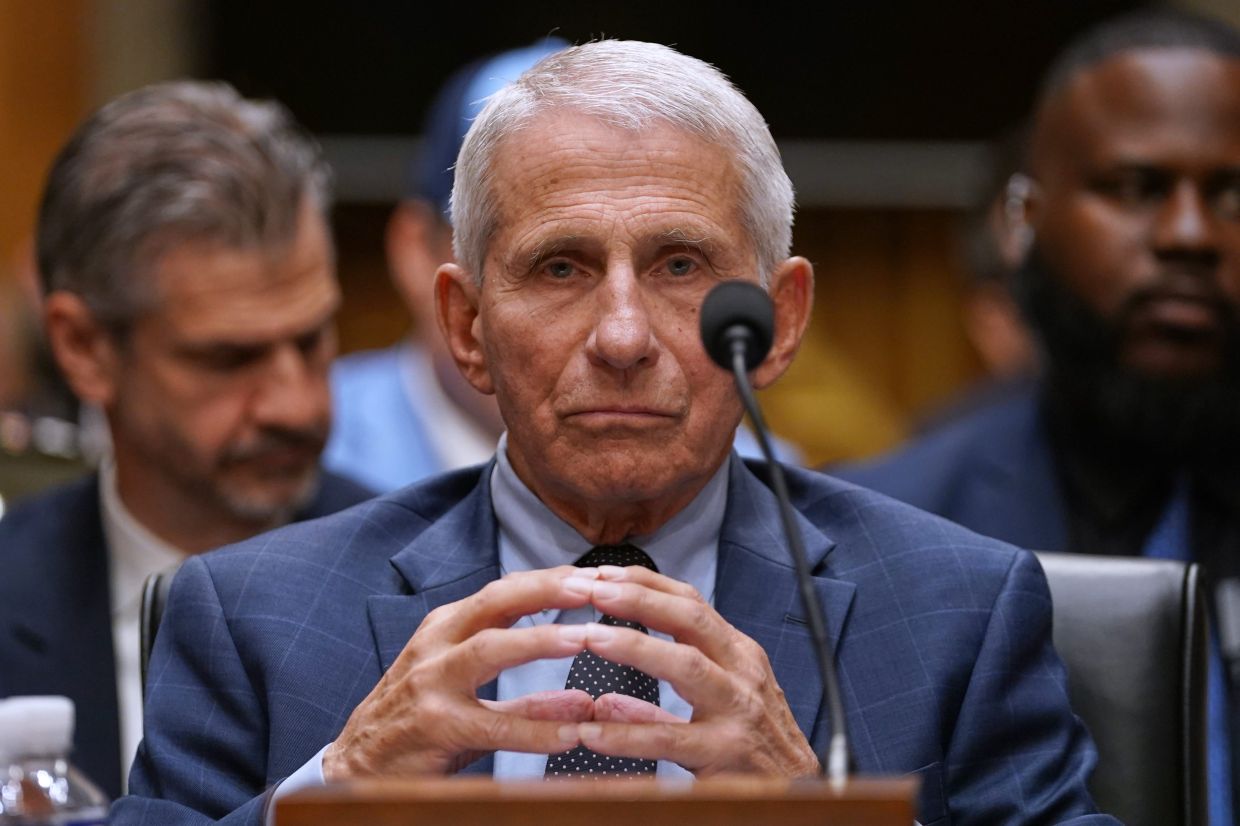
Anthony Fauci's appearance before the US Senate on Wednesday descended into extraordinary political theatre as the former director of the National Institute of Allergy and Infectious Diseases systematically declined to answer questions about American-funded coronavirus research in China, repeatedly invoking his Fifth Amendment right against self-incrimination. The hearing marked a dramatic escalation in one of Washington's most divisive post-pandemic controversies: whether the virus emerged naturally from animal-to-human transmission or through a laboratory incident at the Wuhan Institute of Virology, and whether American officials properly overseen research there that received US government support.
The 85-year-old Fauci, whose face became synonymous with America's pandemic response, was subpoenaed by the Senate Homeland Security and Governmental Affairs Committee to address longstanding Republican accusations that he concealed evidence supporting the lab-leak hypothesis. Committee chair Rand Paul, a Kentucky Republican who has made challenging Fauci's credibility a political priority, immediately pressed him on why the government funded what he characterised as dangerous research. Rather than engage substantively, Fauci declined every question on his lawyer's advice, citing constitutional protections typically reserved for criminal defendants. The dynamic underscored how thoroughly Covid-19's origins have become entrenched in American partisan politics rather than treated as a discrete scientific question.
Fauci's opening statement framed the hearing itself as politically motivated persecution. He accused Paul of obsessive determination to prosecute him, arguing that answering questions risked exposure to vindictive prosecution driven by ideology rather than legitimate inquiry. The former health official pointed to Paul's public declarations that Fauci belonged "behind bars," suggesting the committee's questioning served predetermined political conclusions rather than genuine fact-finding. This defensive posture, while understandable given the acrimonious context, effectively prevented any meaningful substantive exchange about the actual research and funding decisions at issue. Notably, Fauci's lawyer was escorted from the hearing room after attempting to make a statement, an incident symbolising the hearing's deteriorated civility.
At the centre of Republican criticisms lay funding decisions by the National Institutes of Health. The agency awarded grants to EcoHealth Alliance, a American non-profit organisation, which directed substantial portions toward bat coronavirus research at the Wuhan institute. Republicans characterised this work as dangerous "gain-of-function" research—experiments deliberately designed to enhance certain pathogenic characteristics. Paul and his allies argued such funding represented reckless enabling of potentially hazardous work that could have contributed to the pandemic itself. The NIH and Fauci, conversely, disputed that the funded research constituted gain-of-function studies and categorically denied that any American-supported work created the pandemic virus. This fundamental disagreement over how to characterise the research remained unresolved and largely unexamined during the hearing.
The political context around the hearing extended beyond the immediate moment. In January 2025, just before leaving office, former President Joe Biden granted Fauci a comprehensive pre-emptive pardon covering potential federal offences arising from his government service between January 2014 and January 2025. The pardon's explicit exclusion of statements made after January 20, 2025, created legal uncertainty for Fauci regarding testimony given at this hearing. Notably, Fauci has never been formally charged with any crime related to the pandemic or his official conduct. Yet the pardon's existence seemed to validate Republican suggestions of potential criminal liability while simultaneously protecting him from prosecution for past actions. This unusual arrangement highlighted how the origins debate had been transmuted into a quasi-criminal investigation within an ostensibly legislative context.
Republican senators grew increasingly frustrated as Fauci's refusals multiplied. Senator Bernie Moreno of Ohio, visibly exasperated, accused Fauci of evading accountability for alleged wrongdoing and expressed hopes he would "answer for your crimes" through some unspecified mechanism. The language deployed—invoking crimes without charges, demanding accountability for unproven allegations—illustrated how thoroughly the hearing had departed from standard congressional procedure. Paul promised further action and questioned whether any presidential pardon could shield Fauci from complete accountability, framing the hearing as a "capstone" to what he described as forty years of abuse of power at the National Institutes of Health. These escalating rhetorical attacks suggested the hearing's real purpose was political positioning rather than substantive investigation.
Democratic senators offered vigorous defence of Fauci, characterising the entire proceeding as an orchestrated partisan attack disguised as legitimate oversight. Gary Peters of Michigan, the committee's ranking Democrat, directly challenged the hearing's premise, arguing that Republicans had reached predetermined conclusions years ago and were now manufacturing an investigation to validate those ideological positions. Democrats presented Fauci as a public servant being persecuted for his role in the pandemic response and defended his reliance on constitutional protections given the nakedly political context. The partisan split starkly illustrated how thoroughly the pandemic's scientific questions had been absorbed into American electoral politics, making genuine bipartisan inquiry nearly impossible.
The international dimensions of this controversy remained present but marginalised. China's Washington embassy reiterated positions that origin-tracing should remain a scientific rather than political matter, citing a WHO-China joint study concluding a laboratory leak was "extremely unlikely." The embassy characterised American allegations as "smearing and slander" and opposed what it termed "political manipulation" of the origins question. For Southeast Asian observers, particularly those in countries with close research ties to both China and the United States, this hearing demonstrated how geopolitical tensions and domestic political cycles could overwhelm scientific inquiry. The inability of American political institutions to address pandemic origins through evidence-based investigation rather than partisan theatre had broader implications for international scientific cooperation.
Scientific consensus on the origins question remained unsettled despite—or perhaps because of—the political intensity surrounding it. A February 2024 survey by the Global Catastrophic Risk Institute found that most virology professionals supported the natural-origin hypothesis, with the virus jumping from animals to humans before spreading person-to-person. However, in January 2025 the CIA issued a revised assessment supporting the lab-leak hypothesis, albeit with notably low confidence. This scientific uncertainty, combined with the absence of definitive evidence either direction, created space for genuine disagreement among experts. Yet the hearing demonstrated that American political actors had largely abandoned efforts to build consensus around evidence and instead treated the question as a proxy for broader conflicts over institutional credibility, executive power, and pandemic management accountability.
The implications for Malaysian and regional policymakers extend beyond pandemic retrospectives. The spectacle illustrated how political polarisation in advanced democracies could undermine international scientific cooperation and trust in multilateral institutions. For countries navigating relationships with both the United States and China, the hearing exposed how thoroughly geopolitical competition had penetrated even ostensibly apolitical scientific domains. Future pandemic preparedness efforts would require restoring norms of evidence-based investigation insulated from electoral politics—a challenge that this hearing suggested remained distant. The refusal to engage substantively with documented facts about research funding and scientific methodology, instead retreating into constitutional protections and partisan recriminations, represented a concerning precedent for how democracies might address future scientific controversies with major policy implications.

