United States law enforcement authorities moved swiftly to neutralise what federal officials characterised as a credible and elaborate security threat targeting an unprecedented Ultimate Fighting Championship event held at the White House on Sunday. FBI Director Kash Patel disclosed on Tuesday that operatives had dismantled the purported plot after receiving intelligence on June 10 concerning potential violence related to the UFC America 250 celebration, which marked President Donald Trump's 80th birthday alongside the nation's 250th anniversary. The announcement underscores the constant vigilance required to protect high-profile state occasions and demonstrates the capacity of American security apparatus to detect and intercept threats at an advanced planning stage.
According to law enforcement officials who briefed Fox News, the alleged scheme represented a multi-phase operation of considerable sophistication. The initial attack component involved deploying explosive-laden drones to strike structures in the vicinity of the event, creating a chaotic environment through mass panic and forced evacuation. Organisers of the assault reportedly intended to exploit the resulting confusion and crowd displacement by directing panicked attendees toward positions where a pre-positioned sniper team would be stationed, suggesting the plotters sought to inflict mass casualties during the subsequent stage of violence. This layered tactical approach indicated planning by individuals with either military experience or exposure to organised extremism, distinguishing the plot from opportunistic lone-wolf scenarios.
Investigative efforts yielded significant results in terms of apprehensions and broader intelligence gathering. Five individuals were taken into custody by Monday, whilst law enforcement agencies identified a sprawling network encompassing 23 potential conspirators spread across jurisdictions outside the National Capital Region. FBI Director Patel confirmed on the social media platform X that the alleged attacks had been successfully curtailed before materialisation. Officials further disclosed that surveillance and intelligence work had uncovered references to a "second wave" of coordinated action, wherein additional operatives allegedly planned to breach White House security barriers and storm the presidential compound's gates, suggesting an intent to perpetrate violence against government leadership alongside the mass casualty scenario targeting event attendees.
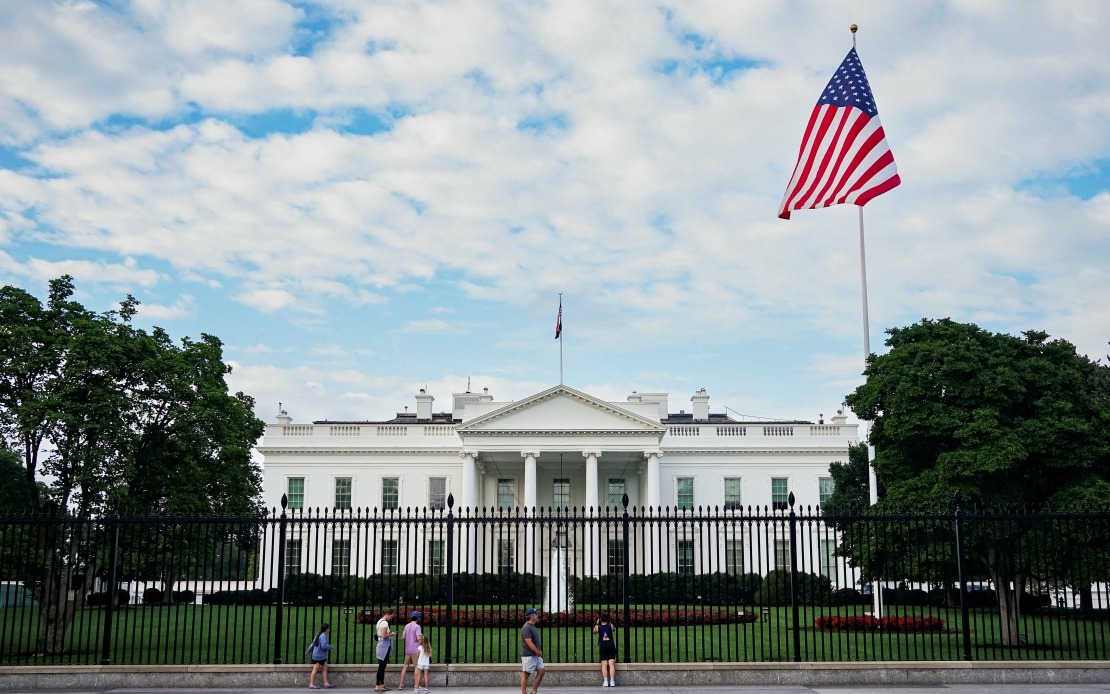
The decision to stage the UFC event at the South Lawn of the White House itself became a subject of legal controversy in the lead-up to Sunday's gathering. Two Virginia residents mounted a legal challenge contesting the lawfulness of hosting a professional cage-fighting competition on the president's official residence, raising constitutional and security concerns about the unconventional use of the grounds. A federal judge serving the US District Court for the District of Columbia declined on Friday to issue an injunction halting the event, thereby clearing the way for final preparations and permitting the show to proceed as scheduled. Approximately 4,000 spectators ultimately attended the high-profile gathering, making it one of the most attended events ever held on the White House grounds.
The foiled plot adds to a troubling pattern of escalating political violence that has characterised the current American political environment. In April, an individual breached security protocols at the White House Correspondents' Dinner while armed with firearms and knives, forcing entry through a security checkpoint before federal authorities apprehended him. He now faces charges related to attempting to assassinate the president, illustrating how threats to national leadership have become increasingly brazen and organisationally sophisticated. The cumulative effect of these incidents has prompted security officials to recalibrate protective measures and threat assessment protocols across venues hosting senior government officials and high-value targets.
From a regional Southeast Asian perspective, the incident carries relevance beyond its immediate American context. The methods alleged to have been planned—utilising drone technology for precision strikes and deploying sniper teams for coordinated violence—represent tactical approaches that security experts across Asia-Pacific nations have identified as emerging threats to major public events and government facilities. Malaysia and neighbouring countries host international sporting events, government summits, and political gatherings that similarly face evolving security challenges in an era when commercial drone technology has proliferated and extremist networks maintain operational capabilities across borders. The American experience in detecting and disrupting such plots, combined with the sophistication demonstrated by the alleged conspirators, underscores the necessity for regional governments to enhance intelligence sharing, border security coordination, and threat assessment methodologies.
The scale of the identified network—23 individuals across multiple locations—suggests organisational depth that transcends simple spontaneous enthusiasm for violence. Intelligence analysts characterise such conspiracies as requiring logistical support, financial resources, communication infrastructure, and ideological cohesion among dispersed members. The fact that authorities managed to identify and apprehend perpetrators before attack execution reflects both robust intelligence collection and effective coordination between federal and local law enforcement agencies. However, the very existence of such a network points to persistent challenges in identifying radicalised individuals within open societies, particularly when recruitment and coordination occur through digital channels and encrypted communications platforms that complicate surveillance.
Security protocols at the White House have historically been among the most stringent globally, yet the plot's apparent scope and specificity raise questions about how such detailed planning escaped detection longer. The June 10 alert that triggered the FBI response presumably came from tip-offs, digital surveillance, informant networks, or pattern analysis of suspicious activities. American security agencies maintain extensive databases of suspicious individuals and monitor various extremist communications channels, enabling them to identify nascent plots through early warning indicators. Nevertheless, the challenge of distinguishing genuine threats from idle threats, false alarms, or entrapment scenarios remains constant in security operations.
The event itself represented a symbolic convergence of presidential celebration and American patriotic commemoration, making it an attractive potential target for violent actors seeking maximum publicity and impact. The decision to host UFC America 250 on the White House grounds broke with historical precedent, elevating the event's profile and creating security complications that planners had presumably factored into their threat assessment calculations. The entertainment industry and sporting organisations now operate within an environment where attendance at marquee events requires sophisticated security measures, creating additional logistical and financial burdens whilst potentially deterring public participation in large gatherings.
Looking forward, the incident illustrates enduring tensions between democratic openness and security imperatives in contemporary governance. Democratic societies enable relatively free movement and public assembly, creating inherent vulnerabilities to those committed to violence. Yet excessive security restrictions can undermine the public nature of democratic institutions and dampen civic engagement. The successful detection and disruption of this plot represents a policy victory for intelligence and law enforcement communities, but the broader challenge of maintaining both security and democratic accessibility remains an ongoing operational and philosophical dilemma for governments worldwide, including those across the Asia-Pacific region navigating similar balancing acts.