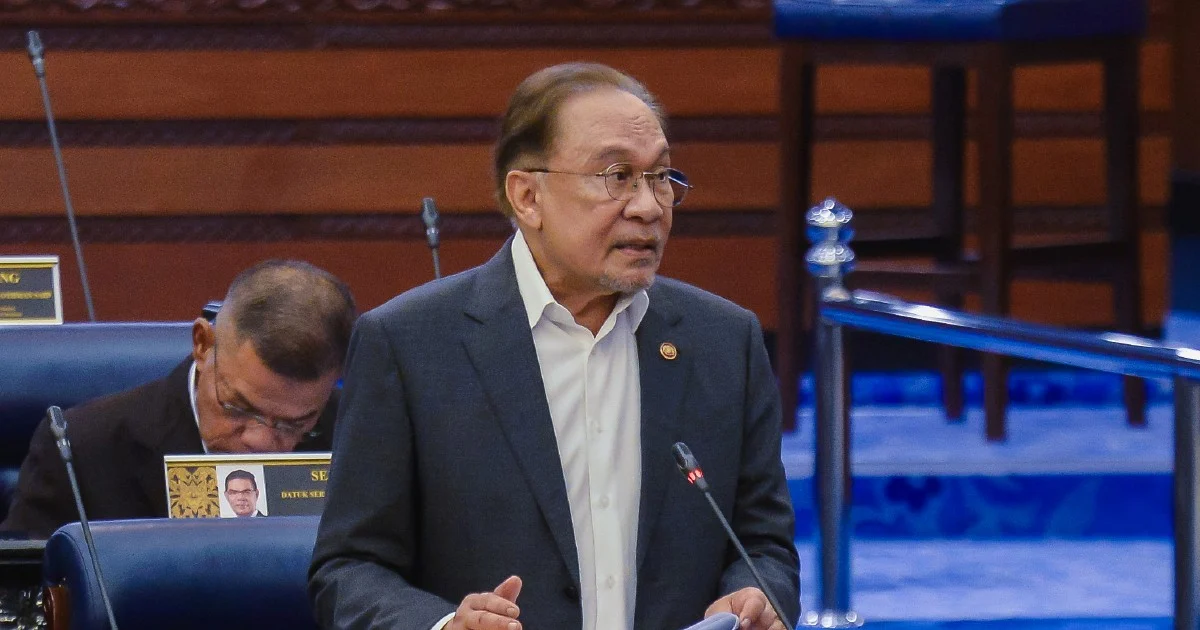
Prime Minister Datuk Seri Anwar Ibrahim has confirmed that the federal government is engaged in discussions with Sarawak to raise the state's special grant allocation under the Malaysia Agreement 1963, a foundational constitutional arrangement underpinning Malaysia's federation. The announcement comes as part of broader efforts by the Putrajaya administration to address long-standing grievances and strengthen relations with the East Malaysian state.
The Malaysia Agreement 1963 constitutes a critical pillar of Malaysia's constitutional framework, governing the terms under which Sabah and Sarawak joined the federation. The agreement encompasses various provisions designed to safeguard the interests and autonomy of these states, including clauses relating to revenue-sharing, legislative authority, and special grants. For Sarawak particularly, the MA63 special grant represents a significant component of state revenue and symbolic acknowledgement of its constitutional standing within the federation.
Sarawak's position within Malaysian federalism has historically been characterised by assertions regarding its constitutional rights and entitlements. The state has consistently advocated for fuller realisation of the provisions embedded within MA63, contending that certain commitments made at the time of federation remain inadequately honoured. The special grant mechanism was established precisely to provide additional financial support reflecting the state's unique constitutional status and contribution to the federation.
The timing of these negotiations reflects a strategic shift in how Putrajaya approaches federal-state relations, particularly concerning the East Malaysian territories. Under Anwar's administration, there has been visible emphasis on addressing historical imbalances and strengthening the social contract between the federal government and constituent states. This approach recognises that sustainable governance in a federal system requires responsive engagement with state governments on matters of mutual concern.
Increasing the special grant carries fiscal implications that must be weighed within the broader context of federal budgetary priorities. However, such an adjustment can be framed as an investment in federal cohesion and in acknowledging constitutional obligations that may have been deferred or inadequately addressed in previous administrations. The negotiation process itself indicates recognition that purely distributional arrangements alone may not suffice without genuine dialogue about constitutional commitments.
For Sarawak's leadership, the prospect of enhanced financial allocations addresses practical governance needs whilst simultaneously validating longstanding arguments about the state's constitutional entitlements. Chief Minister Abang Johari Openg has consistently emphasised Sarawak's push for greater autonomy and resources, framing these demands within the context of MA63's original intent. Progress on the grant issue therefore carries symbolic weight beyond its purely monetary dimensions.
The broader significance of these talks extends to implications for Sabah and the general question of how the federation manages relations with less densely populated, geographically remote territories. Any precedent established through MA63 negotiations with Sarawak may influence expectations in Sabah and shape how future federal-state arrangements evolve. This suggests that the discussions represent more than bilateral housekeeping but rather potential recalibration of federalism itself.
Malaysian federalism has long been characterised as asymmetrical, with different states enjoying varying degrees of autonomy and resource allocation based partly on constitutional arrangements and partly on political circumstance. The MA63 agreement formalised certain asymmetries favouring Sarawak and Sabah, yet implementation of these provisions has remained contested terrain. Reopening discussions about the special grant invites examination of whether existing arrangements truly reflect the original constitutional bargain.
For Malaysian investors and observers monitoring policy stability, these negotiations carry implications for how predictably the government approaches federal arrangements. Increased openness to renegotiating historical settlements could be viewed either as welcome flexibility in addressing legitimate grievances or as unsettling precedent for ongoing flux in constitutional understandings. The manner in which negotiations conclude will influence perceptions of federal reliability.
The discussions also occur against the backdrop of Sarawak's oil and natural resources, which constitute substantial contributors to national revenue. The state's economic significance lends weight to its political position and provides material basis for the state government's negotiating position. Enhanced federal grants might be understood partly as recognition of the state's resource contribution and partly as acknowledgement of constitutional obligations.
Within Southeast Asia's broader context, Malaysia's handling of federal-state relations demonstrates how established federations manage historical agreements and evolving demands for resource redistribution. Neighbouring countries including Indonesia and the Philippines, which grapple with their own federal or quasi-federal arrangements and regional inequalities, may view Malaysia's approach with interest. Successful navigation of these negotiations could illustrate models for constitutional accommodation within diverse federations.
Moving forward, the substance of any agreement reached between Putrajaya and Sarawak will merit close examination. Details regarding the magnitude of increases, implementation timelines, and any accompanying commitments from Sarawak will clarify whether these represent genuine rectification of historical underinvestment or primarily symbolic gestures. The negotiation outcomes may also establish frameworks for how future MA63 disputes are resolved, potentially strengthening or complicating federal-state relations depending on how extensively precedents are applied.

