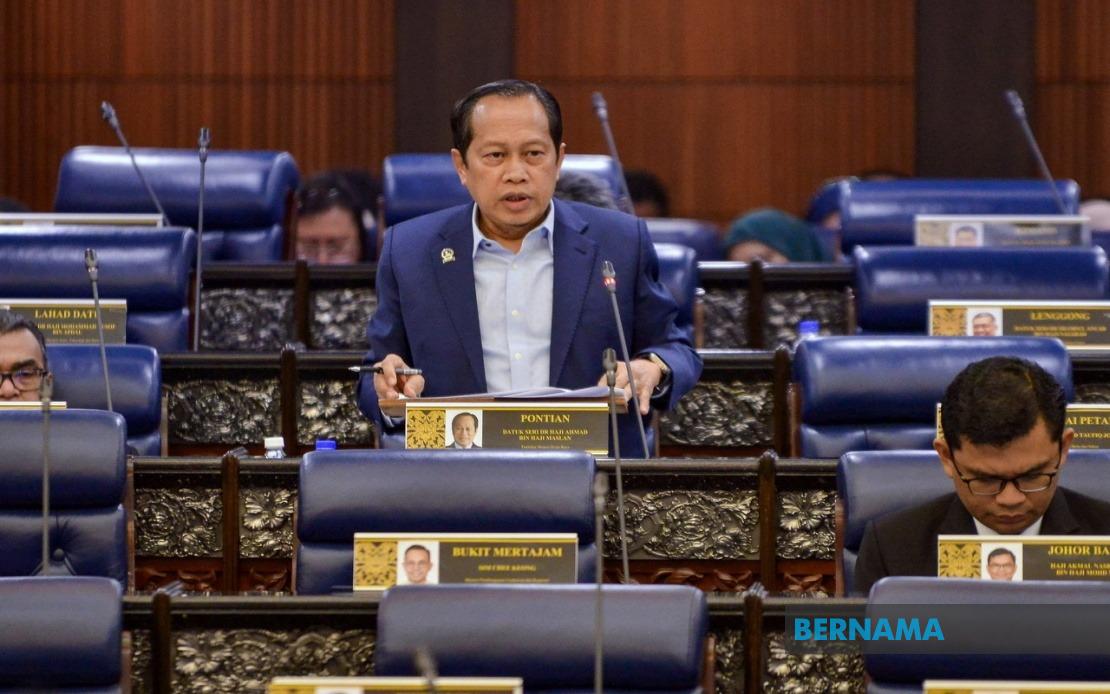
The federal government has distributed RM1.2 billion in compensation payments to landowners affected by the Sabah Pan Borneo Highway Phase 1 project, according to Deputy Minister of Works Datuk Seri Ahmad Maslan, who disclosed the figure during parliamentary proceedings in Kuala Lumpur on July 14. The corresponding Sarawak portion of the Pan Borneo Highway initiative has generated RM737 million in land compensation payouts. Maslan underscored the administration's commitment to protecting affected property holders, emphasising that the federal government is absorbing the complete financial burden of compensation, loss recovery, and related administrative expenses to shield landowners from financial hardship.
The scale of land compensation reflects the significant expansion in the overall project budget. When parliamentary member Isnaraissah Munirah Majilis from WARISAN-Kota Belud raised concerns about the spiralling costs, Maslan provided context for the nearly doubled expenditure. The Sabah Pan Borneo Highway Phase 1 budget has ballooned from an initial RM12.86 billion forecast in 2015 to the current RM24.889 billion commitment—an increase of approximately 93 percent over eight years. This dramatic budget revision has prompted questions about project management and value delivery to Sabahans.
The cost escalation stems fundamentally from a structural shift in project delivery methodology. Originally conceived under a Project Delivery Partner model, the initiative was suspended in 2019 following a strategic government review. Maslan attributed this termination to national interest considerations, requiring comprehensive reassessment of remaining construction phases and project scope following five years of initial implementation. The transition to a Federal Conventional Contractor approach necessitated revised technical evaluations and cost recalibrations that substantially increased the final budget projection.
Beyond administrative restructuring, technical factors have materially contributed to cost increases. Changes in engineering scope and design specifications, driven by geotechnical discoveries and soil stabilisation requirements across Sabah's varied terrain, demanded expensive remediation strategies. Large-scale utility relocation operations—including rerouting telecommunications, water, and power infrastructure—represent significant hidden costs that became apparent only during detailed planning phases. These adjustments reflect the complexity of developing modern highway infrastructure across challenging topography in East Malaysia.
The project's internal structure demonstrates the magnitude of work involved. Phase 1A encompasses 16 separate work packages valued at RM10.9 billion, while Phase 1B comprises 19 packages totalling RM13.989 billion. This bifurcated approach allows staged completion but also multiplies coordination and overhead expenses compared to a monolithic project framework. The distributed work structure provides flexibility for funding allocation but may increase overall administrative burden.
Macroeconomic pressures have amplified construction costs substantially since the initial 2015 assessment. Inflation accumulation across eight years, combined with volatile global commodity pricing for essential construction materials, has inflated expenses beyond purely technical considerations. Iron, bitumen, and cement—critical for highway construction—experienced significant price fluctuations in international markets. Domestic labour costs and machinery expenses have similarly risen, reflecting increased operational requirements and wage pressures across Malaysia's construction sector. These cost drivers operate independently of project-specific factors and affect all major infrastructure initiatives across the country.
The Sabah Pan Borneo Highway represents a critical economic development initiative for East Malaysia. The project aims to connect major population centres and facilitate regional commerce, potentially unlocking economic opportunities across interior Sabah. However, the substantial cost escalation raises important questions about initial planning rigour and risk assessment methodologies employed in major infrastructure procurement. Whether the revised budget represents accurate project scoping or reflects inadequate preliminary due diligence remains a subject of legitimate public scrutiny.
For Malaysian readers, particularly those in Sabah and Sarawak, understanding these developments holds practical significance. Infrastructure investment in East Malaysia has historically lagged peninsular development, making projects like the Pan Borneo Highway symbolically important for regional equity. However, cost overruns of this magnitude—nearly doubling within a decade—warrant careful examination of project governance structures and contractor accountability mechanisms. The RM1.2 billion in land compensation payments demonstrate government commitment to stakeholder protection, yet landowners have legitimate interests in seeing construction completed efficiently and within revised timelines.
The broader context involves competing fiscal priorities across the federal budget. Every ringgit allocated to cost escalations in this single project represents resources unavailable for other development initiatives, healthcare improvements, or education enhancement. The government's assertion that it absorbs all compensation costs acknowledges this trade-off but does not eliminate the fundamental budgetary constraint. Future infrastructure projects must incorporate more sophisticated risk assessment frameworks and realistic cost estimation methodologies to prevent recurrence of such substantial budget revisions.
Moving forward, the Pan Borneo Highway's completion timeline and quality outcomes will determine whether the escalated investment delivers commensurate benefits to Sabahans. The transition from the Project Delivery Partner model to conventional contracting shifts accountability structures, potentially affecting project oversight and dispute resolution mechanisms. Transparent reporting on construction progress, cost management, and contract compliance will be essential for maintaining public confidence in major infrastructure initiatives throughout East Malaysia and beyond.

