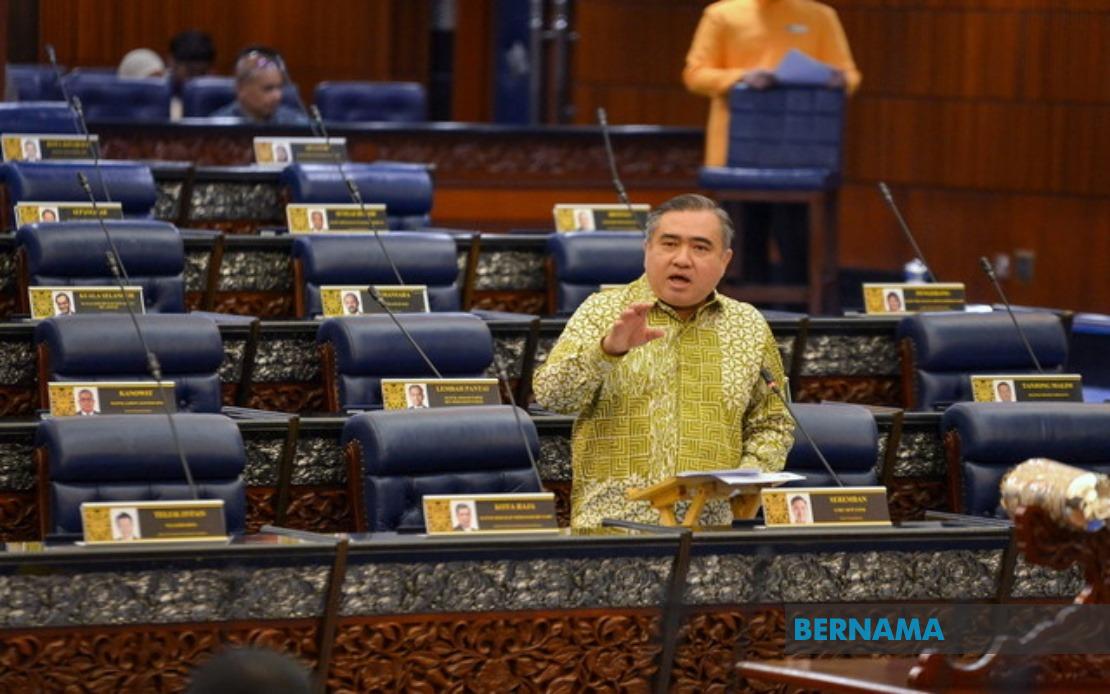
Transport Minister Anthony Loke has announced that the Federal Government will underwrite the financing of Johor's ambitious Elevated Autonomous Rapid Transit (E-ART) project, moving the infrastructure initiative closer to realisation after years of planning uncertainty. Speaking in Parliament during question-and-answer proceedings, Loke outlined a hybrid funding approach that recognises the project's scale whilst addressing financial sustainability concerns that have dogged many major transport infrastructure schemes across Southeast Asia.
The decision to secure government backing represents a significant shift in project structuring. Initially, the appointed private sector consortium was expected to shoulder the full financing burden, but comprehensive assessments have revealed that this approach would render the mega-project economically unviable. The acknowledgement that private investment alone cannot sustain such large-scale transit infrastructure reflects a broader regional pattern, where governments increasingly recognise that transformative transport networks require public sector participation to succeed. Rather than abandoning the partnership model entirely, the government has opted for a blended structure that marries private expertise with public funding.
Loke stressed that detailed negotiations on the precise financing methodology, the actual quantum of government commitment, and the repayment schedule across the concession period remain ongoing. These technical discussions will ultimately shape how taxpayer resources are deployed and what return, if any, the government can expect over the project lifecycle. The complexity of such arrangements demands careful scrutiny to ensure value for money whilst maintaining commercial viability for private partners. Once stakeholders reach consensus, the agreed framework will be tabled before Cabinet for formal consideration and approval prior to executing the Concession Agreement.
The four-year implementation timeline represents an aggressive construction schedule that would commence upon issuance of the Letter of Acceptance. For a region prone to infrastructure delays, meeting such deadlines requires robust project management and minimal regulatory obstacles. The completion target positions E-ART to function in tandem with other major transport upgrades, including the Johor Bahru-Singapore Rapid Transit System Link, which is slated for January 2027 operations. These interlocking timelines demand exceptional coordination between Malaysian and Singaporean authorities to maximise regional connectivity benefits.
Recognising that E-ART alone cannot immediately address Johor's congestion challenges, the Transport Ministry has developed a comprehensive traffic dispersal strategy in collaboration with the state government. This multi-modal approach strengthens existing public transport infrastructure, acknowledging that modern urban mobility requires diversified options rather than dependence on single systems. The BAS.MY service network will expand substantially to encompass 28 routes and 254 buses, with electric vehicles forming part of this expanded fleet—a nod to environmental sustainability concerns increasingly important to Malaysian policymakers and urban residents.
The Stage Bus Service Transformation 2.0 programme will deploy 157 dedicated buses to service critical Johor Bahru corridors including JB Sentral and Bukit Chagar, with operations commencing in early 2027. This timing aligns strategically with the RTS Link launch, creating a coordinated public transport ecosystem across the Singapore-Johor border. Such coordination exemplifies how regional infrastructure planning must transcend national boundaries to deliver seamless cross-border mobility. Beyond buses, the ministry is pursuing procurement of twelve additional KTM Komuter Southern train sets to augment rail capacity, though final approvals remain pending. Pending that acquisition, the recently launched Shuttle Selatan service offers interim capacity between Kulai, Kempas, and Pasir Gudang, operating fourteen daily trips and providing crucial connectivity to underserved populations.
Fare affordability emerged as a secondary parliamentary concern, with lawmakers questioning whether the government intends establishing fare ceilings across public transport projects. Loke indicated that all public transport fares remain under government control, though he acknowledged the challenging policy trade-off inherent in this approach. When governments maintain strict fare ceilings to ensure affordability for lower-income commuters, the resulting revenue constraints necessitate ongoing government fund injections to maintain operational sustainability. This tension between social objectives and financial viability reflects a fundamental challenge facing transport planners across Southeast Asia, where rapid urbanisation creates mounting demand for affordable mobility precisely when fiscal constraints tighten.
The minister's commitment to maintaining fares at the lowest practicable levels demonstrates policy prioritisation of social accessibility over financial returns. For Malaysian commuters, particularly in rapidly developing regions like Johor, this translates to continued subsidised transport options that ease household budget pressures. However, the sustainability of this approach depends critically on government capacity to inject recurring funds without crowding out other developmental priorities. The E-ART project, by improving transport efficiency and reducing travel times, should theoretically generate sufficient demand to enhance revenue streams and reduce required subsidies, though this outcome depends on successful implementation and user uptake.
Johor's emergence as a major transport infrastructure hub reflects its strategic importance as Malaysia's southern economic gateway and its pivotal role in cross-border trade with Singapore. The convergence of E-ART, the RTS Link, enhanced bus networks, and augmented rail capacity signals ambitious efforts to position Johor as a model regional transport centre. For Malaysian stakeholders, this concentration of transport investment offers tangible benefits including reduced congestion, shorter commute times, and improved air quality through modal shift towards public transit. Regionally, enhanced Johor connectivity strengthens the broader Malaysia-Singapore transport corridor and facilitates the kind of seamless cross-border mobility increasingly demanded by business and leisure travellers navigating the integrated Johor-Singapore economic zone.
The project's success hinges on execution excellence, sustained political will across electoral cycles, and continued coordination with Singapore. Given the scale of investment and the complexity of hybrid public-private financing structures, transparent governance and robust oversight mechanisms become essential. Malaysian stakeholders should monitor progress closely, ensuring that government funding commitments deliver promised connectivity improvements and that private partners contribute genuine operational expertise and innovation. The coming years will determine whether Johor's transport transformation becomes a regional success story or a cautionary tale of infrastructure ambitions outpacing implementation capacity.

