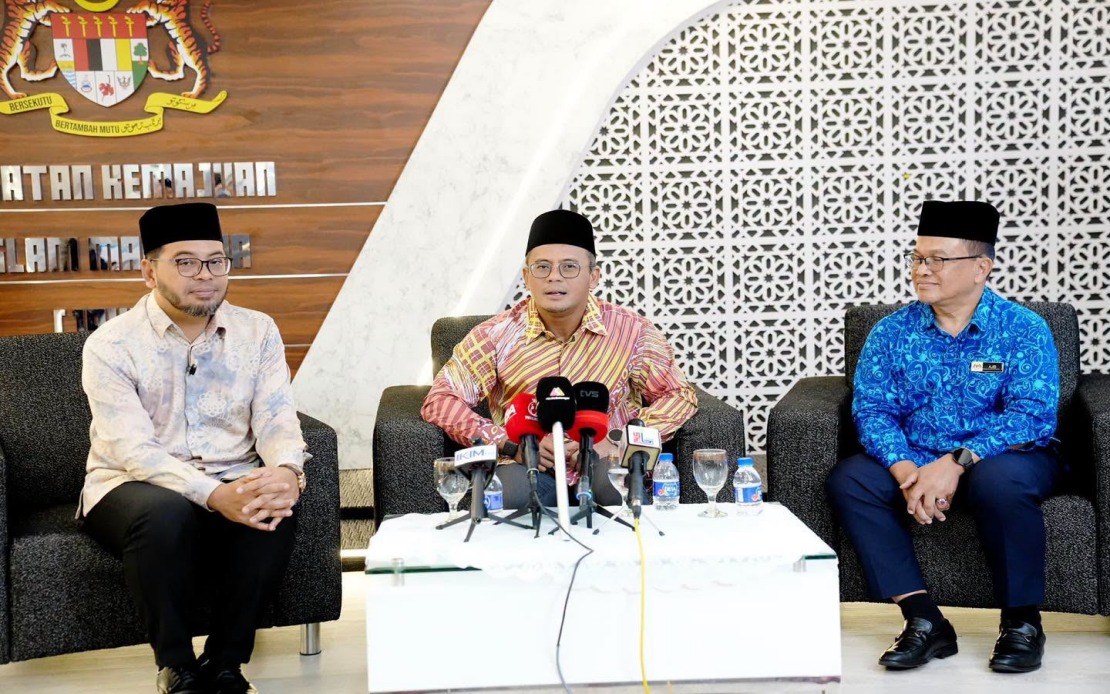
The Festival Turath Islami Selangor has graduated from a state-level platform to national prominence with its fourth edition, rebranded as Festival Turath Islami Malaysia 2026. This expansion marks a significant milestone in Malaysia's commitment to preserving and promoting Islamic intellectual heritage, with Selangor Menteri Besar Datuk Seri Amirudin Shari announcing that the event will operate on a substantially enlarged scale starting in September. The shift to national status reflects growing recognition of the festival's role in anchoring Islamic scholarship within Malaysia's knowledge economy and cultural identity.
The event will unfold across eight days beginning September 13, with the Putra Mosque in Putrajaya serving as the primary venue. This relocation from the Selangor State Mosque, which hosted previous iterations, underscores the transformation from a regional showcase to a federal-level initiative. By moving to Malaysia's administrative capital, organisers aim to elevate the festival's profile and facilitate broader participation from stakeholders across the country. The choice of Putrajaya also strengthens symbolic ties between Islamic heritage preservation and national governance structures, positioning religious scholarship as integral to the nation's developmental trajectory.
The festival operates as a collaborative venture between the Selangor State Government and the Federal Government through the Prime Minister's Department (Religious Affairs), with Minister Dr Zulkifli Hasan participating in the official announcement. This partnership arrangement demonstrates how state and federal authorities can harmonise efforts around cultural and religious objectives. The cooperation model established through this festival may serve as a template for future initiatives seeking to balance centralised coordination with regional expertise and community engagement.
Central to the 2026 edition is the theme "Hikmah Warisan Islam," which directs scholarly attention toward Al-Hikam al-Ata'iyyah, a classical Sufi masterwork authored by Ibn Ata-illah As-Sakandari. This medieval Islamic text explores profound spiritual concepts including sincerity, trust, and the deeper dimensions of servant-God relationships. The emphasis on this particular work carries significance for Malaysian audiences, as Al-Hikam al-Ata'iyyah achieved considerable influence throughout the Malay World, shaping Islamic intellectual traditions across the region. By examining such foundational texts, the festival reconnects contemporary Muslims with their scholarly inheritance and demonstrates Islam's philosophical depth beyond prescriptive dimensions.
Since its inception in 2023, the festival has maintained consistent focus on canonical Islamic works, progressively introducing audiences to different scholarly traditions. The inaugural edition examined Ihya' 'Ulumuddin by Imam Al-Ghazali, followed by exploration of Imam al-Nawawi's Al-Arba'in al-Nawawiyah and Imam Jalaluddin al-Suyuti's Tafsir al-Jalalain. This carefully sequenced approach allows both scholars and general participants to deepen their engagement with Islamic intellectual history methodically. The progression from established foundational texts toward increasingly sophisticated classical works suggests the festival's architects envision their audience as progressive learners capable of appreciating nuanced theological and philosophical perspectives.
The 2026 programme will convene 23 scholars representing both domestic and international expertise, who will deliver insights across more than 42 scholarly sessions. Among confirmed participants is Sheikh Dr Ali Jum'ah, a globally recognised Islamic scholar whose contributions span Quranic interpretation, jurisprudence, and contemporary Islamic thought. Additional speakers include Prof Dr Sayyid Idris al-Fasi al-Fihri, Ustaz Dr Adi Hidayat, Ustaz Wadi Annuar, and Selangor Mufti Datuk Setia Dr Haji Anhar Haji Opir. The diverse composition of speakers ensures participants encounter multiple interpretive schools and contemporary applications of classical Islamic wisdom. International participation particularly strengthens the festival's capacity to contextualise Malaysian Islamic scholarship within broader Muslim intellectual networks.
Beyond lecture-based formats, the festival incorporates diverse programming designed to engage multiple learning preferences and spiritual orientations. Pre-dawn scholarly lectures known as Kuliah Subuh provide intimate discussion settings, while Dalail al-Khairat recitations connect participants to devotional traditions rooted in Islamic spirituality. The five-day Talaqqi Kitab Al-Hikam sessions establish space for direct textual engagement and interactive learning. Additional components including opening addresses, Qasidah performances, and an Islamic book festival create holistic programming that addresses intellectual, devotional, and cultural dimensions of Islamic heritage. This multifaceted structure acknowledges that heritage preservation functions most effectively when reaching audiences through varied entry points.
The inaugural National Muzakarah Ulama Turath represents a particularly consequential innovation within the 2026 framework. By convening Islamic scholars from across Malaysia specifically to deliberate on classical Islamic heritage texts and their relevance to contemporary challenges, this gathering establishes structured mechanisms for intellectual cooperation among Malaysia's ulama class. The Muzakarah format creates space for scholars to collectively examine how classical Islamic wisdom addresses modern issues confronting Muslim communities. Such occasions facilitate development of consensus positions and coordinated messaging on significant religious questions, potentially strengthening the coherence of Islamic institutional responses across the federation.
The decision to expand from state to national level signals official recognition that Islamic heritage preservation serves strategic national interests beyond purely religious dimensions. Governments increasingly appreciate that societies grounded in coherent intellectual and cultural frameworks demonstrate greater social stability and institutional resilience. By supporting systematic engagement with foundational Islamic texts, Malaysian authorities implicitly endorse the view that informed religious communities better resist extremism and generate constructive social contributions. The festival essentially positions classical Islamic scholarship as civic infrastructure supporting Malaysia's broader development aspirations.
For regional audiences, the festival's elevation holds significance extending beyond Malaysian borders. Southeast Asia contains substantial Muslim populations whose Islamic traditions developed within interconnected scholarly networks spanning the Indian Ocean world. The Malay World particularly benefited from classical Islamic learning transmitted through networks linking the Middle East, South Asia, and insular Southeast Asia. By foregrounding classical Islamic texts and international scholars, Festival Turath Islami Malaysia 2026 strengthens intellectual continuities that characterise Islamic heritage across the region. The event demonstrates how individual nations can participate in preserving and revitalising shared Islamic knowledge systems while maintaining distinctive local contexts.
The festival ultimately reflects a deliberate state strategy positioning Malaysia as custodian of Islamic scholarly traditions relevant to contemporary Muslim societies. By investing institutional resources in heritage preservation, providing platforms for leading international scholars, and creating spaces for domestic ulama cooperation, Malaysian authorities construct narratives linking national identity to Islamic intellectual excellence. This approach distinguishes Malaysia's religious engagement from purely ritual or prescriptive frameworks, instead emphasising Islam's capacity to generate sophisticated knowledge addressing existential human questions. For Malaysian citizens and regional observers, the festival's trajectory from state initiative to national programme exemplifies how cultural institutions can simultaneously honour historical traditions and serve contemporary governance objectives.

