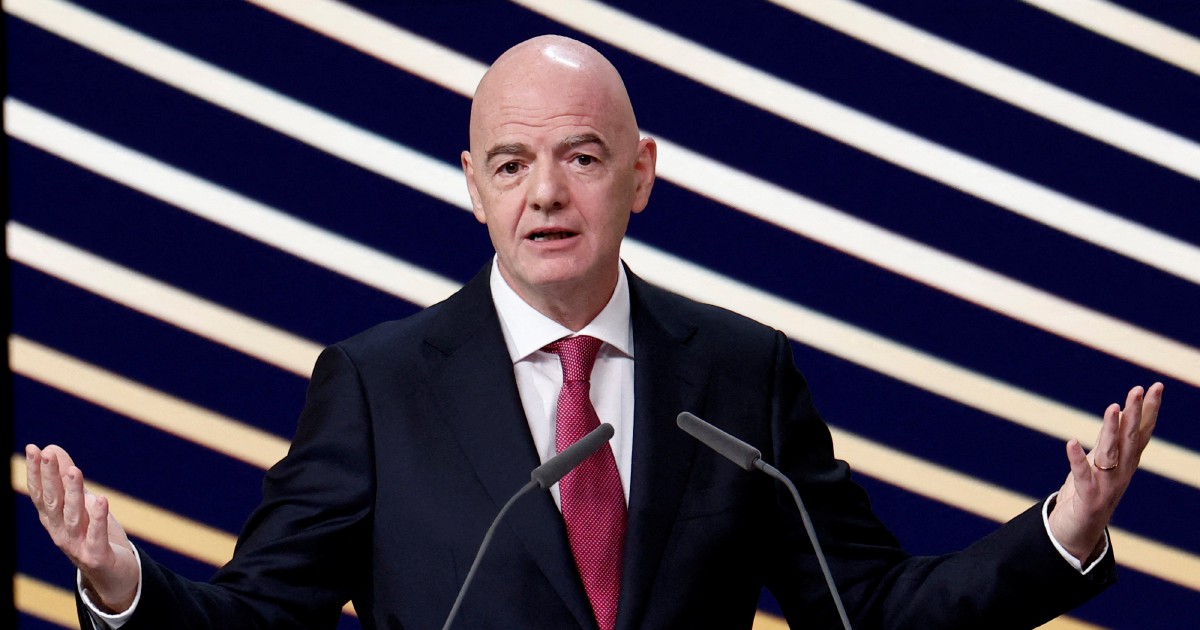
FIFA President Gianni Infantino has emphatically rejected allegations that he maintained an affair and dispensed financial favours while serving in senior positions at UEFA, according to reports from Paris. The denial comes as the football administrator faces mounting pressure following a week of intense criticism directed at a shelved private investment proposal that has drawn considerable controversy within international football circles.
The accusations, which have surfaced through a British newspaper investigation, centre on claims that Infantino paid off an alleged romantic partner during his tenure at European football's governing body. The timing of these allegations compounds existing difficulties for the FIFA leader, whose recent initiatives have faced vocal opposition and scepticism from stakeholders within the global football community. The convergence of these separate controversies creates a challenging period for his leadership and raises broader questions about governance standards within major sports organisations.
Infantino's career trajectory has seen him rise through the ranks of football administration, beginning with positions at UEFA before his election to the FIFA presidency. His time at UEFA, which preceded his current role at world football's apex body, has become the focal point of these renewed investigations into his personal conduct. The allegations suggest that his decision-making during that period may have been influenced by undisclosed personal relationships, a charge that strikes at the heart of administrative integrity and impartiality.
The private investment scheme that triggered this week's criticism represents one of several controversial initiatives under Infantino's stewardship of FIFA. The proposal, which has now been abandoned, had generated significant debate about the direction of football's international governance and raised questions about whether such ventures align with FIFA's core mission. The decision to shelve the plan reflects the scale of opposition it encountered among the football community and stakeholder groups who questioned its merits and potential consequences.
Within Southeast Asia and other football-developing regions, scrutiny of FIFA leadership decisions carries particular significance. Smaller nations and emerging football associations often lack the resources to navigate complex governance changes at the global level, making transparent and impartial decision-making at FIFA particularly important. Any suggestions of impropriety or favour-trading at the highest levels of football administration can undermine confidence in the systems that determine funding distribution, competition scheduling, and development programmes affecting regional football.
The allegations also intersect with broader governance concerns that have periodically surfaced regarding FIFA's operations. The organisation has faced considerable international criticism in previous years over issues ranging from corruption allegations to labour rights concerns. Against this historical backdrop, new allegations of personal impropriety during an executive's career take on added weight and credibility in the eyes of observers and critics.
Infantino's comprehensive denial of the affair allegations and charges of favouritism signals that he intends to defend his record vigorously. How thoroughly and convincingly he addresses these claims may significantly influence perceptions of his leadership among FIFA's member associations, media observers, and the broader football public. The strength of his response to these specific allegations could also affect his ability to rebuild consensus around his policy initiatives and governing vision.
The intersection of personal conduct allegations with professional governance failures creates a particularly complex challenge for any administrator. Even if the personal allegations prove unfounded, the damage to institutional confidence and trust may persist if not addressed comprehensively. Conversely, full transparency regarding both the personal allegations and the broader policy missteps that triggered this week of criticism could potentially provide a foundation for restoration of confidence, though such a path would require substantial effort and institutional reform.
For Malaysian football and the broader Southeast Asian context, these developments at FIFA warrant careful attention. The stability and credibility of international football governance directly influences the opportunities, resources, and frameworks available to regional football associations. Uncertainty about FIFA's leadership and the integrity of its decision-making processes can create instability that ripples through regional football programmes, competitions, and development initiatives that depend on predictable governance.
The convergence of personal conduct allegations with questions about a shelved investment proposal suggests that broader institutional governance challenges may underlie these controversies. Whether Infantino can successfully navigate this difficult period while restoring confidence in FIFA's operations remains an open question that will likely dominate football administration discourse in coming weeks and months.

