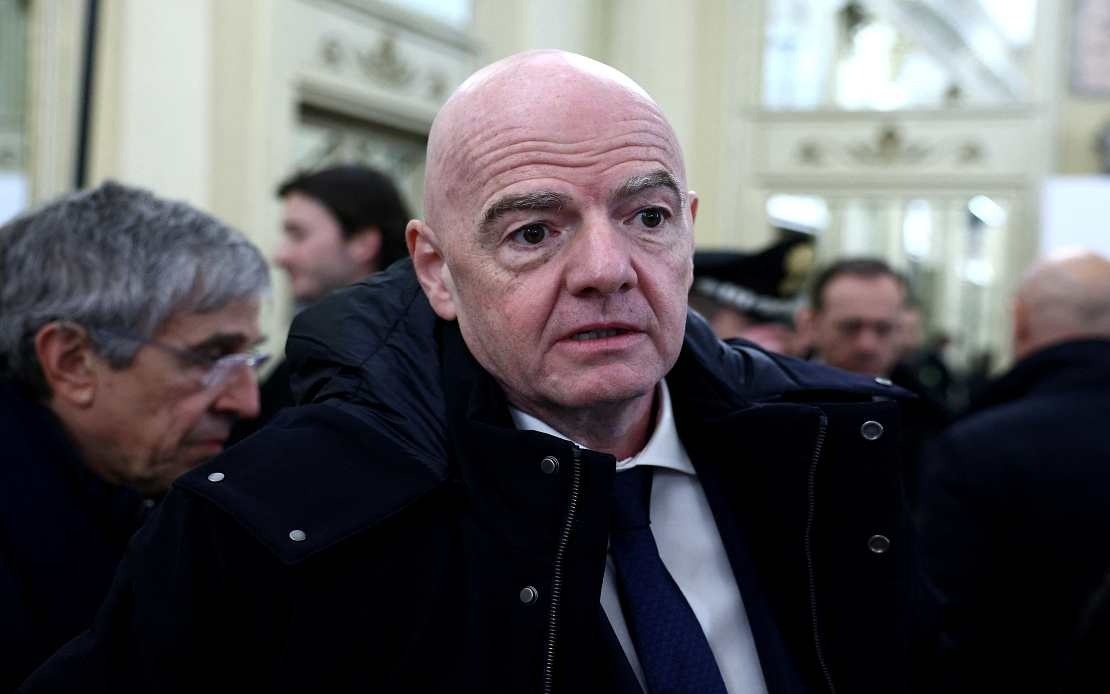
A complaint targeting FIFA President Gianni Infantino has been filed with the International Olympic Committee, accusing the football chief of violating strict rules designed to protect sporting organisations from political interference. The allegation centres on Infantino's conduct during international football competition and his interactions with high-ranking political figures, raising fresh questions about the independence of FIFA's decision-making processes and the compatibility of his leadership with Olympic movement principles.
Human rights organisation FairSquare brought the matter before the IOC, leveraging Infantino's position as an IOC member since 2020. The group contends that his actions constitute systematic violations of the Olympic Charter and the IOC's ethics code, representing a pattern rather than isolated incidents. According to FairSquare, the most recent transgression involves his handling of a disciplinary case that had significant implications for national team competition at the international level.
The specific incident triggering this formal complaint involves a one-match ban that was initially imposed but subsequently suspended, permitting a player to participate in a knockout World Cup fixture against Belgium. This reversal occurred following a reported telephone conversation between the player's nation's leader and Infantino himself. The FIFA chief publicly maintained that his organisation's disciplinary committees operate with complete autonomy and are not influenced by external political pressure, yet the suspension of the penalty raised eyebrows among governance observers.
FairSquare's complaint identifies five explicit violations of IOC neutrality requirements and presents prima facie evidence—sufficient to warrant further investigation—of two additional serious breaches under Olympic governance standards. The document details how Infantino's conduct, particularly in managing the disciplinary matter, conflicts with fundamental principles that prevent sports leaders from allowing political considerations to influence sporting outcomes or administrative decisions.
The timing and nature of the complaint reflect escalating international scrutiny of FIFA governance structures. FairSquare had previously submitted a related complaint to FIFA's own ethics committee in December, establishing a documented record of concerns. This dual-track approach—simultaneously petitioning both FIFA's internal processes and the external IOC—underscores the complexity of addressing governance issues when the accused individual holds positions within multiple sports governance hierarchies.
Political support for the investigation has materialised from unexpected quarters. Norway's football federation formally approached FIFA's ethics committee requesting it take FairSquare's allegations seriously and conduct a thorough examination. Meanwhile, fifty members of the European Parliament issued a collective letter dated June 29 to the same ethics committee, urging substantive action on the complaint. This convergence of political, sporting, and civil society voices suggests the matter has transcended typical administrative disputes to become a question about institutional integrity.
The football community's response reveals underlying tensions between FIFA's claimed independence and the reality of how major sporting decisions intersect with geopolitical interests. When a significant player's competitive availability can be affected by presidential telephone calls, it raises fundamental questions about whether sporting merit or political convenience drives crucial determinations. For Southeast Asian football federations and the region's players, these governance questions have practical implications, as they affect how fairly international competitions operate.
FIFA has conspicuously refrained from offering substantive explanation for why the disciplinary committee reversed its initial suspension, citing only the principle of committee independence. This silence is remarkable given the public knowledge of the presidential intervention and public expectations for transparency in major sporting decisions. The lack of detailed reasoning fuels speculation about whether administrative process genuinely determined the outcome or whether other considerations proved decisive.
The complaint mechanism through the IOC represents a significant escalation in accountability efforts. As an Olympic committee member, Infantino is theoretically bound by Olympic governance standards that prioritise political neutrality more rigidly than some other international organisations. Whether the IOC will treat this complaint as a matter of concern or defer to FIFA's internal processes remains unclear, though the multiple supporting interventions from political and sports organisations suggest momentum behind genuine investigation.
For Malaysia and other Southeast Asian nations, these governance disputes matter considerably. FIFA's credibility affects how fairly international football competitions are administered, influencing opportunities for regional teams and players. If decision-making processes become susceptible to political influence from powerful nations, smaller football nations face potential disadvantage in crucial competitions. The complaint against Infantino, therefore, extends beyond questions of individual conduct to encompass whether FIFA operates according to principles that protect competitive fairness for all member associations regardless of their political or economic standing.

