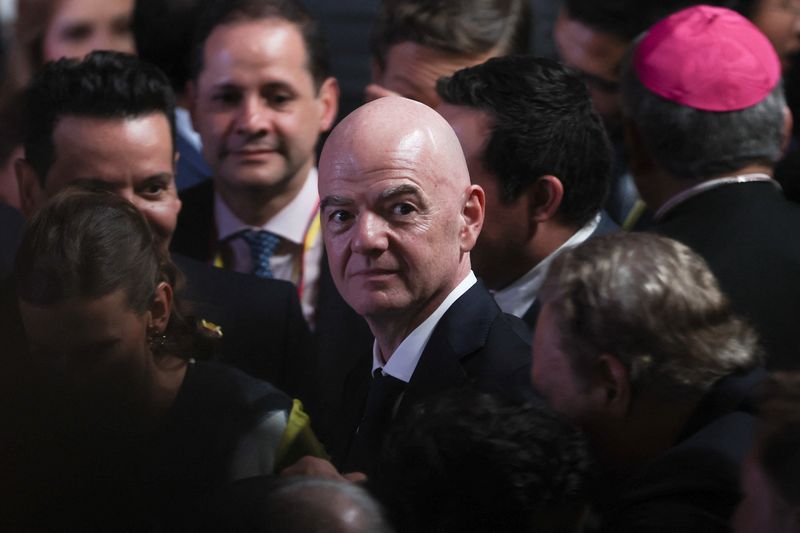
FIFA has moved decisively to shield President Gianni Infantino from mounting criticism, issuing a stern warning against what the organisation describes as a "concerted and ongoing effort" to destabilise his position. The statement underscores the deepening fault lines within world football's governing structure, where Infantino's proposal to generate approximately $4.2 billion through the sale of commercial rights to the World Cup and other tournaments has triggered an unprecedented leadership crisis.
The collapse of Infantino's monetization scheme has exposed significant discord among football's continental and national bodies. UEFA, numerous national football associations, and several senior FIFA officials have openly challenged the proposal, with some demanding the president's resignation. This represents a rare moment of collective dissent against FIFA's leadership, signalling that even traditionally compliant member associations are willing to break ranks on matters of fundamental governance.
FIFA's defensive posture intensifies scrutiny into the internal dynamics of the organisation. Rather than addressing specific criticisms, the governing body has opted for a broad rebuttal, declining to identify which parties allegedly seek to undermine Infantino or which specific allegations warrant dismissal. This approach suggests concern that engaging with particular grievances might legitimize broader questions about the president's tenure and decision-making processes. The vagueness of FIFA's response may ultimately prove counterproductive, as it invites speculation about what controversies the organisation prefers not to confront directly.
Underlying the current tensions are allegations regarding payments UEFA made to a former employee during Infantino's tenure as the European body's general secretary. Infantino has categorically denied these claims, and FIFA has rejected them as baseless. However, the persistence of these allegations in major international media outlets demonstrates that the narrative around Infantino's leadership extends beyond the failed commercial proposal to encompass questions about his past conduct and relationships within European football governance. The simultaneous emergence of multiple lines of criticism suggests opponents are pursuing a multifaceted strategy to weaken his position before the March vote.
A crisis gathering in Morocco this week illustrated the fracturing consensus within FIFA's leadership. While the organisation convened to reaffirm support for Infantino and apologise for mishandling the commercial proposal, the very necessity of such a meeting signals the gravity of the internal crisis. That FIFA leadership felt compelled to explicitly state its backing for the president demonstrates how substantially his authority has been questioned, even among traditionally supportive factions. The apology to the 211 member associations, whilst acknowledging procedural failures, stops short of substantive policy reversal.
The political geography of support and opposition reveals important patterns for understanding football's regional power dynamics. CAF's unanimous backing of Infantino on Thursday provides crucial support from Africa, a constituency representing a significant voting bloc within FIFA's membership. Similarly, CONMEBOL's declaration that any challenge to Infantino must occur through formal FIFA voting procedures effectively shields him from regional action. Mexico's football federation's endorsement, despite CONCACAF's broader call for accountability, illustrates how member associations navigate competing pressures between regional governance structures and their own institutional interests.
Europe's fractured response to Infantino's leadership underscores the continent's diminished influence within FIFA's reformed governance structures. UEFA, historically the most powerful continental confederation, has explicitly withdrawn confidence in the president, whilst Norwegian Football Federation President Lise Klaveness has demanded resignation based on grounds of institutional trust. Yet these European positions carry less weight than they might have in previous decades, reflecting FIFA's deliberate effort to rebalance power away from wealthy European associations toward African and Asian bodies. This structural reorientation means that Infantino's survival depends less on European support than on maintaining backing from Africa and Latin America.
The timing of this crisis, occurring eight months before the scheduled March Congress, leaves substantial uncertainty about Infantino's fourth-term prospects. No credible alternative candidacy has yet materialised, suggesting that whilst opponents possess sufficient collective force to destabilise his leadership, they lack consensus on a replacement. This dynamic could paradoxically strengthen Infantino's position, as divisions among challengers may convince fence-sitting member associations that supporting the incumbent represents the safest choice. The absence of a clear successor also complicates the narrative for critics, who must articulate not merely why Infantino should leave but who should replace him and what alternative vision that person would represent.
FIFA's emphatic statement that it will "not support, facilitate or tolerate any process" concerning presidential elections conducted outside established statutes reveals the organisation's anxiety about potential splinter challenges to Infantino's authority. This language suggests concerns that opponents might attempt to convene alternative voting procedures or establish parallel governance structures, a scenario that would represent an existential threat to FIFA's institutional coherence. By asserting the supremacy of democratic procedures within its own framework, FIFA attempts to foreclose more confrontational tactics whilst simultaneously controlling the terms through which challenges to Infantino's leadership may be mounted.
For Asian football, particularly ASEAN member associations, the Infantino crisis presents distinct considerations. Southeast Asian nations have generally benefited from FIFA's post-2015 governance reforms and Infantino's era, gaining greater representation and influence compared to earlier periods when European and South American bodies dominated decision-making. Most ASEAN members remain quiet on the current leadership dispute, suggesting they regard stability under Infantino's continued presidency as preferable to uncertainty surrounding a succession process. This tacit alignment with FIFA's position may reflect calculations that Infantino, despite his flaws, has proven responsive to Asian confederation interests in resource allocation and tournament hosting decisions.
The commercial rights proposal's failure reveals fundamental questions about FIFA's financial model and strategic direction that will transcend Infantino's presidency. The proposal sought to unlock value from tournaments administered by FIFA but owned collectively by its member associations, a distinction that sparked legitimate governance concerns about authority and accountability. Future FIFA presidents will confront similar pressures to monetise football assets, ensuring that the underlying tensions exposed during this crisis will persist regardless of who occupies the presidency. The challenge for FIFA's membership involves establishing clearer protocols for evaluating such proposals and ensuring genuine consultation rather than top-down imposition of commercially ambitious schemes.
The coming months will test whether Infantino can restore sufficient confidence to proceed to March's Congress without serious challenge, or whether opponents will coalesce around an alternative candidate. His survival depends on maintaining African and Latin American backing whilst managing the reputational damage from failed proposals and allegations regarding his past conduct. The crisp warning FIFA has issued against coordinated opposition may temporarily suppress overt challenges, but it cannot address the underlying substantive critiques regarding governance transparency and financial accountability that have animated recent criticism. The presidency's future ultimately rests not on FIFA's defensive statements but on whether Infantino can demonstrate renewed leadership capable of commanding confidence across football's diverse global membership.

