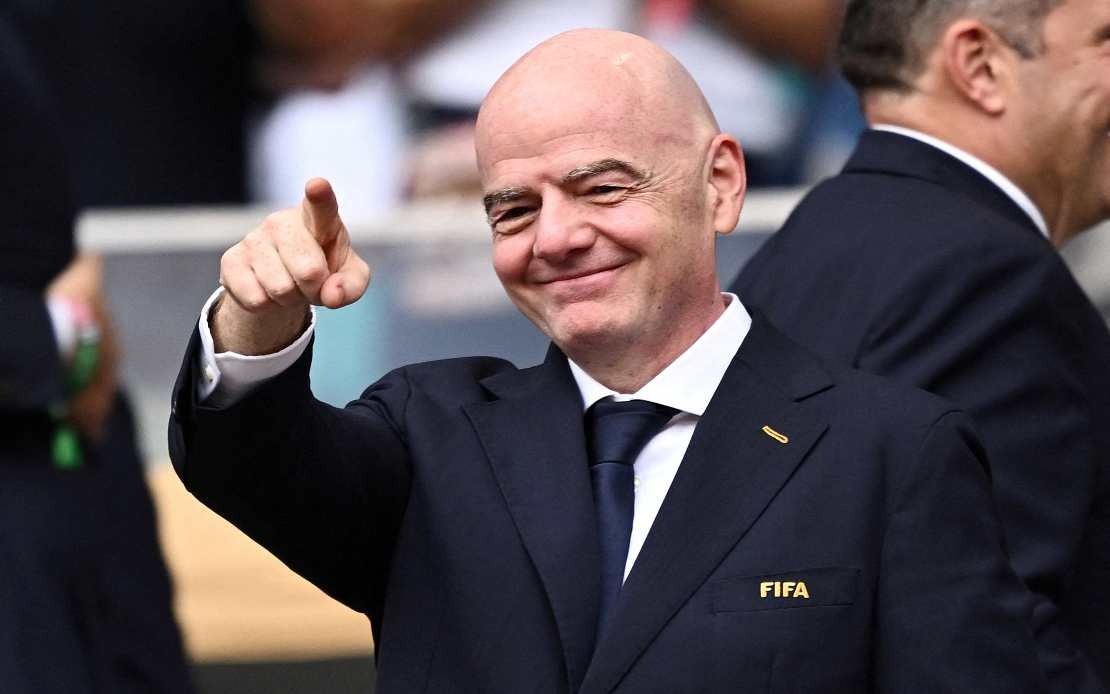
FIFA has distributed pre-written letters praising President Gianni Infantino to national football associations in advance of his re-election campaign, according to reports emerging from Moscow in early August. The letters, which emphasised Infantino's record in expanding sports infrastructure and advancing women's football during his tenure, were circulated ahead of the upcoming World Cup tournament scheduled to be hosted across the United States, Mexico and Canada. The correspondence came with names and signatures of association presidents already filled in, though distribution was selective, with not all member federations receiving copies of the documents.
The initiative represents an unusual approach to securing support for an incumbent leader, raising questions about the authenticity of institutional backing and the degree of genuine consensus among football associations worldwide. By pre-populating signatures and names, FIFA essentially transformed what should have been independent expressions of support from individual associations into template endorsements, effectively speaking on behalf of federation leaders without necessarily soliciting their explicit approval. This practice sits uncomfortably with standard governance practices, where major organisational decisions and endorsements typically emerge through deliberative processes rather than pre-fabricated communications.
The timing of this letter campaign is particularly significant given the turbulent backdrop of FIFA's ongoing financial restructuring. In July, FIFA unveiled an ambitious plan to generate US$4.2 billion in capital by offloading approximately twenty percent ownership in a newly created entity designed to hold the organisation's media and commercial rights, encompassing broadcasting arrangements for the World Cup and other competitions. This move would represent a fundamental shift in how FIFA monetises its most valuable assets, with the global football governing body seeking external investors to fund its operations and development initiatives.
Reports suggest that a fund managed by Joshua Kushner, brother of Jared Kushner and son-in-law of United States President Donald Trump, could emerge as the primary bidder for the stake. The involvement of the Kushner family investment apparatus has added a geopolitical dimension to the internal FIFA controversy, introducing questions about American financial influence over international football governance. Such high-profile investment would inevitably reshape FIFA's operational decisions and strategic direction, potentially affecting how competitions are structured and marketed globally.
The European football establishment has responded with extraordinary hostility to the proposed media rights monetisation scheme. UEFA, the continental governing body representing European football associations, declared in a statement that all its member federations would boycott FIFA tournaments unless FIFA completely withdrew the proposal. This coordinated stance represents a rare moment of unity among competing interests within European football and constitutes perhaps the most serious institutional challenge Infantino has faced during his tenure as president. The boycott threat carries genuine weight given Europe's dominance in global football and its outsized influence within FIFA's decision-making structures.
Amid these cascading controversies, speculation has intensified regarding whether Infantino might step down from his position. Multiple media outlets have reported that the FIFA president faces mounting pressure from football associations worldwide, with resignation emerging as an increasingly plausible scenario. Such a departure would represent a dramatic reversal from Infantino's relative security during his earlier years in office, when he successfully navigated various reform initiatives and expansion proposals. The convergence of the media rights dispute, the European boycott threat, and the pre-written letter campaign has created a perfect storm that threatens his political standing.
For Malaysian football stakeholders and Southeast Asian federations more broadly, these developments carry important implications. The FAM (Football Association of Malaysia) and other Asian associations must navigate an increasingly fragmented FIFA where European interests wield disproportionate power and American capital penetration raises concerns about decision-making autonomy. The proposed media rights arrangement could fundamentally alter how World Cup revenues are distributed among confederations and national associations, potentially affecting development funding available to Asian football programmes. Malaysia's football development initiatives, already constrained by limited resources, could be affected by any restructuring of FIFA's financial model.
The pre-written letter strategy also exposes broader questions about FIFA's institutional legitimacy and the genuineness of democratic processes within international football governance. When the world's governing body resorts to manufacturing consent through pre-filled endorsements, it signals a troubling disconnect between leadership and membership. For smaller associations without significant leverage, such practices underscore the power imbalances inherent in FIFA's hierarchical structure, where major decisions are often determined by a handful of influential stakeholders rather than through inclusive deliberation.
The unfolding crisis at FIFA also reflects deeper tensions within international sports governance, where commercial imperatives increasingly conflict with traditional governance norms. Infantino came to office promising transparency and reform, yet his approach to securing re-election through distributed endorsement templates demonstrates how easily institutional rhetoric can diverge from actual practice. For Malaysia and other nations seeking to develop their football programmes and exert genuine influence within international forums, the FIFA crisis serves as a cautionary tale about the risks of concentrating power and decision-making authority in the hands of small executive circles.
Looking forward, the resolution of the current disputes will significantly shape international football's trajectory over the coming years. Whether Infantino survives this challenge, whether the European boycott materialises, and how the media rights question ultimately resolves will determine FIFA's future operational model and its capacity to distribute resources equitably among its global membership. Southeast Asian football associations must closely monitor these developments and consider how to safeguard their interests in an increasingly contested governance environment.

