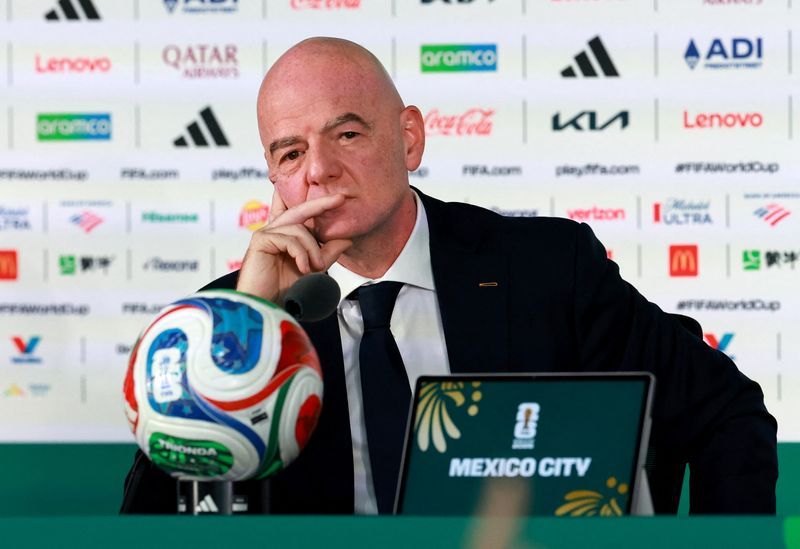
FIFA's effort to draw a line under the most serious political challenge of Gianni Infantino's presidency appears to have succeeded in the short term, yet the underlying tensions over how the world's soccer governing body makes decisions promise to resurface repeatedly in coming years. The leadership gathering in Rabat on Wednesday delivered an immediate public relations victory for the embattled president, with the management board and Secretary General Mattias Grafstrom offering explicit endorsements. However, analysts and stakeholder organisations across European and other confederations have signalled that this temporary truce masks deeper institutional dysfunction that will require more than apologies and reassurances to resolve.
The immediate catalyst for this internal convulsion was FIFA's decision to pursue a proposal to commercialise a portion of the World Cup's future rights—a scheme so poorly handled that even senior staff appeared blindsided. The governing body's subsequent apology to all 211 member federations acknowledged that the initiative "should have been handled differently" and that national associations felt excluded from meaningful consultation. This admission represented a significant concession, yet it focused narrowly on procedural missteps rather than addressing the fundamental question of why a proposal with such far-reaching implications could advance so far through FIFA's system without adequate stakeholder engagement from the outset.
FIFA has committed to a comprehensive review of the processes that generated this fiasco, with findings to be presented at the next Council meeting. The stated intention is to prevent similar episodes in future. Yet the very need for such a review underscores the absence of robust mechanisms for incorporating diverse viewpoints into high-stakes strategic decisions. The organisation insists that all actions complied with existing regulations and that failures were restricted to communication and process rather than governance violations. This distinction, however, may prove semantically convenient rather than substantively meaningful—if regulations permit decisions to be made and presented to stakeholders rather than genuinely deliberated with them, then arguably the regulations themselves are inadequate.
European Leagues, representing over 1,300 clubs across the continent, have emerged as particularly vocal critics. The body lambasted FIFA's approach to evaluating a separate proposal to expand the 2030 World Cup from 48 to 64 teams, noting that member organisations received merely four weeks to assess a decision with profound competitive and scheduling implications. This complaint reflects a pattern: major football constituencies consistently report being presented with fait accompli decisions rather than invited to shape policy alongside FIFA officials. The structural imbalance between FIFA's executive capacity and the distributed power of confederations, national associations, and club leagues creates inherent friction that episodic apologies cannot resolve.
UEFA, European soccer's regulatory body, has joined the criticism with particular force, openly questioning Infantino's leadership. Equally significant are reservations expressed by CONCACAF, which oversees soccer in North and Central America and the Caribbean, as well as the Asian Football Confederation. These declarations from multiple continental bodies suggest that discontent extends far beyond isolated pockets of dissent and touches on fundamental concerns about how FIFA prioritises consultation with its most developed and established stakeholder networks. When confederations representing billions of football fans and the sport's most lucrative markets feel sidelined, institutional legitimacy deteriorates regardless of formal procedural compliance.
Infantino's political position, meanwhile, remains remarkably secure in one crucial respect: he faces no serious challenger for the presidential election scheduled for March 2027 in Morocco, where he will seek a fourth term extending through 2031. Smaller associations, particularly across Africa and Asia, continue to regard the president favourably, recognising that FIFA's development funding remains essential to their national programmes. This asymmetry of support—enthusiastic backing from smaller federations, scepticism from larger and wealthier ones—has permitted Infantino to weather the current storm. Yet this very dependency structure raises uncomfortable questions about whether FIFA's decision-making reflects global football interests equitably or instead privileges the preferences of those less able to resist executive direction.
The apology in Rabat included a notable warning: FIFA declared it would "no longer tolerate any attacks on its integrity, good governance and due process." This formulation inverts the implicit criticism by framing accountability demands as assaults on the organisation itself. Such defensive rhetoric suggests that the organisation views external scrutiny not as an opportunity for institutional improvement but as an irritant to be suppressed. Secretary General Grafstrom's internal memo to staff, which characterised recent events as a "sad and reproachable series" whilst obliquely suggesting that individuals and difficult moments "come and go," reinforced this tone—implying that the solution is patience rather than reform.
Looking forward, the governance debate will almost certainly intensify rather than diminish. Any future proposals touching on commercial strategy, tournament formats, or structural reforms will encounter magnified demands for transparency and meaningful consultation. The World Cup remains football's premier commercial asset, and decisions about its format, scheduling, or commercialisation affect every confederation's interests. FIFA cannot indefinitely defer addressing how decisions of this magnitude are made, nor can it rely on periodic shows of unity to overcome substantive disagreements about process and fairness.
The controversy has fundamentally shifted focus onto FIFA's internal architecture in ways that will outlast the current political cycle. Whether this leads to genuine institutional reform or merely more elaborate performative gestures remains to be seen. For Malaysian and Southeast Asian stakeholders—member federations with limited leverage in FIFA's hierarchy—the outcome carries particular significance. The Asian Football Confederation's own reservations suggest that the region's interests may not be adequately represented in FIFA's highest councils, a concern that systematic governance reform might address but which current reassurances do not resolve.

