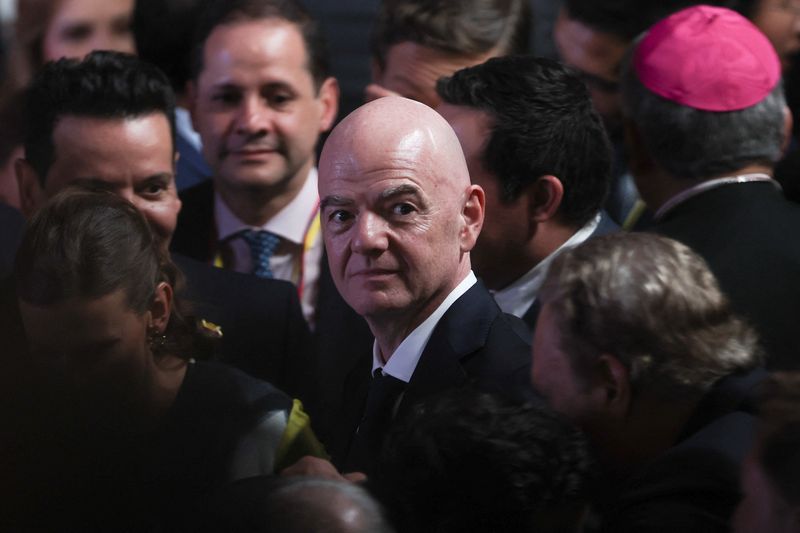
FIFA's embattled president Gianni Infantino should have his political future determined by the organisation's 211 member associations through a transparent electoral process, according to Confederation of African Football (CAF) president Patrice Motsepe. Rather than capitulating to external pressure demanding his resignation, Motsepe argues that the scheduled March 18 Congress in Rabat, Morocco represents the proper forum for FIFA's constituent bodies to collectively weigh in on Infantino's leadership and decide whether to grant him another term.
Infantino currently faces unprecedented organisational turbulence stemming from his controversial attempt to facilitate private capital investment into FIFA competitions, including the World Cup itself. This initiative triggered formal opposition from three major continental confederations: UEFA representing Europe, AFC representing Asia, and CONCACAF representing North and Central America and the Caribbean. Together, these bodies account for a substantial portion of FIFA's membership and have publicly called for Infantino to step aside, signalling a significant rift within global football's governance structure.
Motsepe's intervention carries particular weight given CAF's growing influence within FIFA's power structure. The African confederation represents the continent hosting the 2026 FIFA World Cup qualification matches and comprises dozens of member nations. By staking out a position that prioritises democratic procedure over capitulation to external demands, Motsepe is essentially offering Infantino crucial political cover while simultaneously reinforcing the principle that FIFA's leadership decisions must flow through formal institutional channels rather than orchestrated campaigns from within the organisation's upper echelons.
The CAF president's position reflects a broader philosophical stance on organisational governance that emphasises due process and institutional legitimacy. When speaking to Sky News, Motsepe articulated his belief that leadership accountability should occur within established frameworks rather than through extra-institutional pressure. He acknowledged that leaders must remain open to scrutiny and questioning, but insisted that FIFA possesses adequate mechanisms for addressing grievances and complaints without resorting to demands for immediate resignation or removal.
Motsepe's framing of the matter carries implications for how developing football nations view FIFA's internal conflicts. By emphasising the rights of all 211 member associations to participate equally in determining leadership, he subtly highlights concerns that wealthy European confederations might otherwise dominate decision-making. For Southeast Asian nations competing within the AFC framework, such rhetoric underscores the importance of maintaining a balanced power structure within world football's governing body, where member votes genuinely matter rather than decisions being predetermined by a handful of powerful confederations.
The timing of Motsepe's remarks proves strategically significant given the approaching March Congress. By publicly calling for an orderly electoral process now, he effectively shapes the narrative around Infantino's future and establishes that withdrawing from the race would represent a voluntary decision rather than forced capitulation. This distinction matters considerably for Infantino's political standing within FIFA, as it preserves his authority and influence regardless of the election's outcome. Additionally, it signals to member associations that any decision made through the electoral process carries legitimate democratic endorsement.
Motsepe explicitly confirmed that CAF continues offering Infantino active support, citing his demonstrated loyalty to African football. This backing proves consequential because African member associations constitute nearly one-quarter of FIFA's total membership, providing a substantial voting bloc. Should Infantino ultimately contest the March election, the solidified support of CAF member nations could prove decisive in determining the outcome. For Malaysian football administrators and other Southeast Asian football officials observing from the AFC, this alignment of African and FIFA presidential interests illustrates how continental confederations wield considerable collective influence over the organisation's direction.
The broader context involves fundamental questions about how international sports organisations balance accountability with stability. Infantino's World Cup investment initiative, while rejected by major confederations, reflected legitimate modernisation efforts aimed at generating additional revenue for FIFA and its member associations. The swift opposition it triggered demonstrates the political sensitivities surrounding FIFA's commercial model and the distribution of profits generated through major tournaments. Motsepe's advocacy for electoral resolution rather than executive removal implicitly argues that FIFA's membership should collectively determine whether Infantino's strategic vision merits continued backing or rejection.
Motsepe's insistence on institutional process and governance also resonates within Southeast Asia's football community, where many nations prioritise stability and orderly transitions within sports bodies. The principle that due process and legality remain non-negotiable provides reassurance to smaller member associations that even contentious leadership disputes can be resolved through legitimate democratic mechanisms rather than factional power plays. This approach stands in contrast to the rather public and acrimonious nature of the current UEFA, AFC, and CONCACAF opposition, which risks fragmenting FIFA's already complex internal political dynamics.
Looking forward, the March Congress will effectively function as a referendum on Infantino's stewardship and the direction FIFA should pursue regarding competition financing and modernisation. Whether rival candidates challenge him remains uncertain, though the existence of vocal opposition from major confederations suggests potential contenders might emerge. Motsepe's earlier statement that organisations should welcome competitive elections and diverse candidacies leaves open the possibility that other leadership aspirants could step forward, creating a genuine contest rather than a coronation.
The CAF president's measured stance also subtly distances African football governance from what some might characterise as politically motivated removal campaigns. By championing the electoral process, Motsepe positions African football as principled stewards of FIFA's institutional integrity, which could enhance CAF's own influence in future major decisions affecting global football. For Malaysian and other Southeast Asian football observers, Motsepe's intervention demonstrates how continental confederations strategically deploy governance arguments to advance their political and institutional interests within FIFA's complex ecosystem.

