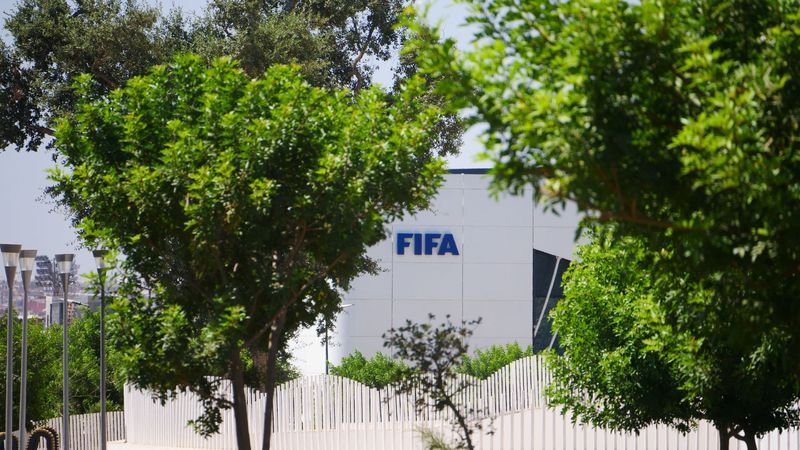
The governance crisis engulfing world soccer's controlling body extends far beyond questions of individual leadership, according to the head of Europe's players' union, who warned this week that FIFA faces a fundamental collapse of trust requiring sweeping institutional reforms. David Terrier, president of FIFPRO Europe, described the current situation as a "real war" among football's governing structures, signalling that the dysfunction revealed by FIFA president Gianni Infantino's botched proposal to commercialise World Cup rights represents a symptom of deeper systemic failures rather than isolated missteps.
The controversy centres on Infantino's initiative to sell off World Cup commercial rights, which triggered a rare united front of opposition from three major confederations—UEFA, AFC, and CONCACAF—publicly demanding his removal. Rather than frame this moment as a contest over Infantino's political future, Terrier reoriented the debate entirely, arguing that the real challenge involves restructuring how power flows through FIFA's bureaucracy and establishing genuine checks on executive authority. His intervention carries weight in Malaysian and Southeast Asian football circles, where FIFPRO's advocacy for player protections and fair governance has resonated increasingly among national federations and league officials concerned about FIFA's direction.
Terrier's diagnosis of FIFA's condition proves particularly significant when measured against the organisation's historical trajectory. He explicitly invoked the corruption scandals of the Sepp Blatter era, when bribery, vote-buying, and opaque decision-making nearly destroyed the institution's credibility before Blatter's resignation in 2015. The parallel Terrier draws suggests that current governance structures have not fundamentally evolved since that watershed moment, despite pledges of reform and transparency. Instead of addressing concentrated power at the presidential level, Terrier contends, FIFA merely reshuffled personnel without altering the concentration of decision-making authority that enabled past abuses.
Following a crisis summit in Morocco, FIFA issued an apology to its 211 member associations, acknowledging errors in communicating the commercial rights proposal while simultaneously reaffirming support for Infantino and warning against challenges to his leadership that fall outside formal democratic procedures. This response exemplifies the governance problem Terrier identifies: leadership acknowledges communication failures while defending the underlying power structure that produced those failures. The organisation framed the matter as a procedural issue rather than questioning whether the proposal itself reflected democratic input from the global football community, including players, clubs, and smaller confederations without leverage in executive circles.
The concentration of authority within the FIFA presidency creates structural vulnerability to corruption and questionable decision-making, Terrier argued, because no internal mechanisms exist to challenge or constrain executive action effectively. He specifically criticised FIFA's administrative apparatus for failing to function as a genuine counterbalance or guardian of regulations, even when those rules apply to the president himself. This observation resonates throughout Southeast Asia, where smaller football nations frequently express concerns about decision-making processes weighted toward Europe's wealthy confederations and FIFA's executive apparatus. Malaysia and its regional neighbours have historically found themselves marginalised in global football governance, making questions of democratic participation and power-sharing directly relevant to their interests.
Terrier proposed that legitimate reform must redistribute power away from a singular executive figure, creating instead a more distributed model in which the president serves as guarantor rather than sole decision-maker. Such structural change would require the sitting president to actively champion reforms that diminish his own authority—a scenario Terrier acknowledged as unlikely without extraordinary pressure. He suggested that credible reform must come from leadership willing to stake its mandate on success, implying that Infantino or any successor operating within unchanged power structures would inherit an illegitimate system incapable of restoring broader confidence. This framing subtly but clearly indicates that Infantino's continuation, should it occur, would represent a failure of football governance rather than a resolution of underlying tensions.
The players' union perspective carries particular importance because professional athletes occupy a unique position within football's ecosystem: they are essential to the sport's economic and competitive value yet frequently excluded from governance conversations. FIFPRO Europe's voice amplifies concerns that would otherwise lack institutional expression, particularly regarding how FIFA's decisions about tournament structure, scheduling, and commercial arrangements affect player welfare and career opportunities. Malaysian players and Southeast Asian talent operating in global competitions face these governance impacts directly, from international match calendar decisions to revenue distribution models that determine resources flowing to their home federations.
Terrier characterised the current moment as potentially FIFA's "last opportunity to change the system," suggesting that failure to implement structural reforms would condemn the organisation to repeat historical patterns of corruption and institutional decay. This framing elevates the stakes beyond Infantino's reelection campaign in March, positioning governance reform as an existential necessity for football's credibility. The window for change appears limited precisely because the current leadership has demonstrated reluctance to champion reforms that would constrain executive power, and any successor operating under identical institutional arrangements would face identical incentives to resist meaningful reform.
The regional implications of FIFA's governance struggles extend through Southeast Asian football development and investment strategies. Confederations like AFC depend on FIFA's institutional legitimacy and commercial viability to justify resource allocation decisions to their member nations. When FIFA's governance credibility deteriorates, it undermines the entire system's perceived legitimacy, potentially creating space for alternative structures or reducing member confidence in decisions about tournament hosting, qualification pathways, and development funding. Malaysian football administrators watching this unfold must assess whether the global governing body can genuinely reform or whether persistent structural problems will continue generating crises that destabilise international football operations.
Terrier's intervention ultimately repositions the narrative surrounding FIFA's current troubles from a dispute over one executive's fitness to lead toward a fundamental question about whether the organisation can establish legitimate governance structures capable of restraining power, protecting the sport's integrity, and rebuilding institutional trust. By arguing that the leadership debate obscures the systemic issues requiring attention, he challenges FIFA and its constituent federations to engage in deeper institutional self-examination. The outcome of this reckoning will shape not only global football's governance for years ahead but also the competitive opportunities and developmental pathways available to players and federations throughout Southeast Asia.

