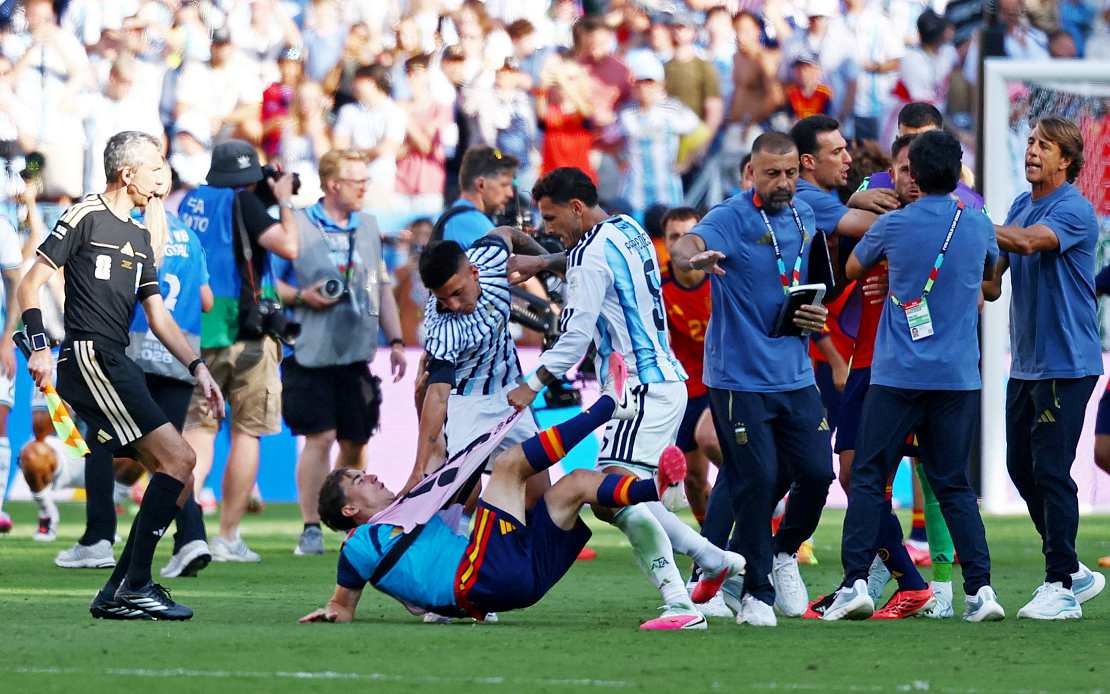
Football's governing body FIFA has opened a formal investigation into disciplinary breaches allegedly committed by Argentina during their World Cup final encounter against Spain in New Jersey. The decision follows a comprehensive review of match reports and follows the appointment of a Disciplinary and Ethics Prosecutor tasked with examining potential violations of FIFA's disciplinary code in the aftermath of the tournament's climax.
The catalyst for the investigation stems from footage captured immediately after the final whistle, which appeared to show Argentina midfielder Leandro Paredes engaging in aggressive conduct directed at Spanish players as they celebrated their victory on the pitch. The incident marked a concerning moment that overshadowed what had been a closely contested final, introducing an unwanted element of physical confrontation into the match's conclusion.
Argentina's disciplinary record throughout the tournament had already drawn scrutiny from observers and FIFA officials alike. Beyond the post-match fracas, the South American team faced persistent criticism regarding their approach to physical play, a pattern that became particularly evident during their semi-final triumph over England. That match saw midfielder Enzo Fernandez receive a red card after accumulating two yellow cards, emphasising the team's tendency toward aggressive challenges that attracted referee attention.
The formal disciplinary inquiry represents FIFA's standard protocol when match commissioners file reports detailing potential rule violations. Under Article 36 of the FIFA disciplinary code, the Disciplinary Committee possesses the authority to appoint specialists to conduct thorough investigations into alleged breaches. This procedural step ensures that all relevant evidence is examined before any disciplinary measures are determined, allowing accused parties opportunity to present their perspective.
Parallel concerns surround Argentina's conduct following their earlier victory against England. Reports indicate that Argentine players displayed a banner asserting their territorial claims over the Falkland Islands after defeating the English side. If confirmed as part of the final investigation, this action would potentially constitute a violation of Article 34.3 of the tournament regulations, which restricts the use of political messaging during competition. The Argentine Football Association had previously faced financial penalties from FIFA for identical conduct during a 2014 friendly match against Slovenia, establishing precedent for how the organisation responds to such infractions.
The scope and severity of FIFA's response to political gestures during football matches has become increasingly inconsistent, however. Earlier this year, UEFA demonstrated a more forceful approach when Spanish players Rodri and Álvaro Morata faced one-match bans following Euro 2024 after engaging in chanting related to Spain's claims regarding Gibraltar. This disparity in enforcement suggests FIFA may face pressure to apply comparable consequences should Argentina be found guilty of similar violations, raising questions about the consistency of global football governance.
Historically, FIFA has projected a hardline stance against political expression at international tournaments. The most prominent recent example occurred at the 2022 World Cup in Qatar, where English captain Harry Kane faced the threat of sporting sanctions for attempting to wear a rainbow-coloured 'OneLove' armband. The prospect of yellow card punishment for this symbolic gesture of inclusion demonstrated FIFA's willingness to suppress forms of expression it deems problematic, regardless of humanitarian context or international norms regarding human rights advocacy.
The investigation's outcome carries implications beyond Argentina's immediate circumstances. A lenient response might suggest FIFA applies different standards to major football nations compared to smaller federations, potentially undermining perceptions of impartial governance. Conversely, severe punishment could establish expectations for how future political conduct by players will be handled, influencing team behaviour at subsequent tournaments including upcoming qualifying matches and continental championships across Africa, Asia, and the Americas.
For Malaysian readers and broader Southeast Asian audiences, this case underscores how international sports bodies navigate the intersection of competitive integrity, political sensitivities, and player conduct. The region's own experience with disciplinary standards—both within AFC competitions and broader FIFA frameworks—demonstrates that consistency in enforcement remains a persistent challenge facing global sports governance. The investigation's conclusion will likely inform how FIFA approaches similar situations involving teams from any confederation.

