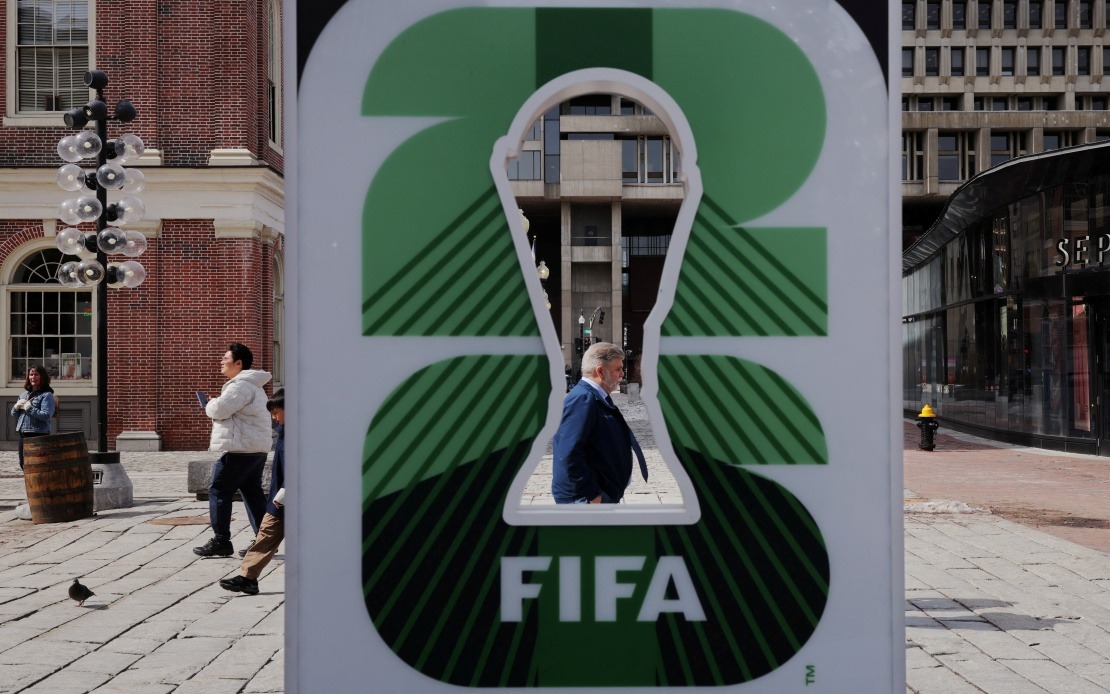
FIFA President Gianni Infantino has shelved an ambitious plan to attract private investment into the World Cup's commercial operations, reversing course on a scheme that triggered considerable resistance from football federations, clubs, and governance advocates worldwide. The decision, confirmed in remarks to Sky News, represents a significant retreat from a strategy the football body had pursued to unlock new revenue streams and modernise how the sport's flagship tournament operates financially.
Infantino's justification for abandoning the initiative centred on the discord it had generated across FIFA's stakeholder ecosystem. Rather than presenting this as a capitulation, he framed the withdrawal as consistent with FIFA's broader mission. The 56-year-old administrator acknowledged that although the proposal had attracted support in certain quarters, the divisions it sparked were fundamentally incompatible with the collaborative ethos required to advance football globally. His statement reflected a pragmatic recognition that pursuing a divisive agenda, regardless of its merits, risked undermining the institutional credibility FIFA had been rebuilding after years of corruption scandals.
The original scheme had been remarkably ambitious in scope. FIFA had proposed establishing a US$20 billion subsidiary to consolidate the management and commercial rights of the World Cup alongside other international competitions. The blueprint included offering external investors ownership stakes exceeding 20 percent, a substantial privatisation component that would have fundamentally altered the governance structure surrounding the tournament. For context, the 2022 World Cup in Qatar generated unprecedented revenues, and FIFA's projections suggested the forthcoming tournaments in 2026 and beyond could generate even greater returns, making the subsidiary an attractive proposition for institutional investors seeking exposure to global sports commerce.
The privatisation proposal struck at fundamental tensions within modern football administration. Supporters argued that bringing private capital and commercial expertise into World Cup operations would enhance efficiency, modernise infrastructure investments, and ensure long-term financial sustainability. They contended that private investors brought specialised knowledge in hospitality, broadcast management, and fan engagement that FIFA lacked organisational capacity to develop independently. However, opponents questioned whether surrendering meaningful equity stakes in the World Cup—arguably football's most valuable commercial asset—represented prudent stewardship of the game's interests, particularly given the sport's murky history of commercial exploitation and corruption.
The backlash crystallised broader concerns about FIFA's trajectory under Infantino's leadership. Football federations, particularly from smaller nations that depend heavily on FIFA revenue distributions, feared that private investors prioritising returns might reshape tournament formats and scheduling in ways that favoured commercially dominant markets at the expense of competitive integrity and universal access. International sports governance advocates raised alarms about accountability gaps that might emerge if private equity holders gained influence over competition rules and participation criteria. Labour unions highlighted concerns that commercial pressure from private investors might intensify exploitation of workers in host nations during tournament preparations.
Infantino's decision to reconvene stakeholders signals an intention to chart a different course that preserves FIFA's institutional autonomy whilst acknowledging the legitimate operational challenges the World Cup poses. The administrator pledged that FIFA's commitment to expanding football's reach—particularly in nations with less developed infrastructure and limited commercial appeal—would remain central to upcoming initiatives. This emphasis on inclusive development carries particular resonance for Southeast Asian football, where nations like Malaysia, Thailand, and Vietnam have invested substantially in professional league development and youth academies whilst seeking greater access to FIFA technical and financial resources.
The timing of this reversal warrants consideration of its political dimensions. Infantino has cultivated notable relationships with powerful political figures, most prominently Donald Trump, whom he presented with FIFA's inaugural Peace Prize in December. Some observers have speculated whether the decision to abandon the privatisation plan reflected calculations about political sensitivities in the United States, where concerns about foreign investment in iconic American cultural institutions resonate across the political spectrum. The 2026 World Cup, jointly hosted by the United States, Mexico, and Canada, represents a pivotal moment for FIFA's commercial strategy, and navigating domestic American political sensitivities around the tournament's governance appeared to factor into Infantino's calculations.
The scrapped privatisation plan also intersected with broader debates about FIFA's financial structure and governance transparency. The football body has operated with substantial autonomy from traditional corporate accountability mechanisms, and proposals to attract private equity investors would have required establishing new disclosure frameworks and investor reporting protocols. Some governance reformers viewed private investment as a potential vehicle for introducing greater financial transparency and independent auditing, whilst critics contended that privatisation represented a mechanism for circumventing existing FIFA constitutional constraints and stakeholder consultation requirements.
Looking forward, Infantino's reversal leaves unresolved the fundamental question driving the privatisation initiative: how FIFA can finance the increasingly complex infrastructure demands of hosting successive World Cups whilst maintaining the tournament's global reach and competitive integrity. The 2026 edition, spanning three nations and 48 teams, will cost considerably more to organise than previous tournaments, straining FIFA's existing revenue model despite substantial broadcasting and sponsorship agreements. Alternative approaches to capital financing—such as host nation contributions, public-sector partnerships, or phased facility development—remain underdeveloped and may prove inadequate to the scale of required investments.
For Malaysian stakeholders in football administration and governance, this episode underscores persistent tensions between FIFA's commercial modernisation imperatives and the concerns of smaller federations about maintaining equitable representation in institutional decision-making. The privatisation backlash demonstrated that grassroots opposition to top-down FIFA initiatives can still influence institutional outcomes, provided that opposition coalesces around coherent governance principles. As FIFA charts its course toward the 2026 World Cup and beyond, the question of how to balance commercial innovation with democratic accountability remains unresolved, and Infantino's retreat on privatisation suggests this debate will continue animating football's administrative future.

