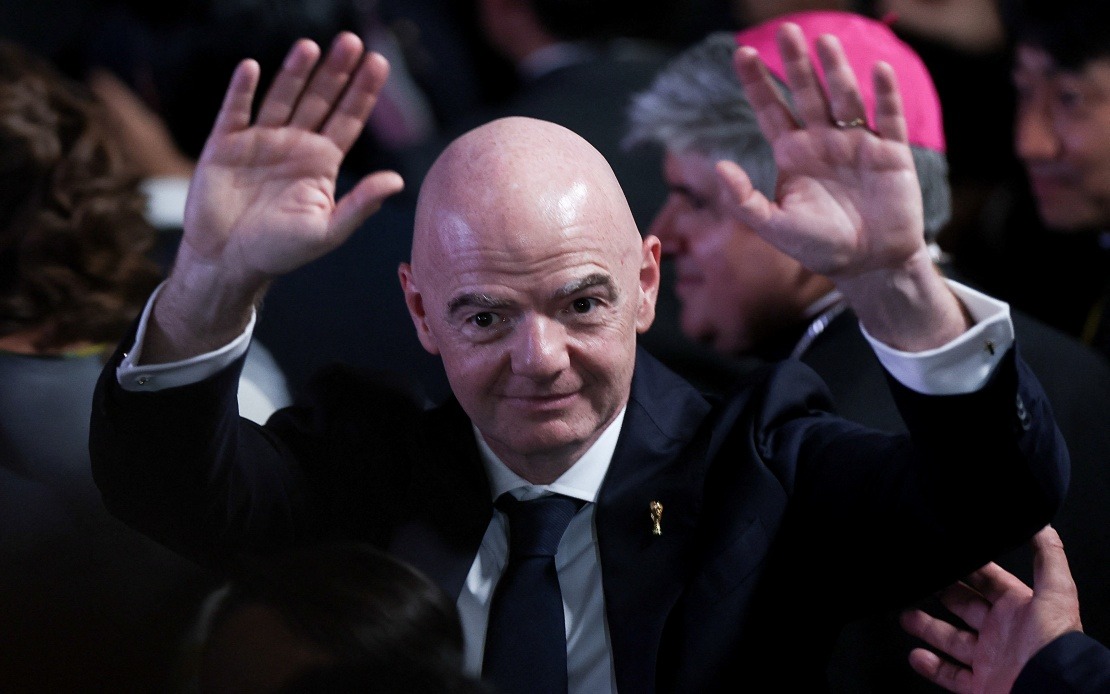
Football's global governing body has doubled down on its support for president Gianni Infantino, issuing a pointed statement from Istanbul that explicitly rejects efforts to circumvent its constitutional procedures as tensions intensify within the sprawling FIFA membership. The statement, released late Saturday, represents FIFA's most direct response yet to mounting criticism of Infantino's stewardship as he prepares to pursue a fourth consecutive term in office, signalling that institutional power remains firmly consolidated around the incumbent leadership.
The crux of FIFA's position centres on procedural legitimacy rather than the substance of criticism itself. The organisation has declared it will neither support nor tolerate any initiative to elect a new president that deviates from its Statutes and established governance protocols, effectively raising the institutional cost of any challenge to Infantino's authority. This defensive posture underscores the vulnerability FIFA perceives in its current trajectory, even as it projects confidence through bureaucratic formality. The statement carries the weight of international football law, reminding member associations that only a constitutionally sanctioned election process holds legitimacy within FIFA's framework.
Infantino's position derives legitimacy, according to FIFA's characterisation, from his election by the organisation's 211 member associations and his ongoing mandate to serve in their collective interest. This framing invokes democratic principle while simultaneously making it nearly impossible for internal challengers to construct alternative legitimacy. By anchoring his authority in member approval, FIFA creates a circular argument: any challenge to Infantino's rule becomes, by definition, an attempt to overturn the democratic will of these same associations. For Malaysian football enthusiasts and administrators, this dynamic echoes regional governance debates about institutional checks and the concentration of executive power in international bodies.
FIFA's statement echoes earlier supportive positions from two influential continental confederations: South America's CONMEBOL and Africa's CAF. This coalition-building across continents suggests that Infantino has successfully maintained backing from key regional powerhouses, though the need to emphasise such support simultaneously reveals fissures elsewhere. The continental confederations represent the structural backbone through which FIFA operates, making their solidarity with the president particularly consequential. However, the fact that FIFA feels compelled to catalogue this support indicates that unity is neither automatic nor universal across all regions.
At the core of FIFA's rebuttal lies an accusation that adversaries are pursuing through innuendo and allegation what they cannot accomplish through legitimate democratic channels. This accusatory framing transforms critics from concerned stakeholders into obstructionists attempting to subvert proper procedure. FIFA characterises recent reporting and allegations as unsubstantiated and demonstrably false, though the statement declines to specify which particular claims it disputes. This rhetorical strategy allows FIFA to dismiss criticism as disinformation without engaging substantively with specific accusations, a approach that raises questions about institutional accountability and transparency.
The statement's assertion that repetition of allegations does not render them true, and that speculation should not be presented as fact, functions as both a warning to media outlets and a dismissal of cumulative criticism. This framing suggests that FIFA views the volume and persistence of critical scrutiny as itself problematic, rather than as evidence that underlying concerns merit serious examination. For Malaysian readers accustomed to media environments where institutional power occasionally constrains critical reporting, this defensive posture carries particular resonance.
FIFA's defence of Infantino's record emphasises his three decades in European and global football administration and his purported contributions to expanding opportunities and resources throughout the sport. The statement cites his expansion of access across the game as a signature achievement, presumably referring to initiatives such as the expanded World Cup format and increased revenue distribution to smaller confederations. These accomplishments, presented as self-evident goods, are intended to outweigh whatever criticisms have accumulated, though the statement acknowledges that such scrutiny exists without conceding that any specific criticism carries merit.
The organisation explicitly states it welcomes legitimate scrutiny while simultaneously drawing a sharp boundary around what it considers legitimate. Scrutiny becomes problematic, in FIFA's formulation, when it distorts facts, amplifies unsubstantiated claims, or manufactures distractions from progress. This distinction assumes that FIFA itself determines which claims are substantiated and which represent progress, reserving the right to define the parameters of acceptable criticism. The tension between welcoming scrutiny and restricting its parameters to pre-approved boundaries reveals an institution struggling to balance accountability with institutional self-preservation.
FIFA concludes by reasserting its primary obligation to its member associations and to global football, framing any distraction from this mission as illegitimate interference. This appeal to higher purpose attempts to elevate the debate beyond questions of internal governance to stakes affecting football worldwide. For Southeast Asian football, which depends on FIFA's organisational capacity and resource distribution, this assertion of institutional continuity carries practical implications. Any instability at FIFA's apex could reverberate through continental competitions, development programmes, and qualification tournaments affecting nations throughout the region.
The fundamental tension in FIFA's position reveals an institution that feels simultaneously secure in its structural power and anxious about its legitimacy. By issuing such a forceful statement, FIFA acknowledges that Infantino's leadership faces real opposition, yet the response privileges procedural formality over substantive engagement with criticisms. As the presidential election process unfolds, the question for member associations—including Malaysia's Football Association—becomes whether procedural compliance with FIFA's statutes constitutes sufficient grounds for re-electing a leader whose vision for global football governance may not command universal enthusiasm. The stakes extend beyond administrative succession to questions about how international sport should balance accountability, continuity, and member representation.

