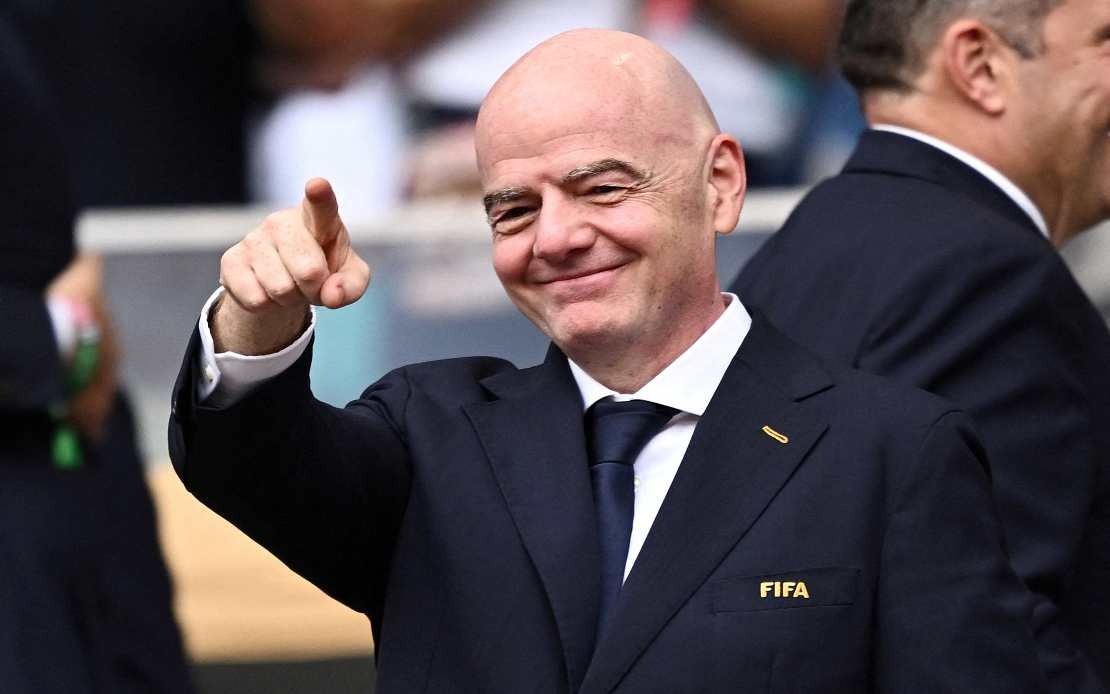
FIFA President Gianni Infantino's ambitious scheme to inject private capital into the sport's flagship competition has effectively collapsed after the Asian Football Confederation joined UEFA and CONCACAF in rejecting the proposal, marking a coordinated continental pushback against his governance vision. The three regional confederations together represent 137 of FIFA's 211 member associations, creating an insurmountable mathematical barrier to the plan's implementation and signalling deeper institutional discord within world football's governing body.
The proposal at the heart of this dispute involves establishing FIFA Forward Enterprise (FFE), a newly created vehicle that would manage World Cup operations and other FIFA competitions. The scheme calls for selling a 20 per cent stake to private investors, with investment group Thrive Eternal positioned as the lead venture capitalist. This connection to the American investment firm has drawn scrutiny, particularly given that Joshua Kushner, the firm's principal, is the brother of Jared Kushner, son-in-law to United States President Donald Trump, adding a layer of geopolitical dimension to what appears to be a purely commercial arrangement.
The AFC's formal rejection statement reveals far deeper concerns than the simple mechanics of private investment in sports administration. Rather than focusing narrowly on the FFE proposal itself, the 47-member Asian confederation articulated alarm over what it characterises as systemic governance failures within FIFA. The statement emphasises that associations learned of the privatization plan through media reports rather than through transparent institutional channels, underscoring the consultation deficits that have accumulated under Infantino's tenure since 2016.
Infantino's position as FIFA president now appears precarious following this coordinated rejection. The AFC statement pointedly references "fundamental weaknesses in FIFA's consultation and decision-making processes," language suggesting that member nations view the privatization push as symptomatic of deeper institutional problems rather than an isolated proposal. This framing opens the door to broader discussions about leadership competence and governance reform that could ultimately affect the Swiss executive's reelection prospects when his current mandate approaches renewal.
The mathematical reality constraining FIFA's options proves decisive. To advance the FFE proposal, Infantino required endorsement from a simple majority of FIFA's member associations. The AFC's 47 members, when combined with CONCACAF's 41 nations (of which 35 hold FIFA membership) and UEFA's 55 member states, yield 137 votes positioned in opposition. This consolidated continental stance renders the initiative mathematically impossible without winning over vast numbers of dissenting confederations, a prospect growing increasingly remote as the controversy intensifies.
UEFA has escalated its resistance to explicit levels of institutional confrontation by threatening to boycott FIFA competitions entirely unless the privatization plan is withdrawn. This extraordinary measure demonstrates the existential threat that European football perceives in the FFE arrangement. For African, Oceanic, and South American confederations observing this unfolding conflict, the spectacle of UEFA threatening withdrawal from international competition signals that the investment proposal touches fundamental principles of how the sport should be governed and financed.
The timing and manner of the plan's rollout have emerged as nearly as controversial as its substance. The fact that major confederations discovered FIFA's intention through press coverage rather than confidential member briefings represents a stunning communications failure for an organization entrusted with administering a sport played by hundreds of millions globally. This procedural breakdown reinforces perceptions among confederation leaders that Infantino operates through unilateral decision-making rather than genuine consultation with member representatives.
For Southeast Asian football administrators observing from Malaysia, Thailand, Vietnam, and Singapore, this continental uprising carries instructive lessons about institutional accountability and stakeholder engagement. The AFC's solidarity with UEFA and CONCACAF demonstrates how smaller confederations can leverage collective action to constrain unilateral executive power. The outcome may embolden reform advocates across Asian football to demand greater transparency and democratic participation in continental governance structures that have historically concentrated decision-making authority in the hands of senior administrative officials.
The AFC's statement carefully distinguishes between opposing the immediate FFE proposal and advancing broader institutional reform. By positioning the privatization plan as merely the precipitating event for addressing systemic governance weaknesses, the confederation positions itself to negotiate meaningful structural changes even if FIFA eventually abandons the controversial investment scheme. This strategic framing suggests that continental confederations intend to use this moment of institutional vulnerability to extract governance concessions from FIFA leadership that extend well beyond the World Cup privatization question.
The reverberations of this dispute will likely shape FIFA's regulatory environment for years. If Infantino survives this particular crisis, he will do so with his authority substantially diminished and his relationships with continental confederations fundamentally damaged. The speed with which UEFA, CONCACAF, and AFC achieved consensus rejection suggests that longstanding reservations about his leadership style finally coalesced around a specific concrete issue. Even if the FFE proposal quietly disappears, the underlying tensions that it exposed will persist and continue constraining FIFA's executive autonomy.
For Malaysian football stakeholders and regional administrators, this moment underscores the importance of confederation-level engagement with FIFA governance. The AFC's decisive action demonstrates that regional confederations collectively wield substantial institutional power when they coordinate their positions. Southeast Asian nations, through their representation within the AFC, effectively participated in constraining what many viewed as an inappropriate incursion of venture capitalism into the sport's most prestigious competition. The outcome validates the strategic value of confederation solidarity and suggests that meaningful governance reform in world football increasingly requires coordinated regional action rather than individual member nation initiatives.

