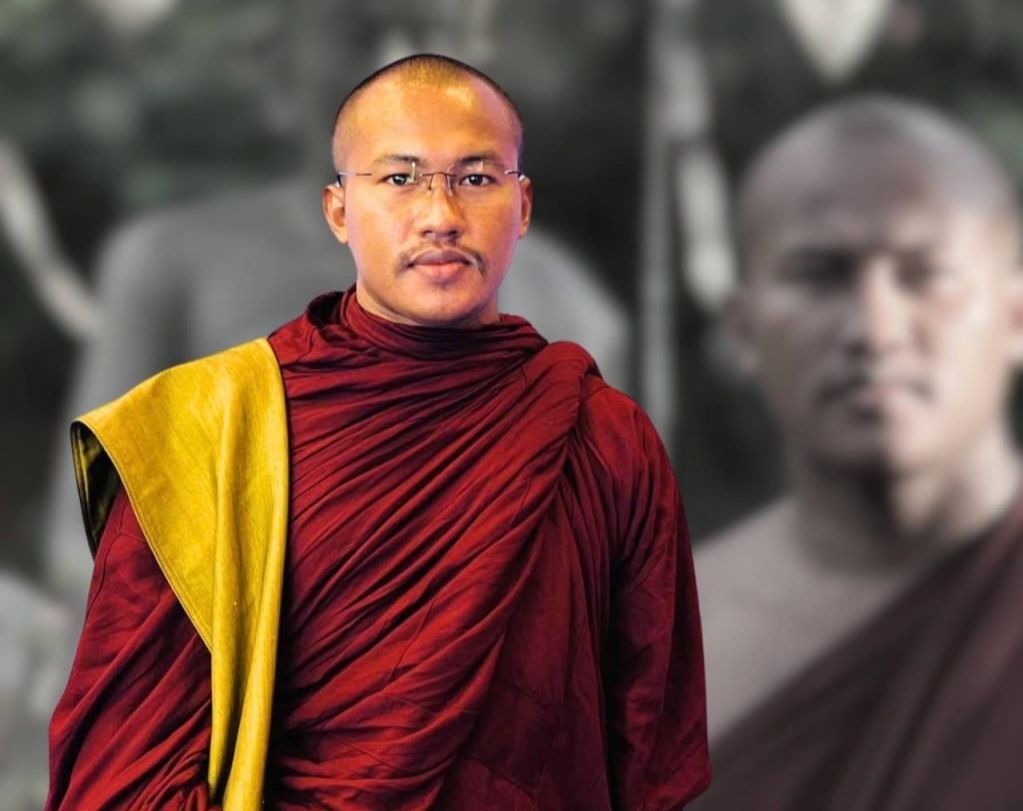
A sweeping coalition of fifty Cambodian civil society organisations, trade unions and grassroots community groups has issued an urgent joint statement calling for the immediate release of Chea Vuthy, a 27-year-old citizen journalist and former Buddhist monk convicted on August 19 of incitement under the Criminal Code. The Phnom Penh Municipal Court sentenced Vuthy to eighteen months in prison and imposed a fine of two million riel, approximately five hundred US dollars, based on comments he made in a private Messenger group chat with roughly twenty people. The case has intensified concerns among rights advocates and media freedom groups about the scope of criminal liability for private online communications in Cambodia and the application of incitement laws that many argue violate international standards.
Vuthy's conviction stems from a private message posted to a Messenger group in August 2025 regarding provincial boundaries in the context of the ongoing Cambodia-Thailand border dispute. According to the joint statement released on August 20 by the Cambodian League for the Promotion and Defense of Human Rights (LICADHO), the disputed comment specifically addressed the plight of people displaced by fighting in the border region. The prosecution presented the Messenger message as its sole evidentiary basis for the criminal charge, a fact that has galvanised the coalition of fifty groups to question both the legal foundation and proportionality of the conviction. Vuthy acknowledged writing the private message but consistently denied making any public statement, a distinction that appears central to the organisations' objections.
The coordinated advocacy effort represents one of the most significant civil society responses to a single case in recent months and underscores the escalating tension between Cambodia's government and the human rights and media freedom community. The breadth of signatories—encompassing LICADHO, the Cambodian Center for Human Rights, the Cambodian Journalists Alliance Association, labour rights organisations and community networks—reflects the widespread alarm across Cambodia's civil society sector. The grouping of such diverse organisations behind a single demand for Vuthy's release signals a consensus view that his prosecution transgresses fundamental protections for freedom of expression and represents a dangerous precedent for regulating private speech.
In their statement, the fifty groups advanced a forceful legal argument grounded in international human rights instruments to which Cambodia is bound. They contended that the conviction violates Article 19 of the International Covenant on Civil and Political Rights, ratified by Cambodia, which permits restrictions on expression only when such restrictions are prescribed by law, pursue a legitimate governmental aim and are demonstrably necessary and proportionate to that aim. The organisations maintained that private remarks within a small Messenger group cannot reasonably satisfy the threshold of necessity or proportionality, particularly when the government has not established that the comments posed any credible risk to national security, public order or the rights of others. This framing positions Vuthy's case within Cambodia's binding commitments under international law and the country's own constitutional protections for freedom of expression.
Vuthy's background as both a Buddhist monk and an active citizen journalist covering environmental destruction, deforestation and human rights abuses adds a notable dimension to the case. At the time authorities moved against him in April, when plainclothes provincial police arrested him at Wat Por Veal pagoda in Battambang province, Vuthy had become a recognised voice documenting ecological and social issues affecting rural Cambodia. Upon his arrest, he was forcibly defrocked and subsequently held in pretrial detention. He currently remains imprisoned at Phnom Penh's Police Judicial Prison. The forced removal of his monastic robes—a practice that has drawn international scrutiny in past cases—has been viewed by rights groups as a deliberate humiliation designed to sever his connection to the religious community and undermine his standing as a trusted voice on social issues.
The rejection of Vuthy's bail request by the Phnom Penh Appeal Court in June left him with limited recourse during the pretrial phase, concentrating the focus of his defence on the August 19 trial. His lawyer, Em Chantha, has signalled an intention to appeal the conviction, arguing that the evidence presented fell short of the legal standard required to establish incitement. Em Chantha has specifically challenged whether private comments within a small group can satisfy the legal definition of incitement under Cambodian law, a question that strikes at the heart of how broadly the government intends to apply its criminal statutes. The appeal will likely determine whether Cambodian courts recognise meaningful distinctions between private and public expression, a principle that has faced erosion in several recent prosecutions.
Vuthy's case is far from isolated within Cambodia's justice system. LICADHO has documented a pattern of prosecutions related to speech concerning the Cambodia-Thailand border dispute, a situation that suggests systematic use of incitement charges to suppress commentary on sensitive geopolitical matters. In May, a chef received an eighteen-month sentence for border-related social media posts, while a deputy school director was sentenced to two years in June for similar comments. The repetition of these prosecutions and the consistency of sentencing suggest either a coordinated policy or an established practice within the judiciary of applying maximum penalties to speech offences related to border questions. This clustering of cases raises the prospect that Cambodia's authorities are using criminal law to establish de facto boundaries on public discourse about territorial disputes, effectively criminalising viewpoint expression that deviates from official positions.
The government's response to the civil society statement has done little to address the underlying concerns. Tep Asnarith, the Ministry of Information's spokesperson, asserted that the ministry, as part of the executive branch, maintains a stance of non-interference in judicial proceedings and that Cambodia's courts exercise independent authority. He acknowledged that Vuthy possesses the legal right to appeal and to retain legal representation, while simultaneously urging civil society groups to evaluate such cases with what he termed balance and accuracy. The spokesperson's framing of the issue—implying that the fifty organisations lack balance—represents a common deflection technique that avoids substantive engagement with the human rights arguments underlying the advocacy campaign. By emphasising judicial independence while the executive clearly influences sentencing through the prosecution authority, the government's position obscures the structural dynamics that shape outcomes in sensitive political cases.
The implications of Vuthy's conviction and the broader pattern of border-related speech prosecutions extend beyond Cambodia to affect the broader Southeast Asian environment for freedom of expression. Countries in the region facing territorial disputes or internal political sensitivities have watched with interest how Cambodia's courts treat speech that touches on such matters. If private communications can be criminalised and result in substantial prison sentences, the de facto scope of permitted expression contracts dramatically, affecting not only activists and journalists but ordinary citizens who discuss contentious issues with friends and family online. For Malaysian and other regional observers, the case illustrates how incitement statutes, common across Southeast Asia, can be deployed to suppress legitimate discourse when political sensitivities are invoked. The tension between national security concerns and freedom of expression remains perpetually unresolved in the region, and cases like Vuthy's demonstrate how that tension often resolves in favour of state restriction rather than individual liberty.
The international dimension of the case became more prominent when the coalition referenced Cambodia's fourth Universal Periodic Review at the UN Human Rights Council, indicating that Vuthy's conviction potentially undermines commitments Cambodia made during that process. UPR recommendations from peer nations typically address freedom of expression concerns, and a conviction for private speech made after Cambodia's review process could be cited in future international forums as evidence of non-compliance with recommendations. This aspect may provide leverage for the fifty organisations and their international partners to press for reconsideration at diplomatic channels. The convergence of domestic legal arguments with international human rights monitoring creates a multilayered advocacy strategy that extends beyond Cambodia's borders and frames the issue as one of national accountability to global standards.
Moving forward, Vuthy's case will likely become a touchstone in regional discussions about digital freedom and the limits of state regulation of online speech. The appeal process, which Em Chantha has signalled will proceed, offers the Cambodian court system an opportunity to clarify whether private communications receive lesser protection under incitement statutes than public statements. Should the appellate court uphold the conviction, it will have effectively endorsed the principle that authorities can prosecute individuals for private remarks about sensitive topics, a stance that would represent a significant narrowing of expression rights. Conversely, if the appeal succeeds, it might provide some constraint on the government's capacity to regulate private speech. The decision will reverberate across Cambodia's civil society, media and activist communities, establishing practical boundaries on what citizens can discuss privately without legal jeopardy.

