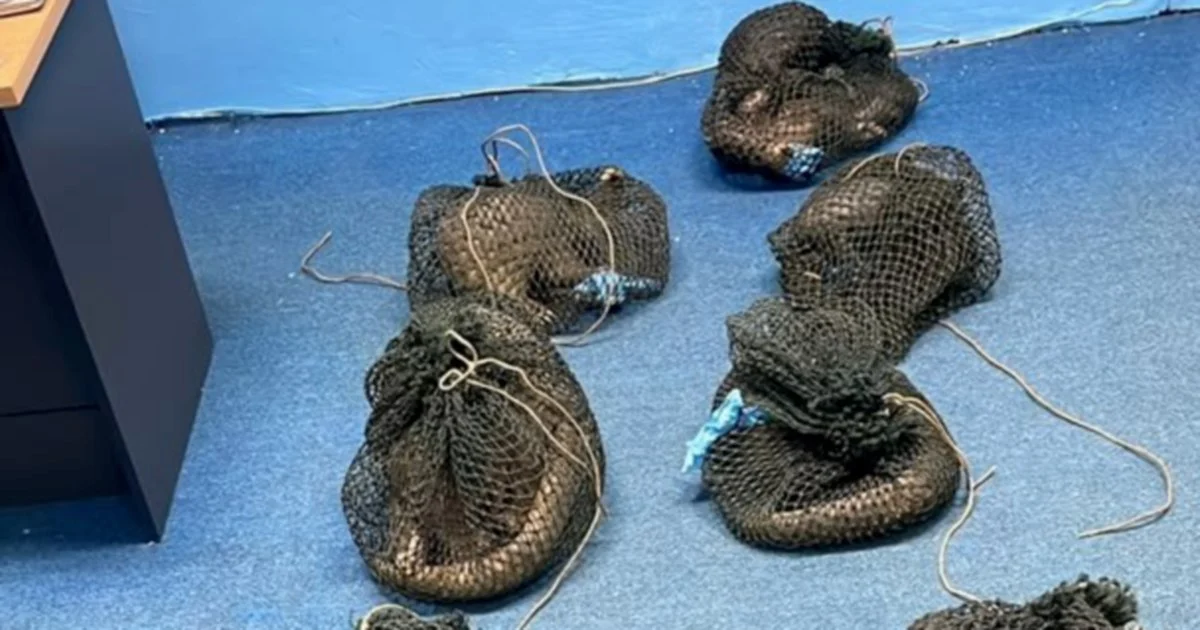
A 27-year-old Filipino national faces wildlife trafficking charges after authorities raided a plantation site in Kampung Paris 3 of Kinabatangan, Sabah, uncovering 10 live pangolins and an elephant tusk. The arrest underscores the persistent problem of illegal wildlife trade operating across Southeast Asia, with Sabah's porous borders and remote plantations repeatedly serving as holding points for trafficked animals destined for international smuggling networks.
The operation, conducted in Kinabatangan's rural plantation belt, recovered the animals in conditions suggesting they were being prepared for onward movement. Pangolins, classified as the world's most trafficked mammals, command premium prices in Asian markets where their scales are valued in traditional medicine and their meat considered a delicacy in certain cultures. The discovery of an elephant tusk alongside the pangolins indicates a more sophisticated trafficking operation handling multiple endangered species simultaneously, a pattern enforcement agencies have increasingly documented across Malaysian Borneo.
Kinabatangan district has become a focal point for wildlife trafficking enforcement due to its geography and demographics. The area's extensive plantation infrastructure, river networks facilitating covert movement, and significant migrant worker populations create conditions where illegal activities can flourish with relative anonymity. Authorities have conducted numerous similar operations in the region, though the frequency of seizures suggests enforcement capacity remains inadequate to the scale of the problem.
The involvement of a foreign national aligns with established trafficking patterns where international syndicates recruit personnel from neighbouring countries to source, hold, and transport contraband fauna. Investigators will examine whether the detained individual operated independently or functioned as part of a larger organised network. The nationality dimension also raises questions about cross-border coordination between Malaysian enforcement agencies and Philippine authorities, whose cooperation remains critical to disrupting trafficking routes utilising both nations' territories.
Pangolin trafficking represents a particularly acute conservation crisis. All eight pangolin species face severe population pressures, with poaching rates driven by demand for scales and meat far exceeding natural reproduction. Asian pangolins, predominantly trafficked from Southeast Asian forests, have experienced precipitous declines over two decades. The ten animals recovered in Kinabatangan might represent a small fraction of poaching volume, yet each recovery prevents further demand reinforcement and removes animals from trafficking supply chains.
Elephant ivory trafficking, though less publicised than pangolin poaching in recent years, persists as a significant concern particularly across Borneo. The Bornean elephant population already hovers at critically low numbers with fragmentation and habitat loss compounding poaching pressure. A single elephant tusk represents loss from an already vulnerable population, making such seizures operationally significant despite individual animals involved seeming numerically modest.
The plantation setting itself warrants scrutiny. Sabah's vast oil palm and timber plantation landscape provides ideal cover for trafficking operations, offering legitimate economic activity as camouflage whilst enabling concealment of illicit cargo. The dispersed nature of plantation infrastructure, limited regular monitoring, and transient workforce demographics create enforcement blind spots that criminal syndicates systematically exploit. Authorities have previously uncovered major trafficking operations embedded within seemingly legitimate agricultural facilities across the state.
Prosecution trajectories for such offences under Malaysian wildlife legislation can result in substantial penalties including imprisonment and fines, though sentences vary based on specific charges laid and circumstances of discovery. The presence of multiple species suggests potential charges under different statutes, potentially strengthening overall cases. International attention to wildlife trafficking has influenced some jurisdictions toward stricter sentencing, though implementation remains inconsistent regionally.
The seizure reflects capacity improvements among Sabah Wildlife Department and related enforcement bodies, yet remains symptomatic of an enforcement environment perpetually struggling against traffickers' resources and operational sophistication. Trafficking organisations command funding exceeding many government enforcement budgets, enabling deployment of surveillance technology, communication systems, and corruption networks that systematically undermine detection. For every successful recovery like Kinabatangan's, enforcement officials acknowledge multiple operations likely proceed undetected.
Regional approaches to wildlife trafficking remain fragmented despite the transnational nature of the crime. While Malaysia participates in Convention on International Trade in Endangered Species frameworks and bilateral agreements exist with neighbouring states, enforcement coordination remains episodic rather than systematic. Trafficking patterns increasingly suggest international criminal networks operate with greater organisational coherence than governmental response mechanisms, particularly regarding information sharing and joint operation planning across borders.
For Malaysian policymakers and enforcement agencies, the Kinabatangan arrest represents both success and indictment. Success in that trained personnel identified and apprehended trafficking activity, recovering endangered animals before transport to final markets. Indictment that such operations continue emerging despite years of enforcement focus, suggesting fundamental approaches require expansion beyond tactical arrests toward addressing demand reduction, plantation sector accountability, and stronger international cooperation frameworks that can match trafficking networks' transnational reach and operational flexibility.
%22%2F%3E%3C%2Fpattern%3E%3C%2Fdefs%3E%3Crect%20width%3D%22100%25%22%20height%3D%22100%25%22%20fill%3D%22url(%23ph4da0ug)%22%2F%3E%3Crect%20width%3D%22100%25%22%20height%3D%22100%25%22%20fill%3D%22url(%23ph4da0up)%22%2F%3E%3Ctext%20x%3D%2250%25%22%20y%3D%2250%25%22%20text-anchor%3D%22middle%22%20dominant-baseline%3D%22central%22%20fill%3D%22rgba(255%2C255%2C255%2C0.95)%22%20font-family%3D%22Georgia%2C%20'Times%20New%20Roman'%2C%20serif%22%20font-weight%3D%22700%22%20font-size%3D%22320%22%20letter-spacing%3D%22-0.02em%22%3ERare%3C%2Ftext%3E%3C%2Fsvg%3E)
%22%2F%3E%3C%2Fpattern%3E%3C%2Fdefs%3E%3Crect%20width%3D%22100%25%22%20height%3D%22100%25%22%20fill%3D%22url(%23phm749g)%22%2F%3E%3Crect%20width%3D%22100%25%22%20height%3D%22100%25%22%20fill%3D%22url(%23phm749p)%22%2F%3E%3Ctext%20x%3D%2250%25%22%20y%3D%2250%25%22%20text-anchor%3D%22middle%22%20dominant-baseline%3D%22central%22%20fill%3D%22rgba(255%2C255%2C255%2C0.95)%22%20font-family%3D%22Georgia%2C%20'Times%20New%20Roman'%2C%20serif%22%20font-weight%3D%22700%22%20font-size%3D%22320%22%20letter-spacing%3D%22-0.02em%22%3EPM%3C%2Ftext%3E%3C%2Fsvg%3E)
%22%2F%3E%3C%2Fpattern%3E%3C%2Fdefs%3E%3Crect%20width%3D%22100%25%22%20height%3D%22100%25%22%20fill%3D%22url(%23phgab1g)%22%2F%3E%3Crect%20width%3D%22100%25%22%20height%3D%22100%25%22%20fill%3D%22url(%23phgab1p)%22%2F%3E%3Ctext%20x%3D%2250%25%22%20y%3D%2250%25%22%20text-anchor%3D%22middle%22%20dominant-baseline%3D%22central%22%20fill%3D%22rgba(255%2C255%2C255%2C0.95)%22%20font-family%3D%22Georgia%2C%20'Times%20New%20Roman'%2C%20serif%22%20font-weight%3D%22700%22%20font-size%3D%22170%22%20letter-spacing%3D%22-0.02em%22%3EMalaysia%3C%2Ftext%3E%3C%2Fsvg%3E)