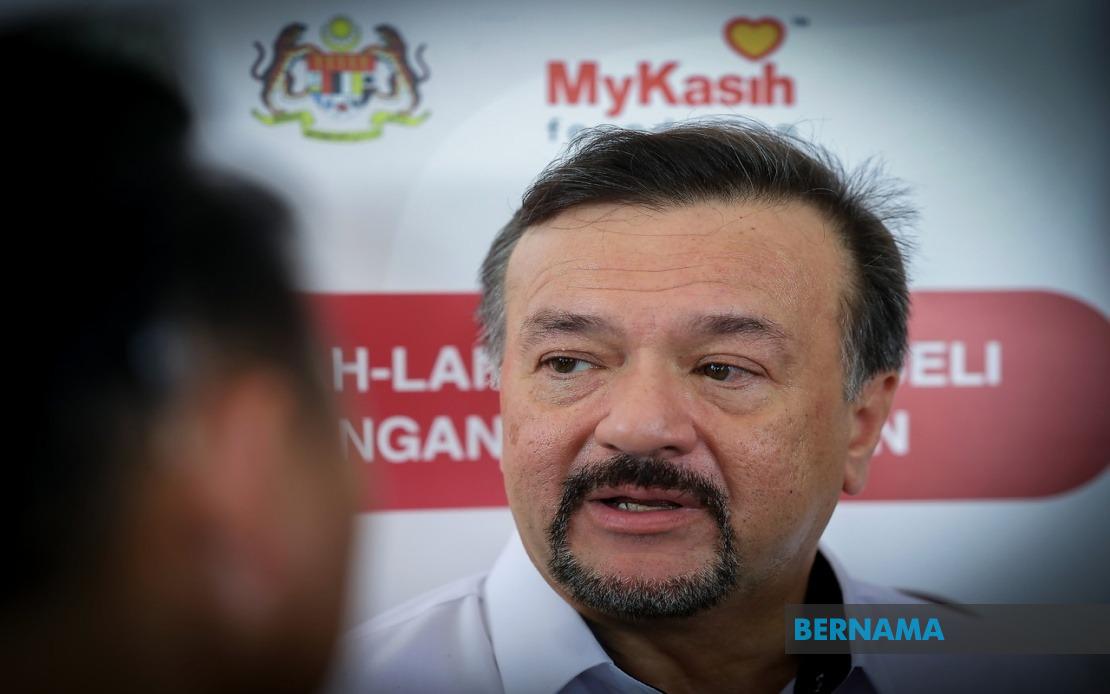
The Malaysian government has signalled a flexible stance toward the BUDI MADANI Diesel programme, with the Ministry of Finance indicating it will evaluate refinements based on concrete operational evidence rather than preliminary assumptions. Finance Minister II Datuk Seri Amir Hamzah Azizan made the remarks at a media briefing in Kuching on June 24, stressing that any modifications—including potential quota increases—would follow a data-driven methodology. The announcement comes as the government continues rolling out its targeted subsidy reforms, a cornerstone of its broader fiscal consolidation strategy.
The minister's commitment to evidence-based policymaking reflects lessons learned from earlier subsidy restructuring efforts. When the government initially implemented the RON95 fuel subsidy scheme, stakeholders raised concerns about insufficient purchase quotas. However, Amir Hamzah highlighted that actual consumption patterns over the first five months of 2024 tell a different story: only 0.76 per cent of beneficiaries exceeded the 200-litre threshold. This data suggests that initial quota allocations were calibrated more conservatively than strictly necessary, yet sufficient for the vast majority of users. The finding underscores the importance of allowing new programmes time to stabilize before making reactive adjustments.
The government's philosophy regarding subsidy management has evolved considerably over recent years, informed by experience with sector-specific schemes. The e-hailing industry provides a instructive precedent. When ride-hailing companies first participated in the targeted subsidy programme, drivers complained that the allocated fuel quotas were inadequate for their operational needs. Rather than dismiss these concerns, the ministry commissioned independent reviews of consumption data supplied by e-hailing operators themselves. The analysis revealed genuine variation in fuel consumption patterns depending on driver activity levels and operating routes.
This detailed assessment led to a more sophisticated quota structure for the e-hailing sector, establishing two tier levels at 600 and 800 litres respectively. Drivers whose documented usage profiles exceeded standard expectations could qualify for the higher threshold, creating a system that balanced fiscal accountability with operational realities. The approach demonstrates that targeted subsidies need not be uniformly rigid; they can accommodate legitimate variations in consumption while maintaining overall programme discipline and cost control. Such flexibility, when grounded in transparent data analysis, actually strengthens subsidy credibility and public support.
The BUDI Diesel programme represents an extension of this refined thinking to the broader transportation and commercial sectors. Unlike blanket fuel subsidies of the past, which applied uniformly to all consumers regardless of actual need, the new framework restricts diesel benefits to specific eligible groups—typically commercial operators, farmers, and public transport providers whose economic activity depends directly on fuel costs. This targeted approach aims to reduce deadweight loss and fiscal leakage while concentrating government support where it generates measurable economic benefit. However, determining the optimal quota for diverse user profiles remains genuinely challenging.
For Malaysian readers and policymakers, the finance ministry's openness to programme refinement carries important implications. It suggests that reform of fuel subsidies—historically a politically sensitive area—can proceed without treating initial parameters as immutable. This flexibility may help sustain political consensus around the broader subsidy restructuring agenda. Businesses and transport operators contemplating their participation in the BUDI Diesel scheme can take some reassurance that if actual operational requirements diverge significantly from allocated quotas, the ministry stands willing to investigate and adjust based on verifiable consumption records.
The emphasis on usage data also highlights an infrastructure advantage that Malaysia possesses. Most BUDI Diesel participants operate within formal economy channels—registered businesses, cooperatives, and licensed operators—whose fuel purchases can be tracked electronically and audited. This administrative clarity facilitates evidence-based policy adjustment in ways that simpler, cash-based subsidy systems cannot achieve. The same digital infrastructure that enables targeting also enables responsive refinement.
Yet the minister's cautious stance—favouring a "wait and see" approach before expanding quotas—reflects appropriate fiscal restraint. With Malaysia's debt levels and narrow fiscal space, every subsidy rupiah carries opportunity cost. Premature quota expansion based on anecdotal complaints rather than systematic data risks inflating programme costs without commensurate economic benefit. By setting clear evidentiary thresholds for adjustment, the government protects itself against scope creep while preserving its credibility with both the International Monetary Fund and domestic taxpayers monitoring fiscal discipline.
The Works Minister Datuk Seri Alexander Nanta Linggi's presence at the briefing signals cross-ministerial coordination on subsidy implementation, important given that fuel costs directly affect road maintenance, public transport, and logistics sectors under his purview. This inter-ministry engagement suggests the government recognises subsidy policy as inherently complex, requiring input from multiple stakeholder perspectives rather than Finance Ministry pronouncements alone. Such collaborative framing may also ease tensions between fiscal discipline and sectoral demands.
Moving forward, the real test of the government's commitment to responsive refinement lies in establishing transparent, accessible mechanisms through which affected groups can submit usage data and request quota adjustments. Without clear bureaucratic pathways, even a minister's stated openness may remain unrealised. The success of the e-hailing subsidy adjustment shows what is possible when government agencies actively solicit and analyse sector-specific consumption information. Replicating that transparency and responsiveness across all BUDI Diesel participant categories would strengthen programme legitimacy and cost-effectiveness while advancing Malaysia's broader transition toward more intelligent, evidence-based fiscal policy.