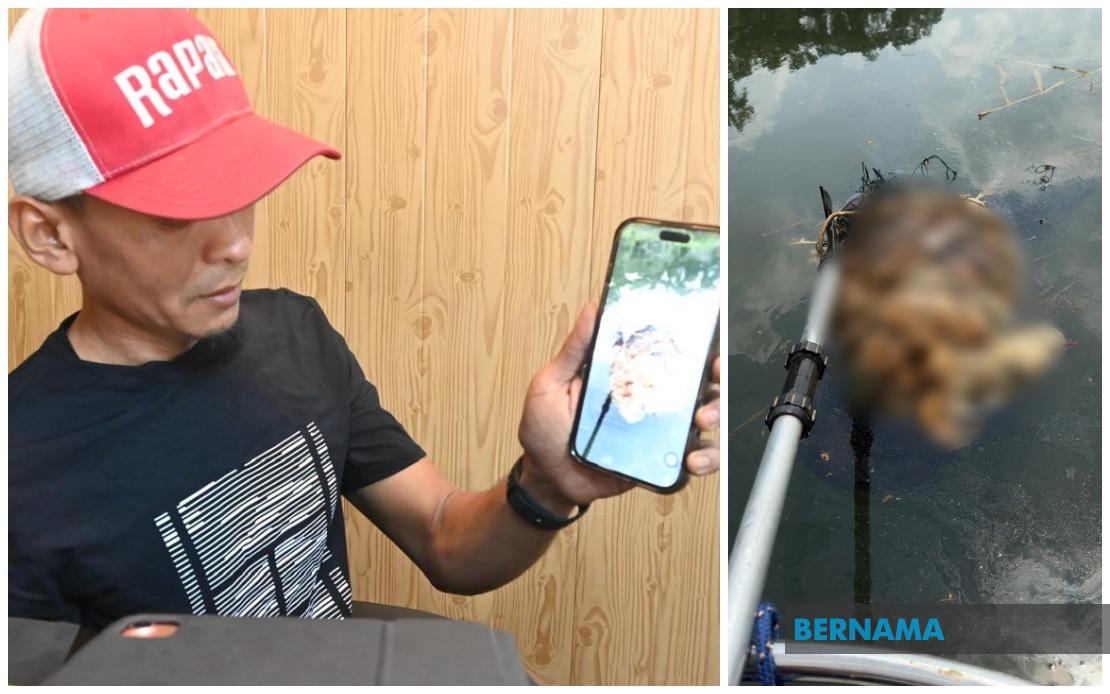
A macabre discovery in a Johor river has yielded crucial leads in what police are treating as a serious criminal investigation. On August 4, a fisherman named Muhamad Zul Fikri Borhanodin, 33, found a human body wrapped and secured with netting while attempting to capture footage for social media content along Sungai Tanjung Sembrong in Parit Raja, Batu Pahat. The find has triggered a swift police response and multiple arrests as authorities work to determine the circumstances surrounding the death.
The discovery process itself reveals the often-mundane nature of tragedy. Muhamad Zul Fikri initially mistook the floating object spotted around 11 am for a decomposed animal, noting that such findings are not unusual in this particular stretch of waterway. It was the combination of an overpowering stench and the deliberate wrapping in netting that prompted him to investigate more closely. Upon observing a pair of jeans amid the netting, his suspicions crystallized into certainty, and he immediately alerted a fellow fisherman operating nearby on a separate vessel.
The victim's identity has been connected to an earlier missing person report. Police confirmed that the wife of the deceased had filed a report on July 29 documenting her husband's disappearance from Mutiara Rini in Iskandar Puteri. This timeline suggests the body may have been disposed of in the river sometime between the initial disappearance and its recovery by Muhamad Zul Fikri. The corroboration between the missing person case and the recovered body accelerates the investigative process considerably.
Muhamad Zul Fikri brought considerable perspective to the discovery, having spent more than two decades fishing in these waters. His intimate familiarity with the river and its regular patterns made the suspicious object stand out sufficiently to warrant further examination. Notably, this is not his first encounter with a body at this location. Several years prior, another individual had fallen into the river, a discovery that likely informed his decision-making process when confronted with the wrapped package in the water.
The police response was swift and coordinated. Authorities received notification of the discovery at approximately 12.30 pm on August 4, enabling them to mobilize investigative resources immediately. By that same day, officers had identified and apprehended three men aged between 26 and 40 in the Batu Pahat vicinity. Their detention is described as assisting with investigations, a phrase that typically indicates they are persons of interest rather than confirmed suspects at this early stage.
This case underscores the unpredictable ways in which serious crimes can be uncovered. Social media content creation, often viewed as frivolous by many, inadvertently became the mechanism through which a significant discovery occurred. Had Muhamad Zul Fikri not been pursuing his hobby of fishing with recording equipment, the body might have remained hidden for considerably longer, potentially compromising the investigation and complicating identification efforts.
For residents of Iskandar Puteri and the wider Batu Pahat region, the incident raises questions about personal safety and the vulnerabilities of missing persons. The Mutiara Rini district, where the victim had last been seen, is a relatively developed area within the greater Iskandar Puteri conurbation. That a disappearance could occur in this context and result in a body being disposed of in a river forty kilometres away speaks to the serious nature of the crime being investigated.
The recovery location itself carries investigative implications. The choice to dispose of a body at Sungai Tanjung Sembrong suggests either familiarity with the area or deliberate effort to move the remains to a location far from the crime scene. The application of netting and wrapping indicates premeditation in concealment, distinguishing this from a spontaneous act of violence. These details will likely feature prominently in the investigative narrative.
Police investigations of this nature typically involve extensive forensic examination, including pathological assessment to determine cause of death, time of death estimation, and collection of physical evidence from the body and surrounding area. The three arrested individuals will face intensive questioning regarding their knowledge of the circumstances, potential motives, and any involvement in events leading to the death.
For the Malaysian public and especially those in Johor, this case serves as a reminder of the occasional darker realities underlying community life. While violent crime remains statistically uncommon, the mechanisms by which bodies are discovered and investigations are pursued continue to evolve with changing technologies and social practices. The role of citizen observation and reporting remains fundamental to law enforcement effectiveness.

