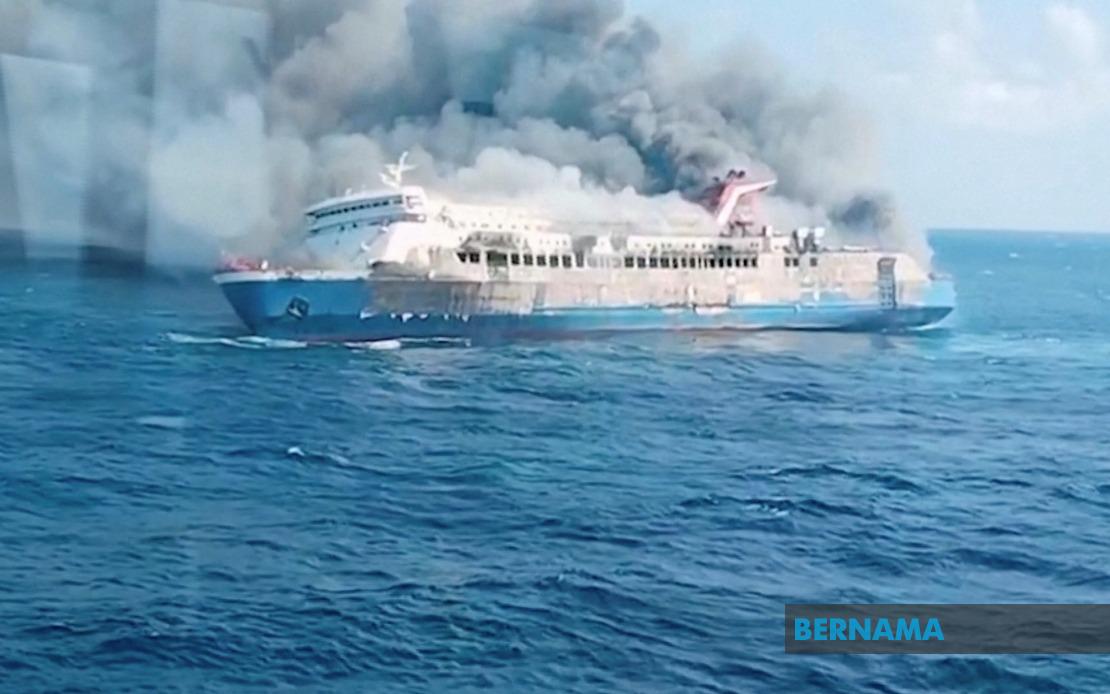
A major maritime disaster unfolded off the coast of Madura in Indonesia's Madura Strait early on August 2 when the KMP Mutiara Santosa 2 erupted in flames while en route from Surabaya to Makassar. The incident has claimed at least five lives with dozens still unaccounted for, prompting a large-scale search and rescue operation that continues to intensify across the waters off northern Sumenep.
The ferry was transporting a total of 271 people — 232 passengers and 39 crew members — when the fire broke out without warning. According to Nanang Sigit, chief of the Surabaya Search and Rescue Office, his team received the distress signal at 8:24 am local time and immediately mobilized rescue assets to the scene. By 4 pm that same day, personnel had managed to extract 225 individuals from the vessel, bringing them to safety aboard rescue boats and nearby commercial vessels that responded to the emergency.
Witnesses and survivors paint a harrowing picture of the evacuation. With most of the ferry's structure consumed by the intense flames, panicked passengers congregated on the bridge and forward sections of the ship, the only areas not yet engulfed by the fire. Nanang's statement reveals that some travelers, faced with encroaching flames and uncertain rescue timelines, made the desperate decision to leap into the sea. Fortunately, vessels operating in the vicinity detected the emergency and managed to pluck several of these individuals from the water, though the exact number rescued this way remains unclear.
The scale of the coordinated response underscores the gravity of the situation. Multiple government agencies and maritime authorities have deployed substantial personnel and equipment to the disaster zone. Helicopters, patrol boats, and commercial vessels continue to comb the waters searching for survivors or remains. The operation involves not just the Surabaya Search and Rescue Office but likely units from the Indonesian Navy, Coast Guard, and regional maritime authorities — a multi-agency effort typical of major maritime emergencies in the region.
For Malaysia and other Southeast Asian nations, this tragedy serves as a sobering reminder of the maritime risks that characterize regional travel. The Sunda Strait, Malacca Strait, and other major shipping corridors handle enormous volumes of passenger and cargo traffic daily. Ferry services connecting Indonesian islands depend on vessels that, like the KMP Mutiara Santosa 2, operate continuously across challenging waters. Fire at sea remains one of the most catastrophic scenarios in maritime operations, often overwhelming crew response capabilities within minutes.
The investigation into the fire's origin is only beginning, with authorities acknowledging that the cause remains undetermined. Initial speculation might point to mechanical failure, electrical malfunction, fuel-system problems, or operational oversight, but determining the precise trigger will require detailed forensic examination of wreckage once recovery operations conclude. Such investigations typically reveal systemic issues — whether maintenance deficiencies, design flaws, crew training gaps, or regulatory enforcement lapses — that carry implications across the regional shipping industry.
The incident also highlights ongoing conversations about maritime safety standards across Southeast Asia. While Indonesia maintains regulations governing passenger vessel operations, enforcement and compliance levels vary significantly. Regular maintenance schedules, safety equipment certification, crew training protocols, and evacuation procedures all factor into passenger protection. The fact that 225 of 271 people were rescued suggests crew response was reasonably effective, yet 41 missing persons indicates breakdowns occurred in the evacuation process or that some individuals were trapped by rapidly advancing flames.
For Malaysian maritime authorities and shipping operators, incidents like this provide crucial data points for risk assessment and policy refinement. The Strait of Malacca and surrounding waters host Malaysian vessels and carry Malaysian passengers regularly. While the KMP Mutiara Santosa 2 operated under Indonesian registry, the broader regional maritime ecosystem means disasters in Indonesian waters carry direct relevance to Malaysian shipping safety protocols and passenger protection frameworks.
The human toll continues to mount as rescue teams expand their search parameters. Family members of the 41 missing persons face agonizing uncertainty as divers and underwater search equipment attempt to locate bodies in the waters off Sumenep. Recovery operations often extend for days or weeks, depending on water depth, visibility, and the dispersal of wreckage across the seafloor. The confirmed death toll of five represents only the initial accounting; final casualty figures typically emerge weeks after major maritime incidents as remains are systematically recovered and identified.
This disaster intersects with broader patterns of maritime risk in Southeast Asia. While the region's ferry services are essential for inter-island connectivity and economic integration, aging vessel fleets, maintenance challenges, and sometimes inconsistent safety oversight create vulnerability. The KMP Mutiara Santosa 2 likely operated on a well-established commercial route with regular passenger schedules, meaning this represents not an isolated anomaly but an event that underscores systemic maritime safety challenges affecting the region. Regional cooperation on maritime safety standards, information-sharing regarding vessel safety records, and harmonized training requirements could help prevent future tragedies across the heavily trafficked waters of Southeast Asia.

