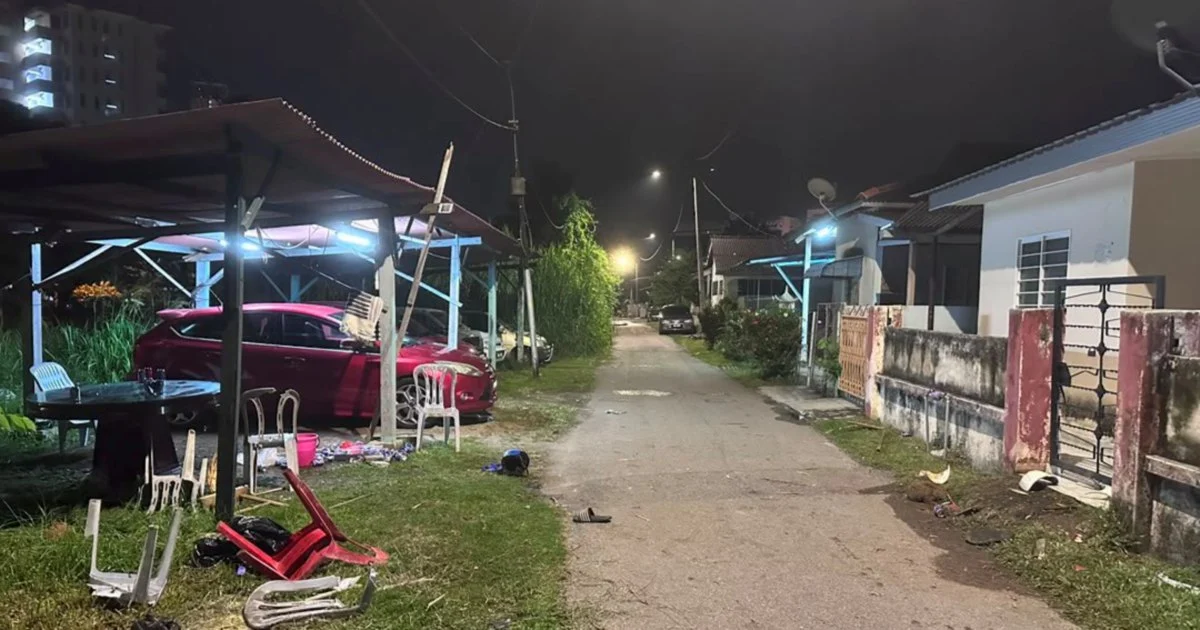
An early morning incident in Melaka has left one victim in critical condition with a fractured skull after he and a companion were set upon by a group of assailants near a temple. The attack, which unfolded in Jalan Pengkalan, Kampung Pengkalan Rama Pantai, emerged as the pair attempted to recover a motorcycle from the location, triggering a violent confrontation that has since drawn police intervention and arrests.
In response to the incident, law enforcement officials moved swiftly to apprehend five individuals believed to be connected to the assault. The arrests represent the authorities' immediate effort to bring those responsible to account and to prevent any further escalation of the situation. Details surrounding the circumstances that precipitated the attack remain under investigation, though officers are examining whether a dispute over the motorcycle or other underlying tensions played a role in the violence.
The victim who sustained the fractured skull represents a particular concern for medical teams, as head trauma of this nature carries substantial risks for long-term complications. He was conveyed to hospital in critical condition, where staff have been monitoring his neurological status closely. His companion sustained injuries of lesser severity, though both individuals required medical attention following the assault.
The timing of the incident—occurring in the early morning hours—raises questions about what drew the two men to retrieve the motorcycle at that particular time and whether security arrangements in the area warrant review. Kampung Pengkalan Rama Pantai, like many residential areas in Melaka, may benefit from enhanced lighting and patrol presence to deter such incidents. The fact that the assault unfolded near a place of worship adds another layer to the concern, as temples and their surroundings are typically regarded as sanctuaries where community members expect a degree of safety.
For Melaka residents, the incident underscores the persistence of violent crime in seemingly ordinary neighbourhoods and unremarkable hours. While the state has made progress in addressing gang-related violence and street crime through various initiatives, incidents such as this demonstrate that targeted enforcement and prevention efforts must remain a priority. The timing of the attack and the coordinated nature of the assault—involving five individuals—suggests a degree of organisation that warrants closer examination by investigators.
The involvement of five attackers in the assault raises the possibility that the incident was not a spontaneous confrontation but rather a deliberate and pre-planned action. Authorities investigating the case will likely focus on establishing connections between the arrested individuals and determining whether they acted under instruction or merely took advantage of an opportunity to commit violence. Understanding the motive behind the attack will prove crucial in assessing whether the victims were specifically targeted or whether they were simply in the wrong place at an unfortunate moment.
From a broader perspective, this incident contributes to an ongoing conversation about public safety in Malaysia's urban and semi-urban environments. While violent crime involving multiple perpetrators remains statistically less common than other forms of crime, clusters of such incidents in particular areas can significantly impact community confidence and perceptions of safety. Residents in affected neighbourhoods often express heightened anxiety and may alter their daily routines, particularly regarding nighttime activities and travel patterns.
The response by law enforcement—securing five arrests in what appears to be a relatively prompt manner—reflects the resources and intelligence-gathering capabilities that authorities can deploy when incidents are reported quickly and eyewitness information is available. However, the speed of arrests does not necessarily indicate the ease with which charges will stick or that all perpetrators have been identified, as investigations into group assaults frequently involve complex questions about individual culpability and the roles played by each participant.
For Southeast Asian readers more broadly, the incident serves as a reminder that violence targeting individuals in public spaces remains a challenge across the region's developing and middle-income economies. Patterns of assault, gang activity, and retaliatory violence persist despite improvement in many areas of personal security and law enforcement capability. Malaysia, which generally enjoys a relatively stable security environment compared to some regional neighbours, nonetheless continues to grapple with pockets of serious street crime that affect vulnerable populations and communities.
The recovery and rehabilitation process for the victim with the fractured skull may be lengthy and challenging. Beyond immediate medical concerns, such injuries can result in cognitive impairment, personality changes, and long-term disability that impact not only the individual but also their family and community support networks. The incident thus carries implications that extend well beyond the immediate moment of violence, touching on questions of victim support, rehabilitation services, and the broader social costs of violent crime.

