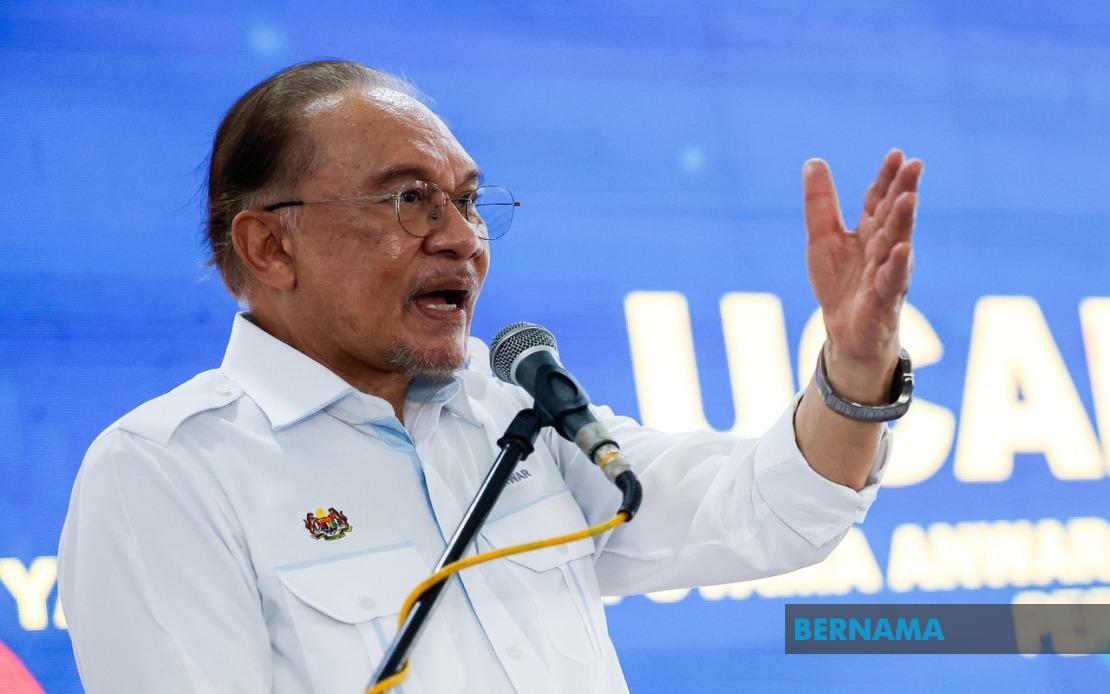
Prime Minister Datuk Seri Anwar Ibrahim has urged the Pakatan Harapan (PH) campaign apparatus to dedicate the final stretch before tomorrow's Negeri Sembilan state election to intensive grassroots work rather than becoming preoccupied with the proliferation of conflicting opinion polls predicting the outcome. Speaking after attending a youth engagement programme in Port Dickson on July 31, Anwar emphasised that PH's energy should remain focused on mobilising supporters and consolidating votes on the ground, where elections are ultimately won or lost.
The Prime Minister's directive comes against a backdrop of considerable polling activity, with six separate surveys now circulating predictions about the 36-seat contest. What makes this polling environment particularly complex is that each survey has yielded markedly different conclusions about which coalition will prevail, creating a situation where the data itself offers little clarity to campaign strategists. Anwar highlighted this inconsistency as a reason to deprioritise speculation, suggesting that the very disagreement between pollsters indicates the race remains fluid and susceptible to movement in the final campaign days.
One prominent prediction, released by the Ilham Centre, suggested that Barisan Nasional (BN) and Perikatan Nasional (PN) combined could capture as many as 22 of the 36 state assembly seats, with PH projected to secure at least nine seats. Should these numbers materialise, such an outcome would represent a substantial consolidation of the opposition blocs at PH's expense, marking a significant political shift in a state where PH currently holds considerable influence. However, Anwar's implicit message was that such predictions, however detailed or professionally conducted, remain speculative until votes are actually cast and counted.
As PH chairman in addition to his role as Prime Minister, Anwar holds responsibility for the coalition's electoral performance and messaging strategy. His intervention reflects a common challenge facing political leaders in the modern polling era: the temptation to analyse and react to survey data can distract from the fundamental work of campaigning. By publicly dismissing the relevance of conflicting polls, Anwar was essentially signalling to PH activists and volunteers that their time is better invested in door-to-door engagement, community events, and voter persuasion rather than in debating what surveys suggest about their chances.
The Negeri Sembilan election carries particular significance within the Malaysian political landscape for several reasons. The state has been a relatively stable PH stronghold, and any substantial erosion of its position there would suggest broader weakening of the coalition's support base, particularly in central peninsula constituencies where Malay-Muslim voters form a decisive bloc. Conversely, a strong PH performance would provide valuable momentum for the coalition as it approaches the next federal general election cycle, demonstrating that the government retains voter confidence despite various policy challenges and internal coalition dynamics.
For Malaysian voters and observers, the polling discrepancies highlighted by Anwar underscore an important caveat: election surveys, regardless of their methodology, remain subject to sampling error, response bias, and the inherent difficulty of predicting human behaviour. Six different surveys yielding six different outcomes is not necessarily evidence of dishonest polling, but rather a reminder that in closely contested electoral environments, the margins of uncertainty can be substantial. This reality becomes even more pronounced in state elections, where turnout patterns and last-minute voter shifts can vary significantly from federal contests.
The significance of Anwar's comments extends beyond tactical campaign advice. By downplaying the importance of prediction data, he was implicitly rejecting a narrative of defeat before the campaign concludes. This is a psychologically important distinction in electoral politics: if opinion polls suggest one outcome is inevitable, supporters of trailing coalitions may become demoralised and reduce their campaign efforts. Conversely, by treating the race as genuinely competitive and winnable, Anwar was attempting to maintain activation and enthusiasm among PH workers and volunteers during the critical final campaign period.
The Malaysian context also matters here. Election polling in Malaysia has historically been less developed than in Western democracies, with smaller sample sizes and lower response rates sometimes producing less reliable results. Additionally, some voters remain reluctant to disclose their voting intentions to pollsters, particularly when their choice contradicts social or community expectations. These factors mean that Malaysian election surveys may have wider confidence intervals than international observers might expect, making them particularly unreliable guides to actual electoral outcomes.
Anwar's emphasis on continued campaign work rather than prediction analysis also reflects the practical reality that voting has not yet occurred. In the hours and days immediately before an election, additional voter contact efforts, volunteer mobilisation, and turnout operations can genuinely move electoral outcomes at the margins. The final push to identify supporters and ensure they vote represents some of the most consequential campaign activity, and time spent analysing polls is time not spent on these activities. This is particularly true in a 36-seat state assembly contest where control of government could come down to relatively small swings in individual constituencies.
From a regional perspective, Malaysian state elections continue to serve as important barometers of federal political health. Southeast Asian observers watch Malaysian elections carefully as indicators of how the country's unique political dynamics—with its federal system, multiethnic composition, and complex coalition management—are evolving. A strong PH performance in Negeri Sembilan would suggest the coalition maintains traction despite governing challenges, whereas a significant loss would prompt analysis about whether the federal government's support base is beginning to erode.
The Prime Minister's comments also implicitly acknowledge that polls, while interesting, do not determine electoral outcomes—voters do. This represents an important corrective to the sometimes excessive attention paid to prediction data in modern politics. PH's pathway to outperforming predictions, should one exist, runs through intensive campaign work in the final 24 hours rather than through hoping that pollsters have systematically undercounted party support. Anwar's directive was therefore not merely tactical advice but a fundamental reorientation of campaign priorities toward activities with proven impact on electoral results.

