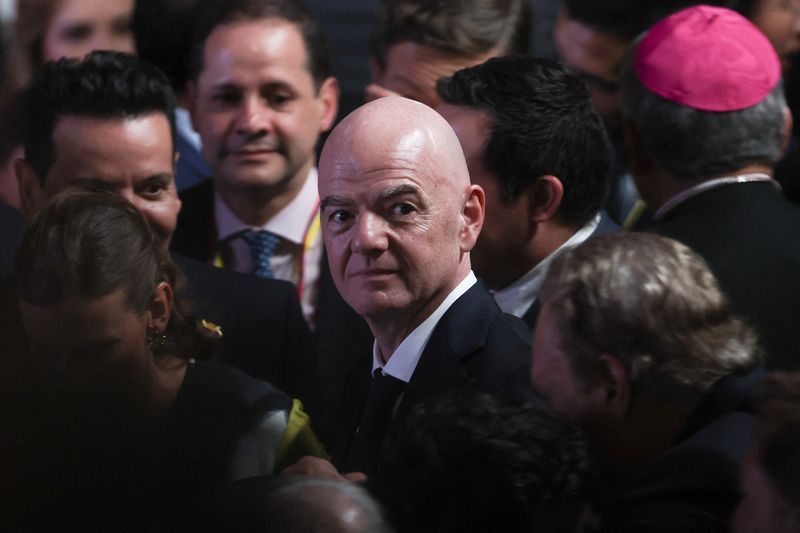
An extraordinary challenge to FIFA's leadership is taking shape as Europe, Asia and North America's leading football confederations seriously consider tabling a no-confidence motion against President Gianni Infantino. The dramatic escalation follows the collapse of his proposal to sell a stake in World Cup commercial rights to private investors—a move that triggered fierce opposition from UEFA, the AFC and CONCACAF and exposed deep governance fractures at sport's governing body.
Sources familiar with high-level discussions confirmed that the three confederations are actively exploring whether to trigger such a vote, a step unprecedented in FIFA's 122-year institutional history. According to those briefed on the matter, Infantino faces an ultimatum of sorts: either he withdraws his candidacy for the March 2027 presidential election voluntarily, or the confederations proceed with the no-confidence challenge. The president has publicly committed to seeking reelection, making the latter scenario increasingly plausible.
FIFA's constitutional framework provides the technical pathway for such action. The FIFA Council possesses the authority to convene an Extraordinary Congress at will, while one-fifth of FIFA's 211 member associations—roughly 43 nations—can force such a gathering by submitting a written petition. Notably, the organization's statutes contain no explicit procedures governing a no-confidence vote in a sitting president, leaving significant legal ambiguity around how such a motion would operate and what threshold would be required for success.
Infantino's governance missteps have accumulated rapidly. His proposal to establish a new commercial entity controlling World Cup rights and sell a minority stake to private investors collapsed amid accusations of secrecy and inadequate consultation. The FIFA Chief Operating Officer Kevin Lamour departed this week after publicly criticizing the scheme and alleging that staff had been deliberately misled. FIFA Vice President Sandor Csanyi subsequently withdrew his backing for Infantino, citing Lamour's exit as the definitive breaking point. These departures signal serious internal dysfunction at headquarters level.
Yet mounting obstacles confront those mobilizing against Infantino. The AFC, UEFA and CONCACAF worry that a failed no-confidence vote would paradoxically strengthen him by demonstrating resilient electoral support and validating his position ahead of the scheduled presidency contest. Such a tactical defeat could prove psychologically devastating and tactically catastrophic, reinforcing Infantino's narrative of holding legitimate mandates from the wider membership. This calculation explains why some confederations remain cautious despite profound frustration with his leadership style.
Infantino retains substantial institutional backing, particularly from Africa's confederation CAF. CAF President Patrice Motsepe recently reaffirmed continental support for the incumbent, arguing his future should be determined through regular electoral channels rather than extraordinary votes. Meanwhile, no credible challenger has publicly emerged before the November 18 nomination deadline, depriving opponents of an obvious alternative around which to coalesce. Without a viable candidate waiting in the wings, even a successful no-confidence motion would create vacuum and uncertainty.
The investment proposal itself deserves understanding for its scale and implications. Under the rejected scheme, member associations would have accessed up to $20 million each in capital funding for infrastructure development, coaching programmes, national team operations, grassroots development and women's football initiatives. For smaller football nations like Malawi, such resources represent transformational opportunity, explaining why some association leaders question whether opposing Infantino serves their interests without clarity on what alternative vision his critics offer.
Pressure extends beyond FIFA's official voting structure into the commercial realm. European Football Clubs, a body representing more than 800 professional clubs and chaired by Paris St Germain president Nasser Al-Khelaifi, has aligned with UEFA and regional confederations in demanding governance reforms. The organization has threatened that member clubs might boycott future Club World Cup competitions unless FIFA addresses their concerns about governance standards and institutional relationships. While clubs possess no formal FIFA voting rights, their commercial and sporting leverage—the ability to withhold participation from FIFA's flagship club tournament—represents genuine coercive power.
Ranking financial considerations complicate the political dynamics. FIFA projects revenues exceeding $15 billion across the 2023-2026 financial cycle, with the bulk generated during World Cup years. The 2026 tournament represents an enormous commercial opportunity, occurring in the United States, Canada and Mexico. Yet Infantino's governance crisis threatens to overshadow this financial windfall with persistent institutional dysfunction and credibility damage. Even if he secures electoral victory in March 2027 with a slim majority from smaller nations, running FIFA while facing opposition from football's superpowers creates operational paralysis.
Marketing experts have highlighted the reputational contradiction at FIFA's core. The organization successfully delivered World Cup tournaments generating extraordinary commercial returns, yet subsequently damaged its own governance reputation through opacity and unilateral decision-making. Corporate sponsors, while maintaining public silence, reportedly express puzzlement at FIFA's apparent self-sabotage—achieving commercial success while simultaneously undermining institutional trust. This disconnect raises questions about organizational coherence that extend beyond the immediate political crisis.
The timeline intensifies pressure significantly. The November 18 nomination deadline approaches, after which the field of presidential candidates becomes fixed. Should confederations decide to pursue no-confidence proceedings, they must coordinate across three continental bodies representing football's wealthiest and most commercially significant regions. Their collective authority carries undeniable weight, yet the legal and procedural uncertainties surrounding a no-confidence vote remain substantial, creating strategic dilemmas as they weigh confrontation against negotiation.
For Southeast Asian football administrators, this crisis carries particular significance. The AFC encompasses South and Southeast Asia, meaning the confederation's decision on whether to support a no-confidence motion directly affects Malaysian and regional interests. Malaysia's football governance should be attentive to how AFC positions itself in this unprecedented institutional conflict. The crisis ultimately reflects deeper questions about how international sports bodies balance democratic principles against executive authority, governance transparency against operational efficiency, and the interests of powerful confederations against smaller nations seeking reliable funding and support.

