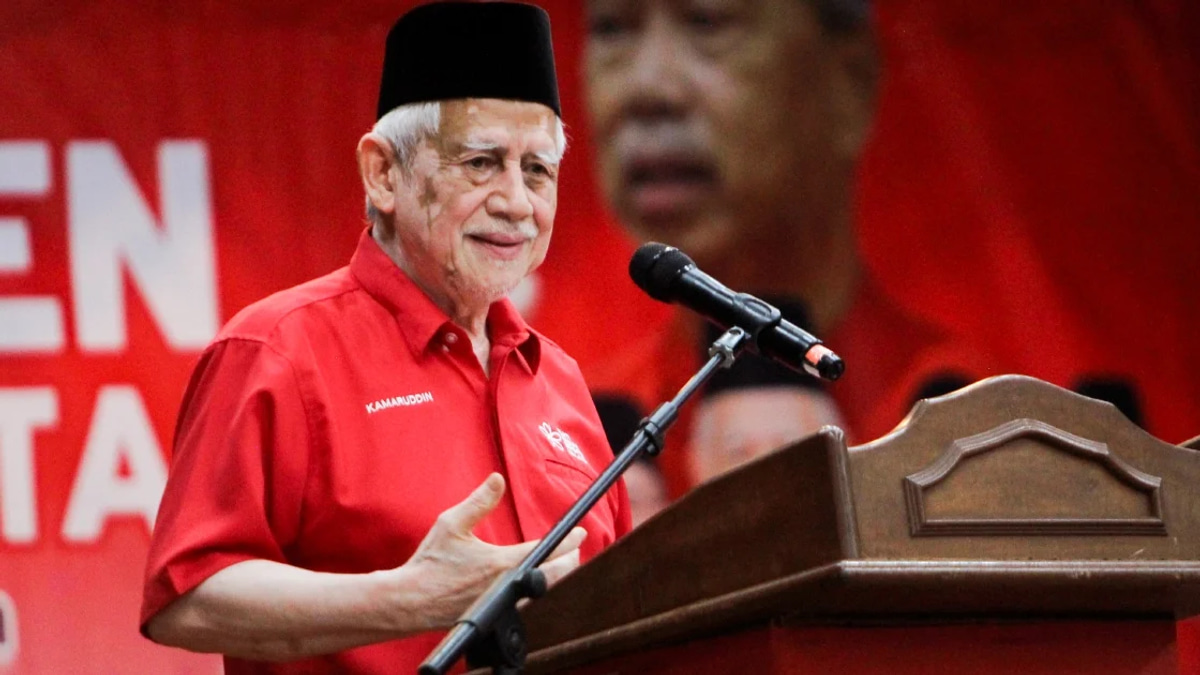
Datuk Seri Fahmi Fadzil has issued a stern advisory to Hisyamuddin Ghazali following his appointment as Communications Minister, urging the new J-Kom chief to exercise considerable caution when making public statements and to remain vigilant against those seeking to manipulate his words for divisive purposes.
The warning from the Foreign Minister reflects broader concerns within Malaysia's political establishment about the potential for misconstrued remarks to trigger unnecessary conflict and undermine governmental cohesion. Fahmi's guidance speaks to a recurring challenge faced by government officials navigating an environment where statements—intentional or otherwise—can be seized upon by political adversaries or interest groups determined to stir controversy.
Hisyamuddin's position carries particular sensitivity given the portfolio's expansive influence over national communications strategy, media relations, and public messaging. The Communications Ministry serves as a crucial interface between government and the public, making the office-holder's utterances subject to intense scrutiny. Any perceived misstep or ambiguous phrasing can rapidly transform into a broader narrative that extends far beyond the original context or intent.
Fahmi's counsel appears grounded in practical experience accumulated across Malaysia's fractious political landscape. Government ministers frequently encounter situations where remarks intended for one audience are selectively quoted, reframed, or weaponised by opposing factions seeking to embarrass the administration or generate manufactured outrage. The Foreign Minister's emphasis on guarding one's words thus represents standard operational wisdom for senior government figures.
The distinction Fahmi makes between careless rhetoric and deliberate distortion is particularly noteworthy. By highlighting those "intentionally looking to cause issues," he identifies a specific threat: actors who operate not from genuine misunderstanding but from calculated desire to weaponise ministerial statements. This dynamic has become increasingly prevalent in Malaysian politics, where social media amplifies partial quotes and sensationalised interpretations reach vast audiences almost instantaneously.
Hisyamuddin's appointment itself reflects the complexities of Malaysia's coalition government structure, where maintaining delicate political balance requires careful coordination across different parties and factions. Each ministerial pronouncement carries implications beyond its face value, potentially affecting the stability of the broader governing coalition. In this context, Fahmi's warning extends beyond mere personal prudence to encompass institutional responsibility.
The Communications Ministry under Hisyamuddin's leadership will oversee numerous policy areas and public-facing initiatives requiring precise messaging. Whether addressing digital transformation, media regulation, or government communications strategies, the Minister's statements will invariably invite interpretation from diverse stakeholders with competing interests. The potential for misrepresentation or selective quotation therefore constitutes a genuine operational hazard rather than a merely theoretical concern.
For Malaysian stakeholders and regional observers, Fahmi's intervention signals the government's awareness of current vulnerability to communication-based attacks. The Coalition continues navigating substantial political pressures from both opposition forces and internal tensions within its own alliance structure. Under these circumstances, disciplined messaging from senior figures becomes strategically essential for maintaining governmental effectiveness and public confidence.
Hisyamuddin's tenure will likely be defined partly by his ability to implement this guidance while still fulfilling the Communications Ministry's mandate to articulate government positions clearly and persuasively. Balancing the need for cautious rhetoric against the requirement for effective public communication presents a genuine challenge—one that demands both tactical awareness and principled consistency.
The broader implications extend to Malaysia's democratic discourse. When government ministers must operate under considerable self-censorship to avoid providing ammunition to adversaries, the public conversation inevitably becomes constrained. Yet the alternative—allowing careless or ambiguous statements to dominate headlines—carries obvious risks for governmental credibility and policy implementation. Fahmi's warning thus highlights a genuine tension within contemporary Malaysian politics.
Moving forward, Hisyamuddin's performance as Communications Minister will test whether such cautionary advice translates into effective governance. The real measure of success lies not merely in avoiding public missteps but in advancing substantive communications objectives while maintaining political durability. This requires not simply silence or evasion but rather disciplined clarity—the capacity to articulate government positions distinctly while providing minimal purchase for opportunistic reinterpretation.
For the broader government and coalition partners, the stakes of Hisyamuddin's ministerial tenure extend beyond routine portfolio management. Communications failures cascade across multiple policy domains and can inflict damage far exceeding the original statement's significance. Fahmi's warning, therefore, reflects institutional recognition that the Communications Ministry demands leadership capable of sophistication in both message formulation and media strategy—a demanding combination in Malaysia's increasingly polarised political environment.