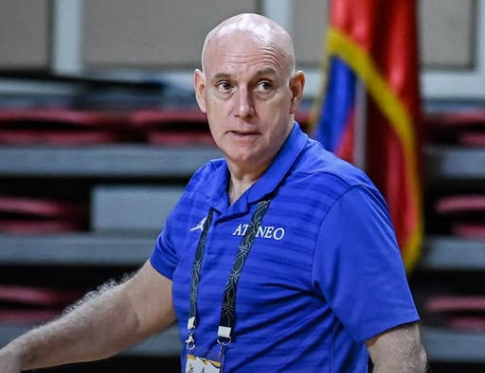
Philippine police investigators have recommended criminal charges against former Ateneo de Manila University men's basketball head coach Thomas Anthony 'Tab' Baldwin and ten members of the coaching and support staff for alleged violations of the nation's Anti-Hazing Act. The recommendations stem from a training activity that claimed the lives of two basketball players, Rene Baterbonia and Divine Adili, who drowned during a coastal exercise in Dipaculao, Aurora on June 8. The Philippine National Police – Criminal Investigation and Detection Group (PNP CIDG) formally presented its findings to prosecutors at the Department of Justice, setting the stage for potential criminal proceedings against all eleven individuals associated with the activity.
The comprehensive list of those recommended for prosecution extends across multiple tiers of the Ateneo men's basketball programme. Beyond head coach Baldwin, the charges target strength and conditioning coaches Grant Dearns and Ceasar Vicent Javellana Elumba, assistant coaches Dean Caesar B. Castaño, Sandro Nicholas Romero Soriano, and Reynaldo Jacinto, as well as student managers Paolo Manuel Maceda Adevoso and Andrew Lorenzo 'Drew' Bondoc Salud. The recommendations also include physical therapist John Eric Quiambao Rueca and utility personnel Aris Ramos Pronce and Joel 'Boy' Palmiano Rapa. According to investigators, all eleven individuals were physically present at the beach activity where the tragedy unfolded, and their collective presence and inaction form a crucial part of the prosecution's case.
Government officials emphasised that what organisers characterised as a legitimate team-building and training exercise crossed unmistakably into unlawful hazing under Philippine law. During a press briefing in Quezon City, officials highlighted that the activity incorporated elements that fall squarely within the definition of hazing under Republic Act No. 11053, including forced calisthenics and deliberate exposure to dangerous weather and environmental conditions. This interpretation marks a significant departure from traditional conceptions of hazing as merely fraternity initiation practices, expanding the legal definition to encompass rigorous physical conditioning exercises conducted in hazardous circumstances without proper safeguards.
The reconstruction of events on June 8 reveals a pattern of escalating physical demands that authorities characterise as deliberately punitive. The players were awakened before dawn at four in the morning and immediately subjected to a four-kilometre running requirement. This initial ordeal transitioned into what investigators describe as intense competitive games with physical punishment meted out to those who performed poorly. The accumulated fatigue from these morning activities would have substantially compromised the players' physical capacity and judgment as they approached the afternoon seawater training component.
The timing of the ocean exercise proves particularly significant to the investigation's argument regarding recklessness and negligence. Officials determined that the seawater training was conducted between two and two-thirty in the afternoon, precisely coinciding with the active high tide, which peaked at two twenty-seven that same afternoon. This temporal overlap was not coincidental but reflected poor planning and inadequate risk assessment by individuals responsible for athlete safety. The ocean conditions that day were characterised by rip currents, powerful waves, and variable seabed depths—a combination of hazards that would present difficulty even for swimmers in optimal physical condition, let alone exhausted athletes already fatigued from hours of strenuous activity.
Investigators also point to the competitive nature of the activity as evidence of its true character as a hazing exercise rather than routine training. Twenty players attended the Aurora activity, yet only seventeen would ultimately be included in the roster submitted to the University Athletics Association of the Philippines for official competition. The beach exercise served an explicit culling function, determining which athletes would retain their places and which would be cut from the team. This pressure transformed the activity from standard physical conditioning into a survival-of-the-fittest trial where athletes faced both the genuine threat of drowning and the psychological terror of possible team removal.
Forensic evidence recovered during the investigation contradicts claims that the athletes were attempting dangerous stunts or were impeded by weights during their final moments in the water. The bodies of Baterbonia and Adili were retrieved without weights or other impediments, establishing that their deaths resulted from environmental conditions and accumulated physical exhaustion rather than deliberate obstruction. This finding undercuts any potential defence that the deaths were isolated accidents unrelated to the overall structure and conduct of the activity.
Head coach Baldwin previously broke his silence through a nine-minute video message posted on Ateneo's official social media channels, offering what amounted to an apology for the deaths. However, such a statement, made without direct acknowledgment of specific wrongdoing or acceptance of responsibility, is unlikely to influence the criminal investigation's outcome or prevent prosecution. The police recommendation suggests that investigators found the deaths were not merely tragic accidents but foreseeable consequences of a reckless programme that disregarded basic safety protocols and athlete welfare.
The case holds profound implications for sports programmes across the Philippines and Southeast Asia. Universities and athletic organisations will face increased scrutiny regarding safety measures, exercise protocols, and risk management during training activities, particularly those involving coastal or water-based components. The broadened interpretation of hazing to encompass potentially dangerous physical conditioning exercises suggests that athletic directors and coaches can no longer rely on the defense that their programmes are purely consensual or standard within the sport. Any activity that exposes athletes to demonstrable environmental hazards while they are in a state of physical exhaustion may now constitute illegal hazing under Philippine law.
The investigation also raises uncomfortable questions about institutional accountability and hierarchy within university sports programmes. The recommendation to charge all eleven individuals present at the activity sends a message that silence and failure to intervene constitute complicity. Coaching staff members who were physically present but did not voice objections or take corrective action face equal legal jeopardy alongside those who directly planned and ordered the exercise. This approach expands the circle of responsibility and potentially establishes precedent that passive acquiescence in dangerous activities carries serious legal consequences.
As the Department of Justice evaluates the PNP CIDG's recommendations for formal charges, the case will likely become a watershed moment in Philippine sports law and safety enforcement. If prosecutors proceed and secure convictions, the legal framework for athletic activities will shift substantially toward prioritising athlete protection and environmental awareness. The families of Baterbonia and Adili await formal proceedings that may finally assign legal responsibility for deaths that occurred under circumstances characterised by cascading failures of judgment, planning, and basic duty of care.

