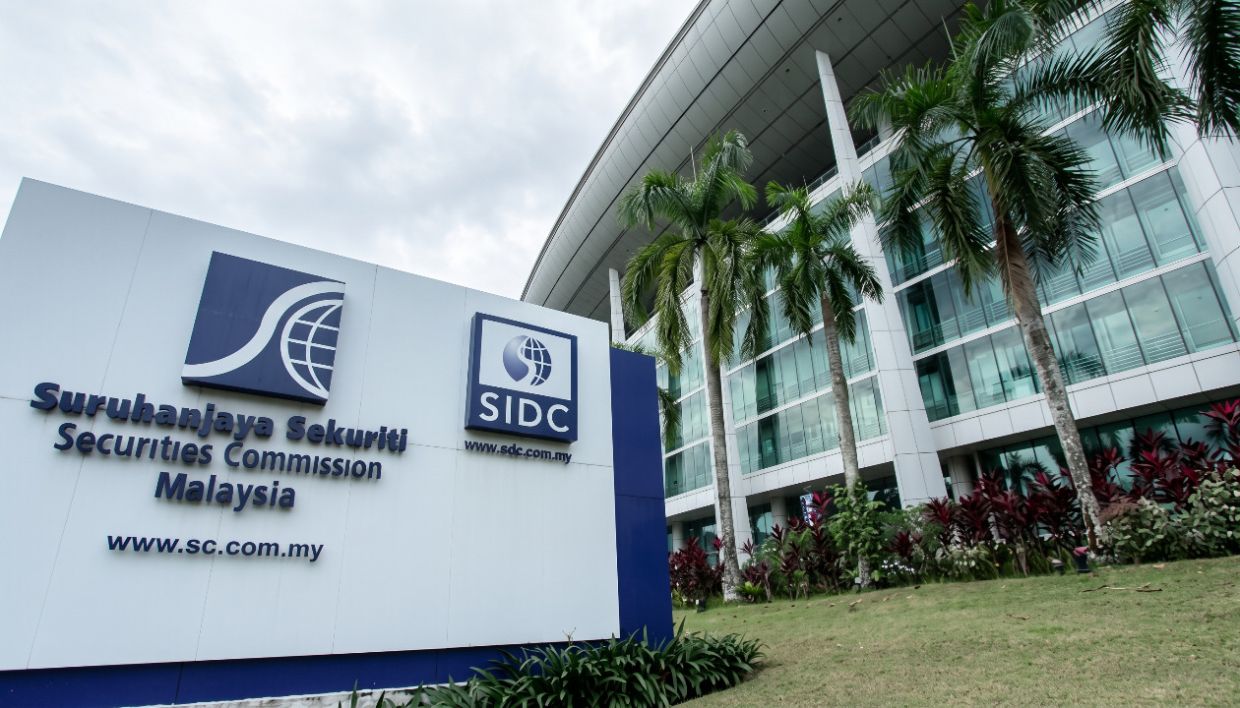
The Kuala Lumpur Sessions Court has handed down a three-year prison sentence to Mohd Arif Fadzlee Mohd Arifin, a former bank analyst found guilty of conducting unlicensed securities trading and fraudulently using professional titles to deceive investors. The court's decision represents a significant enforcement action by Malaysia's securities regulator in protecting the investing public from unqualified intermediaries operating in the capital markets.
Mohd Arif faced two separate charges filed by the Securities Commission Malaysia on January 23, 2024, both arising from activities that took place more than a decade ago in 2011. The first charge alleged that he falsely represented himself as an authorised representative of CIMB Wealth Advisors Berhad while engaging in the regulated activity of securities dealing, despite having no valid Capital Markets Services Representative's Licence from the SC and no registered status within the regulatory framework. This violation falls under section 59(1) of the Capital Markets and Services Act 2007, which establishes licensing requirements for anyone conducting securities transactions on behalf of clients or financial institutions.
The second charge related to his misuse of the Unit Trust Consultant title, a designation protected under section 362(3) of the CMSA. By claiming this credential without proper authorisation, Mohd Arif created a false impression among the public that he was a licensed professional qualified to advise on and execute securities transactions. Such deception is particularly serious because investors typically rely on professional titles and stated affiliations when deciding whether to entrust their money to an intermediary. The combination of false institutional affiliation and fraudulent professional credentials suggests a deliberate scheme to exploit investor confidence rather than inadvertent regulatory non-compliance.
During trial proceedings, the prosecution marshalled substantial evidence through ten witnesses, including two victims who had dealt directly with Mohd Arif. This testimony established how the accused had leveraged his false credentials and claimed association with CIMB Wealth Advisors to solicit investment business from unsuspecting members of the public. The prosecution's strategy of calling victims to testify proved effective in demonstrating the practical harm and deception that occurred, moving the case beyond abstract regulatory violations to concrete consumer harm.
On February 27, 2026, the Sessions Court determined that the prosecution had established a prima facie case sufficient to require the defence to present its version of events. Rather than presenting corroborating witnesses or documentary evidence, Mohd Arif chose to testify personally under oath, relying on his own testimony to rebut the accusations. This tactical choice ultimately proved unsuccessful, as the court found his testimony insufficient to create reasonable doubt regarding the prosecution's case.
The court's verdict reflects a clear finding that the evidence of unlicensed activities and misrepresentation was overwhelming and credible. In delivering judgment, the judge noted that Mohd Arif had failed to raise any reasonable doubt about the core factual elements established by the prosecution, effectively accepting the state's narrative of events. The conviction on both charges demonstrates that Malaysian courts take seriously the deliberate circumvention of capital markets licensing requirements and the fraud perpetrated on retail investors through false credentials.
Mohd Arif's sentence of three years imprisonment applies to each conviction, with both terms running concurrently, meaning he will serve a single three-year sentence rather than six years combined. While this represents a substantial custodial punishment, it falls short of the maximum five-year terms available under either section 59(1) or section 362(3) of the CMSA. The court's decision to impose concurrent rather than consecutive sentences, and to fall short of statutory maximums, may reflect factors such as his earlier guilty plea status, the passage of time since the offences occurred, or other mitigating circumstances presented during sentencing.
The regulatory context underlying this conviction is significant for Malaysia's capital markets development. Unlicensed securities trading and investment fraud represent persistent challenges in emerging markets, where unregulated intermediaries can inflict considerable damage on retail investors who lack sophisticated knowledge to verify credentials independently. The Securities Commission's pursuit of this case demonstrates regulatory commitment to maintaining market integrity through enforcement against fraudulent actors, even where significant time has elapsed since the underlying conduct.
For Malaysian investors, this case underscores the importance of verifying whether intermediaries and advisers hold current, valid licences from the SC before engaging their services or transferring funds. The SC maintains public registries of licensed individuals and firms specifically to enable such verification. The fact that a former bank analyst—someone with legitimate financial industry background—resorted to fraudulent misrepresentation suggests that even industry experience does not translate into legal authorisation to conduct certain regulated activities. Investors should treat professional titles and institutional affiliations with appropriate skepticism unless independently verified through official regulatory channels.
The broader enforcement implications of this judgment extend to financial institutions themselves. While CIMB Wealth Advisors was not charged in connection with Mohd Arif's activities, the case illustrates how former or current employees might attempt to use institutional names without authorisation to attract clients. Financial firms have responsibility to monitor their brand use and to report suspected unlicensed persons falsely claiming affiliation, particularly in an era where digital communication makes such deception increasingly feasible.
Regional context matters as well, as Malaysia's enforcement action aligns with tighter scrutiny of unlicensed investment activity across Southeast Asia. Regulators in Singapore, Thailand, and Indonesia have similarly intensified crackdowns on unregistered brokers and investment promoters operating across borders. The SC's successful prosecution in Mohd Arif's case sends a deterrent message to would-be fraudsters considering unlicensed securities activities and reinforces the commission's capacity to investigate and prosecute complex financial crimes.
Looking forward, this conviction may prompt the SC to increase public awareness campaigns reminding investors of licensing verification procedures and warning against the risks of dealing with unverified intermediaries. The case also illustrates the SC's resource commitment to pursuing historical cases—here spanning from 2011 to final conviction in 2026—demonstrating that regulatory violations will not escape enforcement merely through passage of time. For the broader Malaysian investment community, the message is clear: operating in the licensed and regulated sphere remains non-negotiable.

