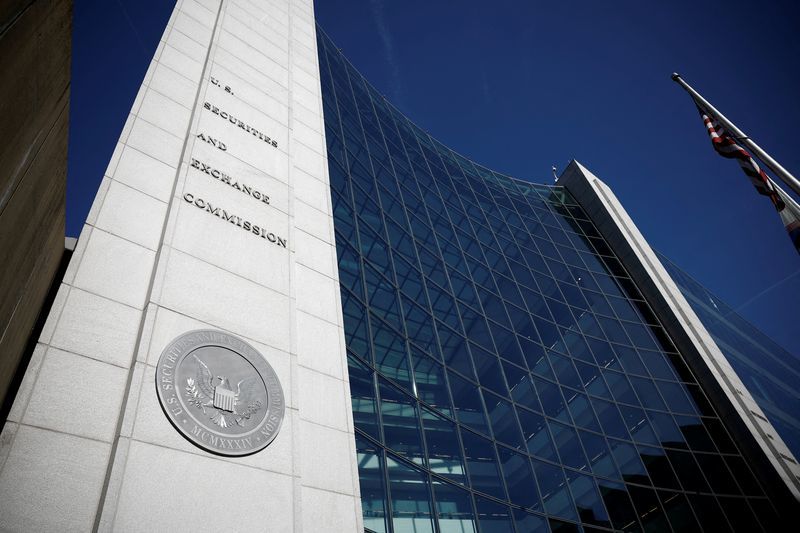
The U.S. Securities and Exchange Commission has brought insider trading charges against Jason Satsky, a former senior investment banker at Bank of America, in connection with what authorities describe as a scheme to share confidential corporate information with a personal associate. According to the allegations, Satsky disclosed details regarding a planned acquisition to his friend Gavin Wolfe in late 2021, giving Wolfe sufficient advance notice to accumulate a substantial shareholding position before the transaction became public knowledge. The case highlights the continuing vulnerability of information barriers within major financial institutions and the persistent temptation for bankers to monetise privileged access to sensitive market-moving data.
Satsky held the position of co-head of Americas power and renewable energy banking at Bank of America at the time of the alleged misconduct. His alleged tip concerned the impending acquisition of South Jersey Industries, an energy company to which Bank of America was providing advisory services. Prosecutors contend that this confidential intelligence, communicated well before any public announcement, allowed Wolfe to position himself for substantial financial gain through equity purchases. The timing proved critical: South Jersey Industries's parent company announced an $8.1 billion buyout on February 24, 2022, just weeks after the alleged tip occurred.
Wolfe, who manages Evergreen Capital and operates in New York and Sunny Isles Beach, Florida, allegedly deployed that inside information with precision. He purchased more than 2.2 million shares valued at approximately $53 million in total, according to SEC filings. When the acquisition was announced, the share price jumped, allowing Wolfe to realise a 36 percent gain on his position—translating into roughly $18.5 million in unlawful profit. The scale of the transaction underscores not merely casual information-sharing but rather what authorities characterise as a deliberate scheme to exploit material nonpublic information for financial enrichment.
The relationship between the two men spans more than two decades of personal and professional association, beginning when both worked at Credit Suisse before transitioning to Bank of America in 2012. This longstanding friendship may have created a context in which sensitive information flowed more casually than institutional compliance protocols would ordinarily permit. The SEC's complaint further alleges that Satsky and Wolfe communicated multiple times regarding the potential acquisition, with one such conversation occurring during a Duke versus Kentucky college basketball game at Madison Square Garden, where Satsky occupied luxury seats procured through his employer. The casual setting of a major sporting event may have provided cover for exchanges that would have attracted immediate scrutiny had they occurred in a formal business environment.
Both men have rejected the allegations through their legal representatives. Satsky's attorney, Robert Anello, issued a statement asserting his client's innocence and expressing confidence that evidence will vindicate him entirely. Anello specifically denied that Satsky communicated any material nonpublic information regarding South Jersey Industries to Wolfe or any other party. Wolfe's counsel, Reed Brodsky, issued an equally forceful denial, contending that his client acquired South Jersey shares based on an independent investment analysis rather than illicit tips. Brodsky additionally suggested that the SEC overlooked sworn testimony and documentary evidence supporting an autonomous investment thesis.
The regulatory action seeks to recoup all profits that Wolfe derived from the allegedly unlawful trading, along with civil penalties against both individuals. The SEC is also pushing for officer-and-director bars against Satsky and Wolfe, which would restrict their future involvement in publicly traded companies in supervisory or management capacities. Such sanctions represent severe professional consequences that extend far beyond monetary remedies, effectively closing off career paths in regulated finance for substantial periods. Bank of America terminated Satsky's employment in March 2025, suggesting that the institution acted independently once the investigation became apparent, though the bank itself faces no accusations of institutional wrongdoing.
This case arrives at a moment when regulators worldwide are intensifying scrutiny of insider trading within the investment banking sector, particularly regarding mergers and acquisitions where information asymmetries create the greatest temptation. The Malaysian investment community should note that such enforcement actions, while focused on American actors and institutions, have implications across Southeast Asian markets where Bank of America and other international investment banks operate. Many significant regional transactions involve advisory services from these same institutions, and their compliance frameworks apply globally. Weaknesses in information barriers identified through cases like this one prompt institutions to revisit their internal controls and whistleblower mechanisms across all geographic markets where they conduct business.
The prosecution also illuminates a broader challenge within high-finance environments: the inherent conflict between social relationships and fiduciary responsibilities. Satsky and Wolfe's two-decade friendship created personal bonds that may have compromised judgment, yet the SEC's case suggests that even sophisticated financial professionals sometimes underestimate the risks of sharing information, particularly in seemingly innocuous circumstances like social events. For Malaysian professionals working in international banking and investment firms, this episode offers a cautionary reminder that geographic location, employment tenure, and personal relationships provide no shelter from enforcement action for securities violations. Regulators have demonstrated willingness to pursue cases years after the underlying transactions occurred.
The broader implications for market integrity across Asia-Pacific warrant consideration. If conviction rates in insider trading cases remain high and penalties severe, the general deterrent effect may strengthen information barriers across regional finance sectors. Conversely, if sophisticated traders perceive enforcement as inconsistent or penalties as manageable relative to potential profits, the incentive structure for violations remains attractive. The SEC's willingness to pursue individuals across state and international boundaries, combined with modern data analytics that can detect unusual trading patterns preceding major announcements, raises the costs for would-be securities violators. For Malaysian investors and institutions, this reinforces the importance of scrupulously adhering to information barriers when dealing with international financial firms.

