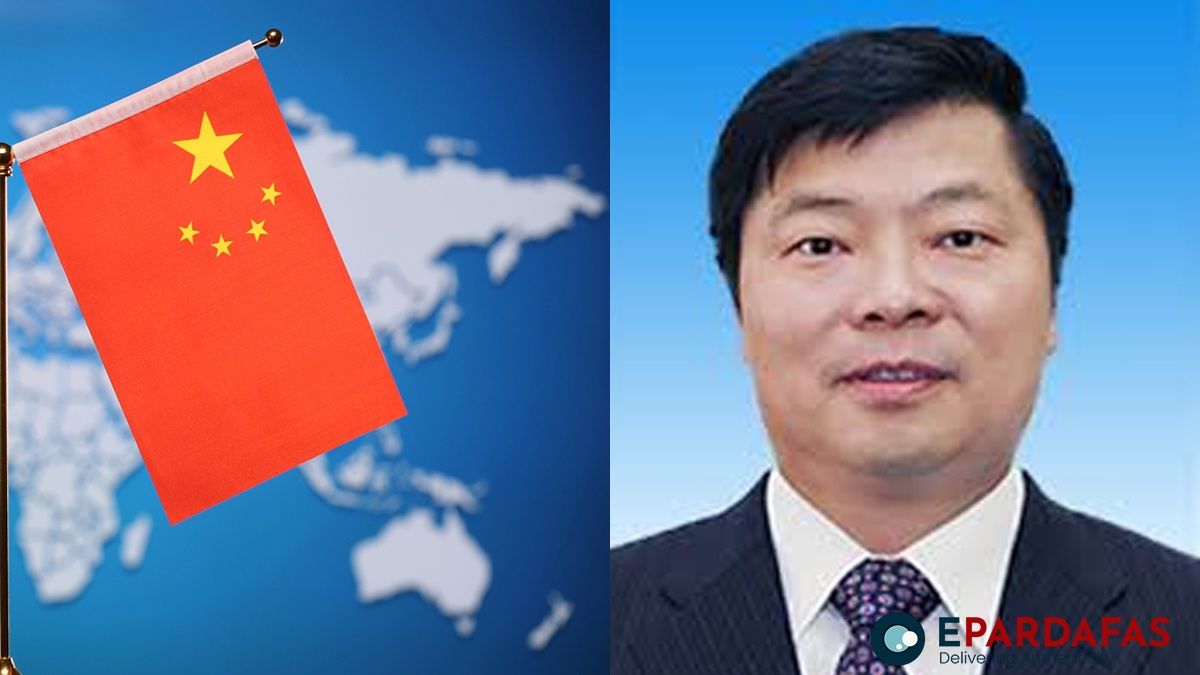
Beijing's top anti-graft authority has initiated a formal investigation into Ouyang Weimin, who previously served as president of the China Development Bank, marking another high-profile case in China's ongoing campaign against official misconduct. The Central Commission for Discipline Inspection and the National Commission of Supervision jointly announced the move, though they disclosed minimal information about the specific allegations or anticipated timeline for the probe.
Ouyang's career trajectory reflects the typical pathway of senior Chinese financial officials, beginning with his entry into the Communist Party in 1986. Much of his formative years in public service were spent at the People's Bank of China, where he accumulated expertise in monetary policy and financial regulation. This banking background would subsequently position him for leadership roles in state-owned financial institutions that serve as crucial pillars of Beijing's developmental agenda.
Before assuming the helm at the China Development Bank in 2019, Ouyang held the influential post of vice-governor of Guangdong province, one of China's most economically vibrant regions and a neighbouring region to Hong Kong. His appointment to the development bank signified recognition of his administrative acumen, particularly in managing complex financial systems within economically significant jurisdictions. He remained in that presidential position until stepping down in 2023, roughly four years into his tenure.
The China Development Bank itself occupies a unique position within China's financial architecture. Established in 1994, the institution operates as a state-owned development finance entity rather than a commercial bank, placing it directly under oversight by China's State Council. Its mandate centres on channelling capital into strategic sectors deemed critical for national development, including infrastructure, energy, and industries operating in economically disadvantaged regions. This developmental focus distinguishes it from profit-driven banking operations.
For Malaysian and Southeast Asian observers, the implications of such investigations into China's senior financial officials warrant careful consideration. The China Development Bank has been instrumental in funding major regional infrastructure initiatives, including components of the Belt and Road Initiative that directly affect Malaysian interests. Projects spanning ports, railways, and industrial zones across Southeast Asia have received substantial financing from this institution. Uncertainty surrounding leadership transitions and internal governance scrutiny at this level could potentially influence the pace and priority of future regional investments.
Xi Jinping's anti-corruption campaign, which commenced after he assumed the presidency, has become a defining characteristic of Chinese governance over the past decade. The drive has ostensibly targeted officials at all levels—from local administrators to senior military commanders—creating a comprehensive framework for investigating alleged misconduct. The centralised nature of these investigations, conducted under Beijing's direct supervision, underscores the Communist Party's commitment to maintaining discipline within its ranks.
Observers and analysts have noted that corruption investigations, while addressing legitimate governance concerns, have simultaneously functioned as instruments for consolidating political power. The selective targeting of certain officials has corresponded with periods of factional tension within the party hierarchy. This dual function—genuine anti-corruption enforcement alongside political reorganisation—means that investigations such as Ouyang's warrant interpretation within the broader context of internal party dynamics and Xi's efforts to strengthen centralised control.
The absence of detailed allegations in the initial announcement is standard practice within China's investigative framework. Authorities typically release minimal information until formal charges are formulated or official conclusions are announced. This measured disclosure approach contrasts sharply with the immediate media saturation common in Western jurisdictions, reflecting different procedural traditions and political culture. The months or years ahead will likely determine whether substantive evidence emerges regarding specific misconduct or whether the investigation concludes with administrative penalties.
For the financial sector more broadly, such investigations underscore the vulnerability of senior officials to scrutiny regardless of institutional stature or previous success. Officials managing state-owned enterprises operate within an environment where professional accomplishments do not necessarily insulate them from legal jeopardy. This reality shapes decision-making incentives and may influence how financial leaders approach complex transactions or regional partnerships, potentially affecting investment patterns throughout Asia.
The timing and prominence of Ouyang's investigation reflect Beijing's determination to project an image of systematic, impartial enforcement against official wrongdoing. By investigating figures of considerable seniority, the authorities signal that no position is exempt from accountability. For regional governments and businesses contemplating partnerships with Chinese state institutions, such developments introduce variables concerning institutional continuity and leadership stability that must be factored into long-term strategic planning.

