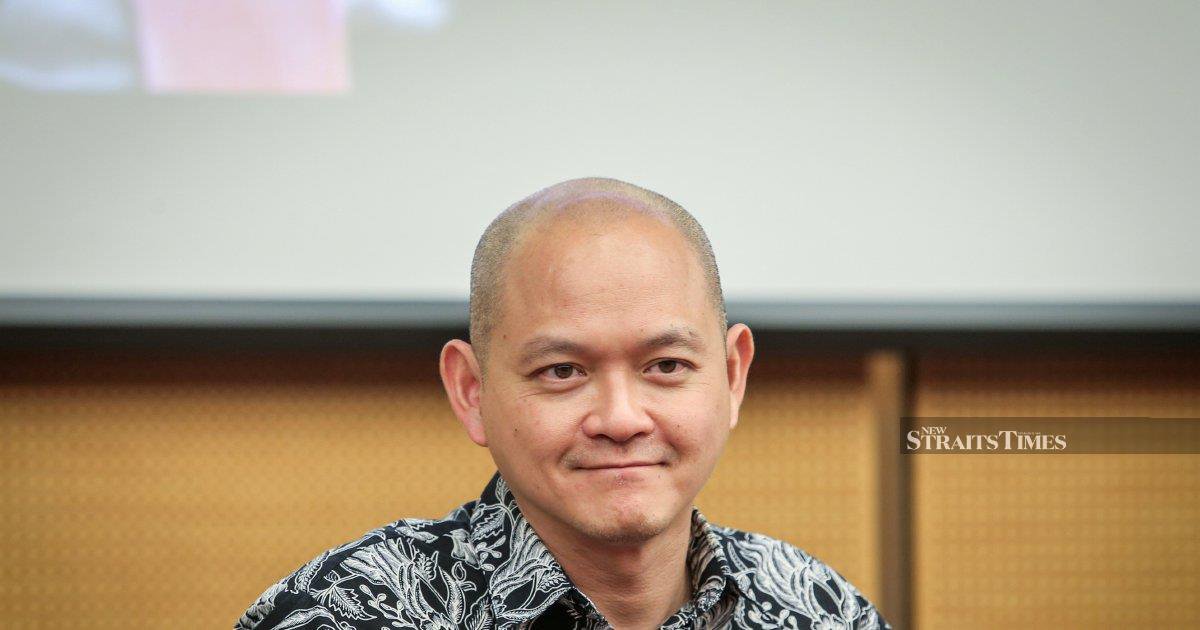
Dr Ong Kian Ming, who previously served as Member of Parliament for Bangi, has ended his affiliation with the Democratic Action Party in a move that signals evolving political realignments in Malaysia's competitive landscape. The former lawmaker made his announcement in Kuala Lumpur, effectively severing ties with the party that had served as his political vehicle in recent parliamentary cycles.
The decision carries particular significance given Ong's profile within DAP circles. As an economist and political analyst with credentials from respected international institutions, his departure represents the loss of intellectual capital within the opposition coalition at a time when strategic planning for the next general election intensifies across all political blocs. The timing of his exit, explicitly tied to supporting Khairy Jamaluddin's political trajectory, underscores how Malaysia's electoral cycle creates unexpected partnerships and realignments among political operatives.
Khairy Jamaluddin, the former Health Minister and prominent UMNO figure, has maintained an active political presence despite periods of relative quietude in formal government roles. His political fortunes have demonstrated resilience through multiple electoral cycles, and Ong's decision to join his orbit suggests confidence in Jamaluddin's capacity to influence Malaysian politics heading toward GE16. This alignment bridges the former DAP politician and the establishment-aligned UMNO personality, reflecting the pragmatic calculations that often govern Malaysian political transitions.
The defection contributes to a broader pattern of political mobility that characterises Malaysia's democratic system. Unlike systems with rigid party discipline, Malaysian politics permits relatively fluid movement between coalitions and independent positioning, enabling ambitious figures to pursue alternative platforms when conventional party structures no longer align with personal objectives or political calculations. Ong's departure from DAP illustrates how individual ambitions can override long-standing party commitments.
For the DAP, the loss of Ong represents a minor erosion of parliamentary talent pool and technical expertise, particularly in areas where the party struggles to project sophisticated economic and policy frameworks to urban, educated constituencies. His previous work on economic issues and analysis provided the party intellectual resources that are increasingly valuable as Malaysian political competition focuses on substantive policy differentiation rather than mere coalition positioning.
The move also reflects deeper transformations within opposition politics following the 2022 general election outcomes. The DAP's complex relationships with other Pakatan Harapan components and independent actors have created space for dissident voices seeking alternative political homes or independent platforms from which to exercise influence. Ong's calculation evidently favoured direct engagement with Jamaluddin's political machinery over remaining within DAP structures.
From a Southeast Asian perspective, Malaysian political realignments of this nature demonstrate how democratic systems accommodate entrepreneurial political actors. Unlike neighbouring jurisdictions with more constrained political environments, Malaysia permits individuals to navigate between opposition and establishment-adjacent positions, creating fluid political markets where talent and strategic positioning determine opportunity. This permeability distinguishes Malaysian democracy within the region.
The support Ong pledges to Khairy's GE16 preparations will likely focus on policy development, strategic communications, and intellectual positioning rather than grassroots mobilisation. His academic background and previous parliamentary work suggest his value lies in articulating sophisticated policy alternatives and constructing compelling narratives around economic management and technical governance—areas where Malaysian elections increasingly turn on detailed positions rather than personality-driven politics.
Looking ahead, Ong's transition underscores how GE16 calculations begin well before formal campaign periods, with key operatives repositioning themselves across political space to optimise their influence in coming parliamentary contests. His decision to leave DAP and actively support Jamaluddin signals confidence that this alternative pathway offers superior prospects compared to remaining within established opposition structures, whether through contested internal positions or external advisory roles.
The broader implications for Malaysian politics centre on coalition fragmentation and the growing role of individual political entrepreneurs who maintain influence outside formal party hierarchies. As both governing and opposition coalitions face internal pressures ahead of GE16, figures like Ong Kian Ming represent valuable assets—technically skilled, analytically credible, and willing to navigate political transitions—whose movements foreshadow larger realignments within Malaysia's competitive political landscape.

