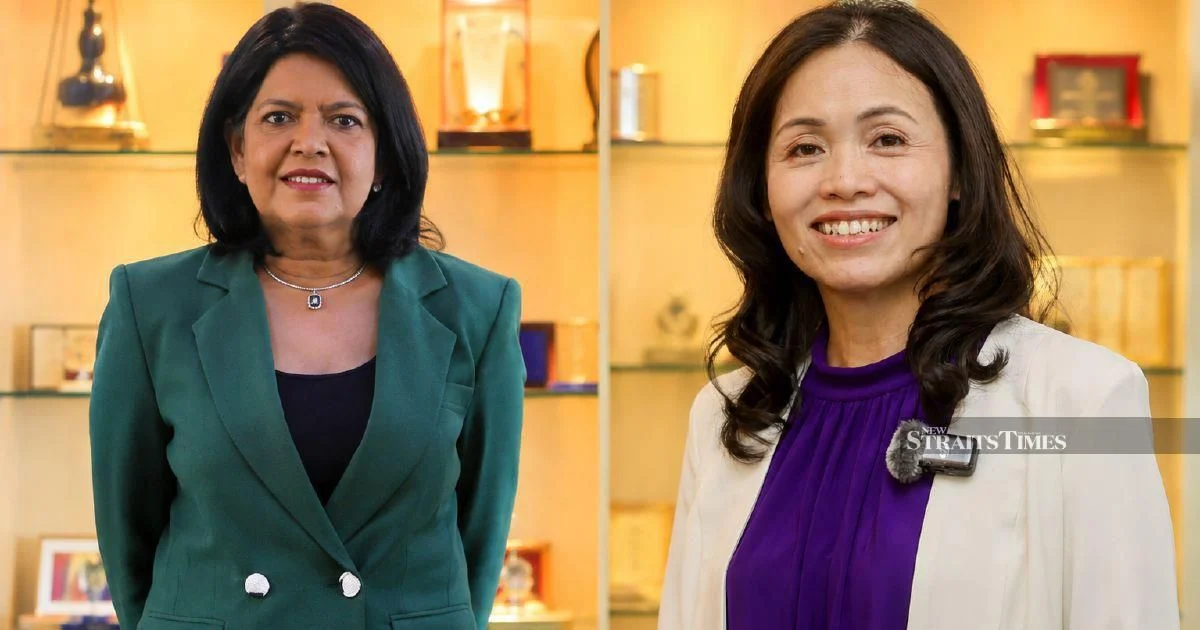
The Malaysian Media Council has found its new leader in Tan Sri Nallini Pathmanathan, a retired Federal Court judge whose appointment has drawn strong support from Deputy Communications Minister Teo Nie Ching. In endorsing the selection, Teo highlighted Nallini's distinguished judicial career and her demonstrated commitment to upholding press freedom—a critical consideration as the media regulator navigates an increasingly complex media landscape in Southeast Asia's digital age.
Nallini's ascension to the helm of the MMC represents a significant moment for Malaysian media governance. Her appointment underscores the government's intention to place someone with deep constitutional knowledge and judicial credibility in charge of an institution tasked with maintaining professional standards across the industry while protecting the fundamental right to free expression. As a former member of Malaysia's highest court, she brings institutional gravitas and legal expertise that few other candidates could match.
Teo's confidence in Nallini rests substantially on her judicial record regarding press freedom matters. During her tenure on the bench, she engaged with cases touching on constitutional rights and the boundaries of media expression, decisions that reflected careful consideration of Malaysia's plural society and democratic values. Her judgments, according to Teo's assessment, demonstrated an understanding that a free press serves as an essential check on power and a vehicle for public discourse in a functioning democracy.
The appointment arrives at a crucial juncture for Malaysian media. The industry faces mounting pressures from technological disruption, the rise of social media, questions about misinformation, and evolving audience expectations. The MMC, as the primary industry body responsible for self-regulation and ethical standards, requires leadership capable of balancing commercial interests against public responsibility. Nallini's background suggests she is equipped to navigate these tensions thoughtfully rather than defaulting to either extreme censorship or complete deregulation.
For regional observers, the selection carries broader implications. Malaysia's approach to media governance influences discussions across Southeast Asia about how democracies can protect both free expression and social stability. By appointing a respected judge with a clear commitment to constitutional principles, Malaysian policymakers are signalling that media regulation need not be synonymous with state control or suppression. This distinction matters profoundly for journalists, media organisations, and civil society groups monitoring press freedom throughout the region.
Nallini's judicial philosophy, as evidenced in her court decisions, reflects a nuanced appreciation for the complexity of managing press freedoms within a multicultural framework. Malaysia's diverse religious, ethnic, and political landscape has historically created tension between unrestricted expression and the need to prevent inflammatory speech. Her jurisprudence suggests she grasps these difficulties without resorting to blanket restrictions that undermine democratic accountability and transparency.
The MMC's role has become increasingly important as traditional media faces digital transformation. Newsrooms are shrinking, business models are fragmenting, and the line between professional journalism and citizen content has blurred considerably. The council must establish credible standards that the public respects and that media organisations willingly adopt. Leadership from someone with Nallini's background—intellectually rigorous, institutionally experienced, and publicly trusted—can lend the MMC the moral authority needed to guide industry standards in this transitional period.
For Malaysian journalists and news organisations, Nallini's appointment may signal a reset in relations between the MMC and the working press. Media practitioners have periodically expressed frustration with regulatory frameworks perceived as overly restrictive or unevenly applied. A leader with judicial temperament and documented respect for constitutional freedoms might foster more constructive engagement between regulators and media stakeholders, resulting in standards that are both meaningful and justifiable to the industry.
Teo's public endorsement also reflects deliberate positioning by the communications ministry. By celebrating Nallini's commitment to press freedom and constitutional rights, the government is staking a claim to supporting media independence—a position that carries weight in Malaysia's competitive political environment and contributes to Malaysia's standing internationally as a country that values democratic principles, even if implementation remains contested.
The practical test of this appointment will come as Nallini settles into her role. The MMC will face decisions about coverage standards, ethical guidelines, handling of complaints, and perhaps most significantly, how to address misinformation and disinformation without overstepping into censorship. Her judicial background equips her to distinguish between protecting legitimate public interests and simply suppressing inconvenient truths, a distinction that has eluded many regulators globally.
Looking forward, Nallini's leadership at the MMC may establish a model for media governance that other Southeast Asian democracies examine closely. If she can build consensus around industry standards that journalists respect, if she can demonstrate that regulation can coexist with genuine freedom of expression, and if her tenure rebuilds public confidence in media institutions, her appointment will be remembered as consequential. Conversely, if she faces pressure to compromise her judicial principles or if the MMC's standards become tools for suppressing legitimate criticism, the significance of her background will be severely tested.
The months ahead will reveal how Nallini translates her judicial experience into effective leadership of a complex regulatory institution navigating unprecedented challenges in Malaysia's evolving media ecosystem.