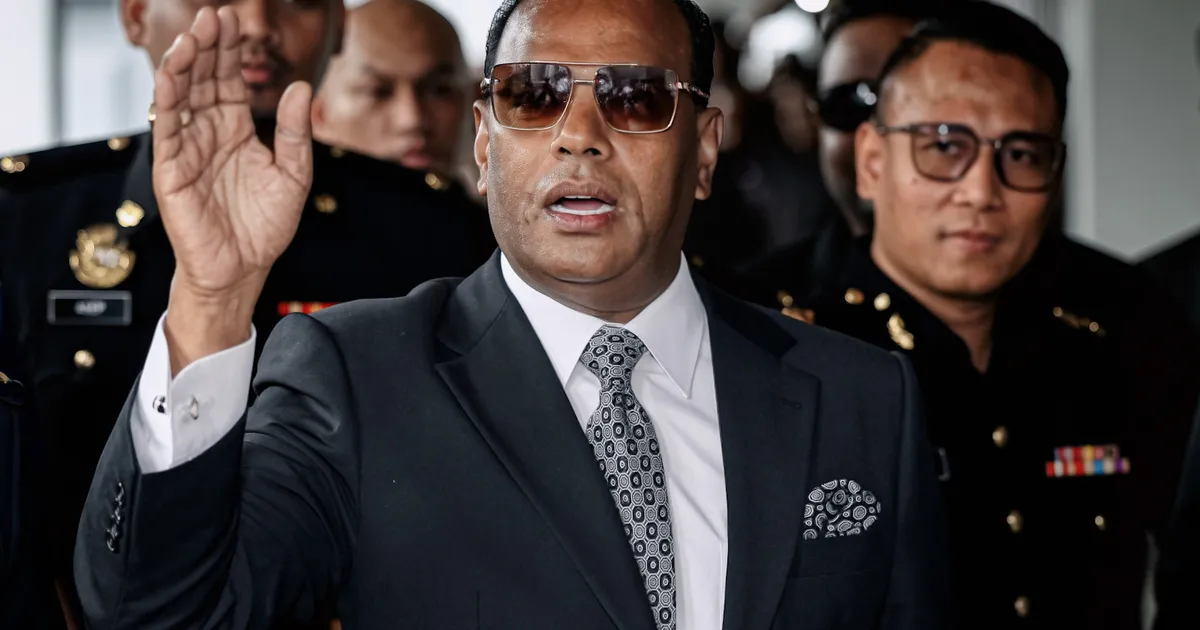
Former Human Resources Minister Saravanan has moved to dispel suggestions that his correspondence with Prime Minister Anwar Ibrahim was designed to conceal wrongdoing, instead characterising the letter as a legitimate request for a complete examination of the allegations levied against him. The distinction matters considerably in Malaysian political discourse, where accusations of interference with the judicial process carry significant weight and consequences for ministerial credibility.
Saravanan's clarification addresses growing scrutiny over the nature and timing of his communication with the Prime Minister while facing corruption-related charges. The former minister has maintained consistently that the allegations themselves lack substance and credibility, viewing them as fundamentally flawed from both evidential and procedural standpoints. By framing his approach as seeking transparency rather than obstruction, he attempts to reposition the narrative around his actions.
The episode underscores an enduring tension within Malaysia's governance structures regarding appropriate channels for ministerial concerns about legal proceedings. Questions arise about whether direct correspondence between an accused minister and the head of government risks creating perceptions of preferential treatment or institutional bias, regardless of the sender's stated intentions. This remains particularly sensitive given Malaysia's ongoing efforts to strengthen institutional independence and public confidence in anti-corruption mechanisms following years of high-profile cases.
Saravanan's insistence on the lack of credibility in the charges points to a substantive dispute about factual foundations rather than mere procedural objections. He appears to be arguing that a thorough, objective review would demonstrate the weakness of the prosecution's case, thereby justifying his decision to escalate the matter to the Prime Minister's attention. This approach assumes that systematic examination will vindicate his position and restore his standing.
The characterisation of his letter as seeking a "thorough review" rather than intervention introduces nuance into how observers interpret interactions between members of the executive branch and judicial or quasi-judicial proceedings. Malaysian political observers have grown accustomed to distinguishing between legitimate oversight and inappropriate pressure, yet the line often remains contentious and subject to interpretation based on political allegiance and institutional perspective.
For Southeast Asian governance standards more broadly, the incident reflects broader regional struggles with separating legitimate executive consultation from potential obstruction. Countries throughout the region grapple with establishing clear protocols that permit ministerial engagement with legal matters affecting their careers while maintaining firewall protections against undue influence. Malaysia's approach, still evolving, continues to be tested by scenarios such as Saravanan's.
The timing of Saravanan's clarification suggests awareness that perceptions had crystallised in directions unfavourable to his position. By proactively reframing his actions, he seeks to reclaim narrative control before additional scrutiny or revelation might entrench negative interpretations. This reactive posture, however, inadvertently highlights the fundamental legitimacy question: why communicate with the Prime Minister about an active matter rather than through established legal channels or his defence counsel.
Saravanan's confidence in the non-credibility of the charges implies he believes objective examination will vindicate him, yet this assumption itself invites examination. If the case genuinely lacks foundation, conventional legal processes should expose this reality through standard procedural mechanisms. His elevation to the Prime Minister's level suggests either extraordinary confidence in an intervention's beneficial effect or concern that standard channels may prove inadequate—a distinction with considerable implications.
The broader political context matters considerably here. Saravanan's tenure as HR minister occurred during Malaysia's complex transition of power, where ministerial roles intertwined with factional positioning and party realignments. Any charges against former ministers carry resonance beyond the individual defendant, potentially reflecting political competitions and institutional rivalries that characterise contemporary Malaysian politics.
For Malaysian business and investor communities watching ministerial stability, the Saravanan situation exemplifies the ongoing uncertainty surrounding governance predictability. When senior officials face charges and pursue high-level political intervention, it reinforces perceptions of institutional fragility and rule-of-law concerns that investment decisions often depend upon. This calculus extends throughout Southeast Asia, where Malaysia's governance trajectory influences regional assessments of political risk and institutional reliability.
Looking forward, Saravanan's position depends substantially on how thoroughly and transparently the review process, should one occur, demonstrates the alleged weaknesses he identifies. Public confidence in Malaysian institutions requires that such examinations appear genuinely objective and independent, undertaken according to established standards rather than adjusted to accommodate particular outcomes. The credibility of both Saravanan's defence and Malaysia's institutional independence may ultimately rest on processes rather than statements.

