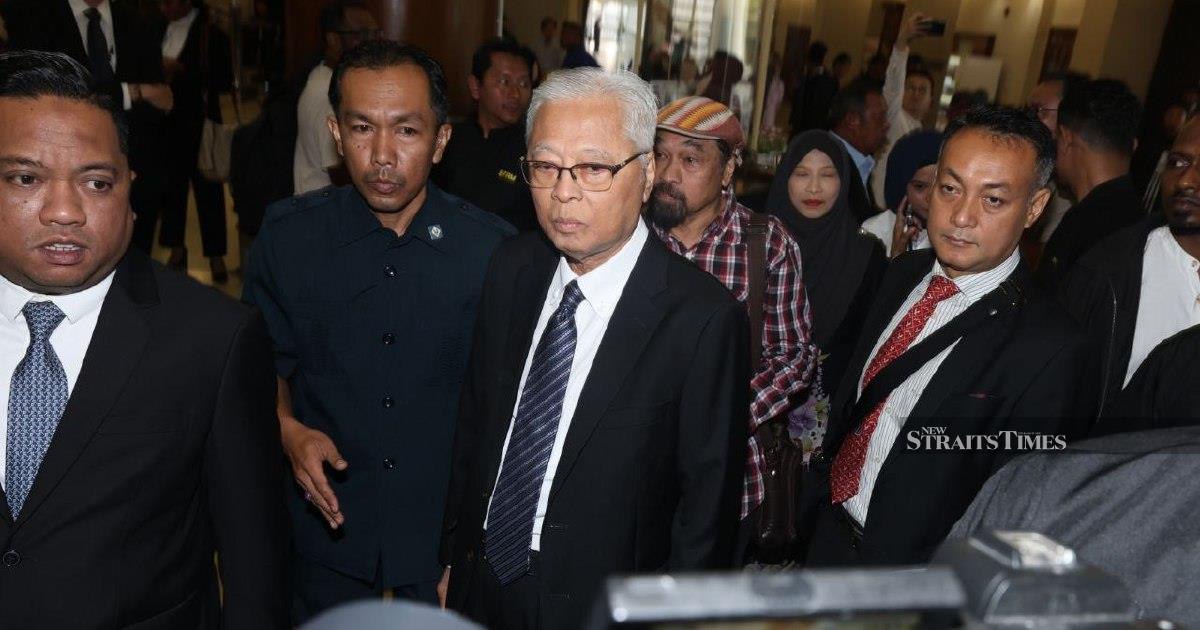
Former Prime Minister Datuk Seri Ismail Sabri Yaakob walked free from the court complex in Kuala Lumpur after his son successfully posted RM300,000 bail on his behalf, concluding proceedings that saw the high-profile political figure appear before a judge.
The bail amount represents a substantial but manageable figure for the family of the former head of government, who served as the eighth Prime Minister of Malaysia from August 2021 to November 2022. His departure from the courthouse marked the end of an intensive day of legal proceedings that attracted considerable media attention, reflecting the intense public interest surrounding cases involving former senior political leaders in Malaysia.
The posting of bail by Ismail Sabri's son underscores the family's determination to secure his temporary release from custody while legal matters proceed through the judicial system. This arrangement is standard practice in Malaysian courts, where individuals facing charges may be released on bail pending trial, provided stringent conditions are met and the court is satisfied regarding the likelihood of the accused appearing for subsequent hearings.
The development occurs within the broader context of Malaysia's ongoing efforts to address governance and accountability concerns that have occupied the national conversation over recent years. High-profile legal cases involving former government leaders have become increasingly common as investigative and prosecutorial bodies intensify their scrutiny of past administrative decisions and financial transactions.
For Malaysian citizens monitoring the trajectory of political accountability, this case represents a critical juncture in demonstrating how the judicial system handles matters concerning individuals at the highest echelons of political power. The availability of bail, rather than remand in custody, suggests the court has assessed that detention is not necessary to ensure Ismail Sabri's appearance before the bench for future proceedings.
The former Prime Minister's brief tenure at the helm of the nation was characterised by significant political volatility, emerging amid the political upheaval that followed the collapse of the previous administration. His appointment came during a period when Malaysian politics was fragmented across multiple competing coalitions and factions, creating a complex governing environment.
The circumstances surrounding Ismail Sabri's legal situation have profound implications for understanding how Malaysia's institutional framework addresses questions of ministerial conduct and administrative oversight. Whether involving allegations related to his tenure as Prime Minister or matters arising from his broader political career, the case demonstrates the functioning of legal mechanisms designed to investigate and adjudicate such matters.
Regional observers of Malaysian politics will note that this bail posting represents a tactical response by the family to navigate the criminal justice process while minimising disruption to the accused's personal circumstances and family life. The quantum of bail—RM300,000—suggests the court's assessment of both the seriousness of potential charges and the accused's financial capacity to comply with bail conditions.
The proceedings at the Kuala Lumpur court complex have renewed focus on the intersection between political leadership, legal accountability, and institutional independence in Southeast Asia's third-largest economy. How Malaysian courts handle cases involving individuals who previously occupied the highest offices remains a matter of interest for those evaluating the nation's commitment to equal application of the law regardless of political status or prior position.
Looking ahead, Ismail Sabri will be required to satisfy all conditions imposed by the court as part of his bail arrangement. These conditions typically include reporting requirements, restrictions on travel, and obligations to appear punctually for all scheduled court hearings. Non-compliance with such conditions could result in bail being revoked and the accused being remanded in custody pending trial.
The case also reflects broader questions about Malaysia's legal trajectory, particularly regarding how the nation's courts and prosecutorial authorities navigate the politically sensitive terrain of investigating and prosecuting former high-ranking government officials. The handling of such matters carries significance beyond the individual circumstances, touching on institutional credibility and public confidence in the impartiality of Malaysia's judicial system.

