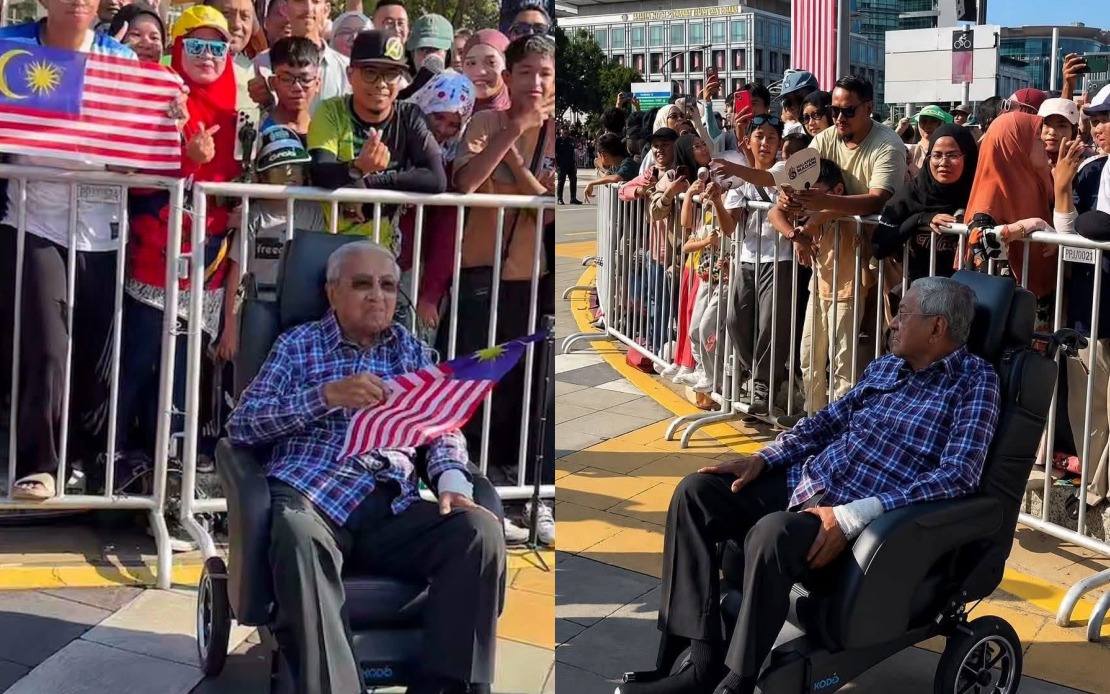
The National Day Celebration 2026 Secretariat has moved to clarify the protocol governing invitations extended to former prime ministers, emphasising that such invitations follow a case-by-case assessment rather than automatic approval. The statement came amid public questioning over former Prime Minister Tun Dr Mahathir Mohamad's attendance at this year's National Day festivities held at Dataran Putrajaya, prompting the secretariat to explain the underlying procedures that guide such decisions.
Datuk Abdul Halim Hamzah, who serves as both chairman of the 2026 National Day and Malaysia Day Celebration Working Committee and secretary-general of the Communications Ministry, detailed the established framework during an official announcement. He noted that the Prime Minister's Department's Protocol and International Conference Secretariat Division, known as BIUPA, maintains responsibility for processing invitations to major federal government celebrations. This centralised management system ensures consistency in how such high-profile events are organised across the country.
The secretariat's position reflects a significant shift in institutional practice. Since 2018, the government has operated without a blanket policy automatically granting invitations to all former prime ministers who wish to attend national commemorations. Instead, the system now requires prospective attendees to make formal applications and follow established procedures. This change represents a deliberate move toward greater discretion in event management, allowing the government to consider various factors when deciding who receives invitations to official functions.
According to Hamzah's statement, the non-automatic nature of invitations does not mean that former leaders are excluded from participating in national celebrations. Rather, the process has been structured to permit their attendance through a proper application mechanism. Any former prime minister wishing to join such events must submit a formal request, which is then evaluated according to the administrative guidelines that have governed these matters since 2018. This approach balances inclusivity with maintaining institutional protocols.
The clarification became necessary when questions arose regarding Dr Mahathir's participation in the morning's celebration. In response, the secretariat disclosed that Dr Mahathir's office had submitted an application to the Prime Minister's Office concerning the Overseas Rest Facility. According to the filing, Dr Mahathir indicated that he was scheduled to travel abroad during the period spanning August 28 to 31, 2026, which would encompass the National Day celebration.
Prime Minister Datuk Seri Anwar Ibrahim approved the application, acting in accordance with the legal framework established under the Members of Parliament (Remuneration) Act 1980, specifically the provisions governing remuneration and entitlements of former prime ministers. This legislative basis provides the formal authority for decisions regarding former leaders' access to government facilities and benefits, including those related to official events and absences.
The disclosure of Dr Mahathir's travel application adds context to the broader institutional arrangement. Rather than simply deciding whether to invite Dr Mahathir to the National Day event, the government processed his request through an established channel that recognises his status as a former prime minister while maintaining proper administrative procedures. This approach avoids the appearance of arbitrary decision-making while preserving the government's authority to manage official celebrations.
For Malaysian readers, this clarification underscores how contemporary governance structures balance respect for former leaders with the necessity of maintaining orderly administrative systems. The practice since 2018 reflects a professionalisation of event management protocols, moving away from informal or ad-hoc approaches toward transparent, documented procedures. Such systematisation becomes increasingly important as governments handle growing numbers of former office-holders and face heightened public scrutiny of decision-making processes.
The significance of this protocol extends beyond mere ceremony. National Day celebrations represent important occasions for national unity and reflection on shared values. By establishing clear procedures for invitation processes, the government can ensure that such events proceed smoothly while maintaining fairness and institutional integrity. The framework allows former prime ministers, who have served the nation, to participate meaningfully without requiring special favours or creating perceptions of preferential treatment.
Regionally, Malaysia's approach to managing former leaders' roles in national ceremonies reflects broader trends across Southeast Asia. Many governments in the region have similarly formalised procedures governing interactions with retired officials, recognising that clear guidelines reduce political controversy and strengthen democratic institutions. The Malaysian system, with its emphasis on documented applications and transparent criteria, aligns with contemporary best practices in administrative governance.
Looking forward, the secretariat's clarification signals that invitations to National Day celebrations will continue to be determined on individual merit rather than seniority or historical service alone. This principle allows the government to recognise former prime ministers' contributions while ensuring that decision-making remains impartial and grounded in established procedures. For future national commemorations, this framework provides the administrative clarity necessary for orderly event planning and equitable treatment of all applicants, regardless of their previous positions.

