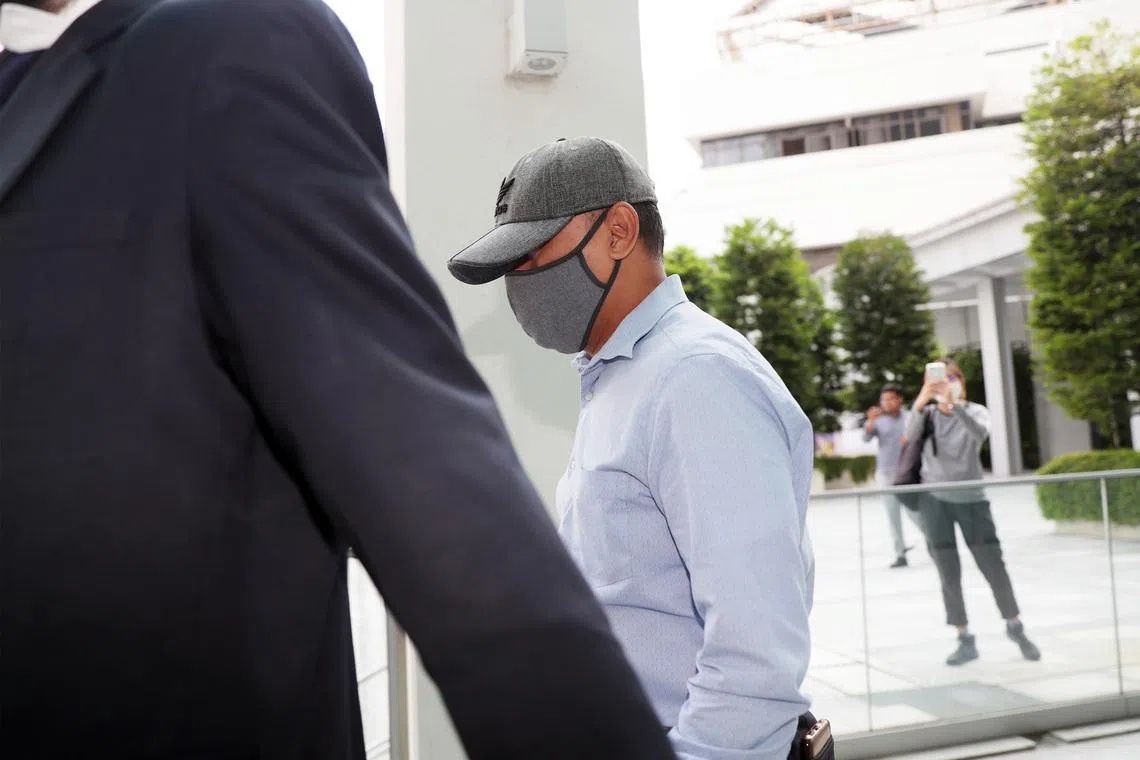
Abdul Rahim Mawasi, the former executive chairman of Darul Aman Mosque and Sallim Mattar Mosque in Singapore, has received a 14-month prison sentence following his conviction on corruption charges. The 59-year-old, who was also a senior officer with the Islamic Religious Council of Singapore (MUIS), abused his position to steer lucrative construction contracts worth S$223,000 to a company controlled by a close personal associate, undermining the integrity of the mosque procurement process.
The case exposes how personal relationships can compromise institutional governance, particularly in religious organisations that hold significant community trust. Abdul Rahim's actions represent a flagrant breach of public sector ethics, wherein he leveraged his authority and access to sensitive bidding information to benefit a friend's commercial interests. The scheme unraveled when investigators discovered the pattern of price manipulation and undisclosed financial arrangements spanning several years of collusive bidding.
According to court proceedings, Abdul Rahim had known Mohd Mustaqim Kam, also identified as Kam Hock Beng, for over a decade before they formulated the corrupt arrangement in July 2018. The two men struck an unusual partnership whereby Kam, a director at construction firm Zeal-Con Engineering, would undertake lucrative mosque projects on the condition that profits generated would serve as paid-up capital for a travel company focused on pilgrimage tours. Critically, Abdul Rahim agreed to invest no money upfront, securing his stake entirely through Kam's commercial success at the mosques.
The corruption manifested through systematic price manipulation across multiple tender processes. When Darul Aman Mosque sought vendors for construction work in its yard area during 2018, Zeal-Con submitted an initial quote of S$128,600 in August, subsequently revising it downward to S$118,000 by September. This revised figure undercut the nearest competing bid of S$125,500, a suspicious reduction that prosecutors attributed to Abdul Rahim's direct involvement in advising Kam on pricing strategy. The contract award followed swiftly, with Zeal-Con securing the S$118,000 project on September 26, 2018, whilst the mosque's management remained entirely unaware of the corruption backstage.
A parallel scheme unfolded at Sallim Mattar Mosque, where Zeal-Con obtained an initial quote for S$115,700 to undertake various works including roof and reception area renovations. Within months, the company submitted a dramatically reduced quotation of S$105,000 for identical scope, again at Abdul Rahim's encouragement. By August 2019, the mosque issued formal contract awards to Zeal-Con based on the reduced pricing, completing the second phase of the coordinated fraud. Collectively, these two contracts represented substantial sums for a construction company, generating significant profits that could be channelled toward the undisclosed joint venture.
To obscure his financial interest in the travel venture, Abdul Rahim orchestrated an elaborate concealment strategy involving his own son. In November 2019, Kam converted an existing shell company into Amal Travel and Tour (ATT), allocating 25,000 shares valued at S$1 each to Abdul Rahim's son. This shareholding structure was designed to distance Abdul Rahim from direct ownership whilst preserving his beneficial interest, effectively using his family member as a nominee holder. The arrangement allowed Abdul Rahim to reap financial rewards whilst maintaining plausible deniability about his involvement in the travel company—a common corruption tactic in public sector fraud cases across the region.
Mosque officials and MUIS leadership remained completely unaware of these arrangements, discovering the breach only after investigative scrutiny. Abdul Rahim had failed to disclose his interest in ATT to his employer, violating fundamental conflict-of-interest protocols that should govern senior management in religious institutions. His position as a MUIS officer seconded to chair both mosques' management boards placed him in a position of profound trust, making his abuse of that authority particularly egregious. The prosecution emphasised that whilst the construction work itself was completed satisfactorily, technical competence in service delivery does not diminish the corruptive intent or the institutional damage caused by the breach of governance.
Abdul Rahim's culpability was established during trial despite his defence counsel's attempts to distance him from the travel company scheme. His lawyer, Satwant Singh Sarban Singh, argued that his client held no shares in ATT and had no formal involvement, contending that the shareholding arrangement was entirely Kam's initiative. However, the court rejected these protestations, finding that the pattern of communications, pricing advice, and contract coordination demonstrated clear corrupt intent. The evidence demonstrated that Abdul Rahim had conducted extensive discussions with Kam regarding bid pricing and provided crucial price indications that directly enabled Zeal-Con to win competitions that should have been conducted at arm's length.
His co-conspirator, Mohd Mustaqim Kam, received a lighter sentence of six months' jail in February 2025, reflecting his position as the recipient rather than the facilitator of the corrupt arrangement. Nevertheless, both individuals were convicted under Singapore's corruption statutes, which treat such offences as serious threats to public sector integrity. The Deputy Public Prosecutor argued vigorously that Abdul Rahim merited substantial custodial punishment due to his senior position and deliberate abuse of institutional authority for personal financial gain.
For Malaysian readers and regional observers, this case illustrates recurring vulnerabilities in Southeast Asian governance institutions. Religious organisations, whilst often held to high ethical standards by their communities, can become targets for corruption if internal controls and oversight mechanisms are insufficient. The case also demonstrates how individual senior officials can compromise institutional integrity through collusive arrangements with external contractors, a pattern observed across the region in government procurement and infrastructure projects. The travel company component adds a layer of sophistication typical of modern corruption schemes, wherein illicit gains are laundered through seemingly unrelated commercial ventures.
The sentencing reflects Singapore's relatively strict approach to public sector corruption compared to some regional counterparts, signalling zero tolerance for such breaches regardless of an offender's previously unblemished record. Abdul Rahim, who had served MUIS since 2005 without prior convictions, discovered that long tenure and apparent respectability provide no shield against prosecution once corrupt conduct is established. His bail was set at S$30,000, with his sentence scheduled to commence on July 10, allowing time for appellate consideration if pursued.
This case reinforces the importance of institutional vigilance and transparent procurement processes in religious organisations across Southeast Asia. The weakness that enabled Abdul Rahim's scheme—inadequate separation between decision-makers and bidding processes, combined with insufficient disclosure requirements for senior officials—represents systemic vulnerabilities that many similar organisations across Malaysia and the region continue to face. Enhanced governance frameworks, including mandatory conflict-of-interest declarations, competitive bidding oversight, and regular audits of procurement decisions, remain essential safeguards against such institutional corruption.

