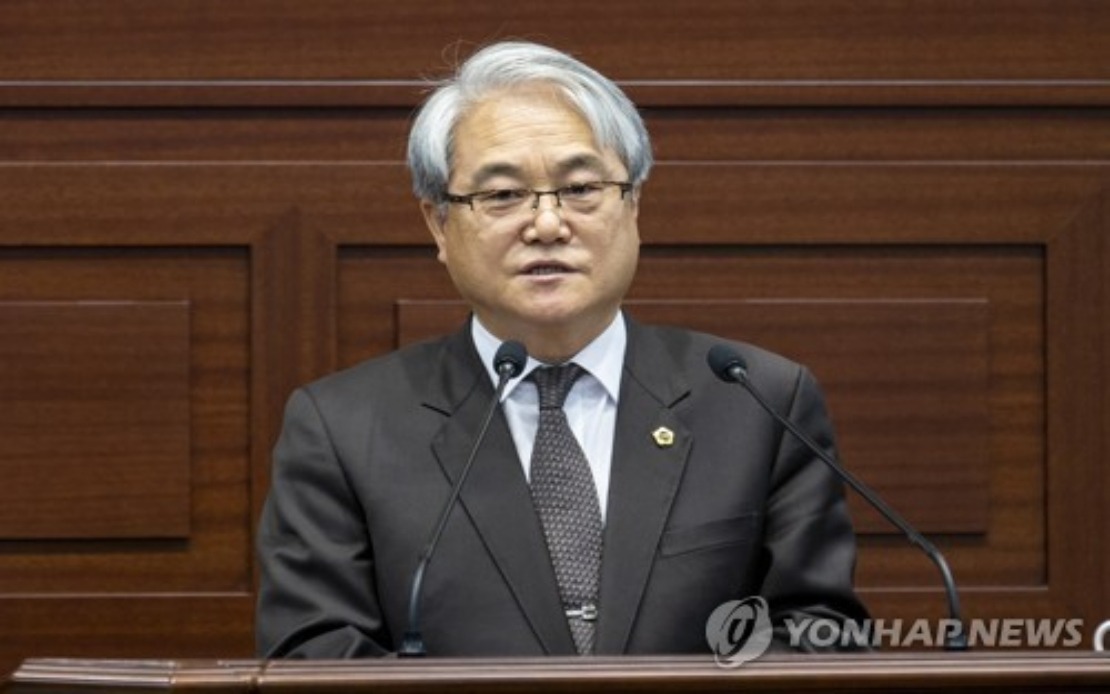
A former leader of Cheongdo County in southeastern South Korea has been found dead while under investigation for corruption-related offences, according to local police and media reports. Kim Ha-soo's body was discovered on a mountainside early Monday morning by rescue personnel, who also recovered a handwritten note apparently left by the deceased. The discovery marks a dramatic conclusion to a high-profile scandal that has exposed questionable practices within local government administration in the region.
Investigators had been examining allegations that Kim, who served as county chief from 2022 until his resignation earlier this year, accepted unlawful payments from a government employee in return for facilitating career advancement. The arrangement represents a breach of public trust and violates South Korea's stringent anti-corruption regulations that govern the conduct of elected and appointed officials. Such quid pro quo arrangements undermine meritocratic principles within public service and erode public confidence in institutions designed to serve the broader community fairly and transparently.
The case extends beyond simple bribery allegations. Authorities had previously referred Kim to prosecutors for investigation into a separate incident in January, where he was accused of unlawfully entering the residence of a nursing home director without permission. The multiple charges suggest a pattern of questionable behaviour spanning different areas of misconduct, from financial impropriety to violations of personal property rights. These allegations would have subjected Kim to considerable legal jeopardy had the investigation progressed through the formal justice system.
Significantly, the individual suspected of delivering the bribe to Kim had already been found dead under separate circumstances, further complicating the investigation and potentially hampering efforts to establish the full scope of the alleged corrupt dealings. The death of this key witness removed a crucial source of testimony that might have clarified the mechanics and extent of the scheme. Such sudden deaths during active corruption inquiries have raised questions within South Korea about the pressures facing those implicated in high-level misconduct cases.
The incident reflects broader concerns about accountability within South Korea's local government system. While the nation has made substantial progress in combating corruption compared to previous decades, provincial administration continues to present challenges in oversight and transparency. County-level officials often exercise considerable discretionary power over personnel decisions, construction projects, and resource allocation, creating environments where improper relationships can flourish if monitoring mechanisms prove inadequate.
For Malaysian observers, the case offers instructive parallels regarding the importance of robust institutional checks on local authority. Both countries have federal systems where sub-national administrators wield significant power, and both have experienced recurring scandals involving abuse of promotional authority and acceptance of unlawful inducements. The South Korean experience underscores how investigative agencies must develop sophisticated capacity to detect and prosecute complex corruption schemes, particularly those involving quid pro quo arrangements that may be deliberately obscured.
The circumstances surrounding Kim's death—particularly the recovery of a handwritten note—remain subject to investigation, though police have not disclosed detailed findings. The apparent suicide during an active criminal inquiry represents a tragic conclusion that adds psychological dimension to the scandal. Such outcomes raise difficult questions about the intense pressure facing officials caught in corruption investigations and whether existing support systems adequately address the mental health implications of public exposure and legal liability.
South Korea has implemented extensive anti-corruption measures in recent years, including mandatory asset declarations, whistleblower protection programmes, and specialised prosecution units focused on white-collar crime. Nevertheless, cases like the Cheongdo County situation demonstrate that determined individuals may still attempt to exploit system vulnerabilities, particularly at local administrative levels where oversight resources may be thinner. The incident will likely prompt renewed examination of safeguards governing personnel decisions within provincial governments.
The broader implications extend to public sector ethics training and institutional culture within local government. Senior administrators must establish clear standards of conduct and create environments where subordinates feel empowered to report suspicious activities without fear of retaliation. Transparent promotion procedures, competitive hiring processes, and regular rotation of officials in positions offering substantial discretionary authority can collectively reduce opportunities for corrupt arrangements to take root and persist undetected.
For Southeast Asian governments grappling with similar challenges, the Cheongdo case reinforces critical lessons about the necessity of independent oversight bodies, competitive civil service examinations, and clear separation between political patronage and merit-based advancement. Investment in investigative capacity, protection for witnesses and whistleblowers, and comprehensive asset monitoring systems creates conditions making corruption costlier and riskier for potential offenders. South Korea's experience suggests that building effective anti-corruption infrastructure requires sustained institutional commitment extending across multiple electoral cycles.

