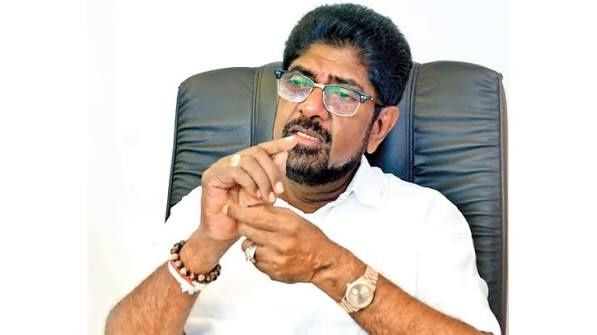
Former Sri Lankan minister Keheliya Rambukwella was taken into custody on Tuesday following allegations that he conspired to steal an ancient carved granite stone from the palace of Veera Parakrama Narendrasinghe, the final Sinhala king to rule the island until 1739. The Commission to Investigate Allegations of Bribery or Corruption (CIABOC) initiated the arrest in connection with the December 2022 disappearance of what is known locally as a moonstone—a significant ornamental stepping stone that formed part of the symbolic entrance architecture to the royal residence.
The moonstone, a heavy circular piece of granite bearing intricate carvings, held considerable historical and cultural value for Sri Lanka. Its theft represented not merely the loss of a material object but a breach of the nation's heritage at a time when institutional systems were under severe strain. The palace where the stone originated serves as a tangible link to Sri Lanka's pre-colonial past, making the artefact's removal a matter of national concern that extended beyond typical theft cases. CIABOC's involvement signalled that authorities viewed the incident as involving high-level corruption rather than opportunistic criminality.
According to the commission's findings, Rambukwella did not act alone but rather orchestrated the stone's removal through conspiratorial arrangements with unidentified accomplices. More troubling for investigators was evidence that he subsequently obstructed police inquiries into the theft, leveraging his ministerial position to impede the course of justice. Such obstruction charges carry particular weight in anti-corruption proceedings, as they suggest deliberate attempts to shield culprits from accountability and undermine investigative procedures.
Beyond the moonstone allegations, Rambukwella faces a separate charge involving the misappropriation of government resources for private commercial purposes. The commission established that he had employed six individuals using state funds for his own business operations—a clear breach of public sector ethics and fiduciary responsibility. This parallel charge demonstrates a pattern of conduct in which official position was allegedly leveraged for personal financial gain, a recurring theme in contemporary Sri Lankan political scandals.
The arrest occurs against the backdrop of a more serious ongoing court case in which Rambukwella confronts accusations related to his tenure as health minister. During his time in that portfolio, he allegedly authorised the procurement of pharmaceutical products that proved to be counterfeit, including a life-saving cancer medication that investigation revealed to contain merely water. Such negligence in a healthcare context carries consequences far beyond financial loss, potentially contributing to patient deaths and suffering during an already critical period for Sri Lankan medicine supplies.
The counterfeiting scandal encompassed a broader procurement fraud affecting state hospitals throughout the nation. Police testimony submitted to the court has implicated multiple senior officials within the health ministry in the scheme, suggesting this was not an isolated incident but rather a systematic exploitation of the healthcare system during a period of national vulnerability. The involvement of numerous officials points to possible coordination at institutional levels, raising questions about oversight mechanisms and accountability structures within the ministry.
Rambukwella's role in the health ministry coincided with one of Sri Lanka's most severe economic crises in recent history. When the country defaulted on its US$46 billion foreign debt in April 2022, following an official bankruptcy declaration, the nation experienced an acute and prolonged shortage of essential medicines. The resulting public health emergency created desperation within the system, potentially motivating officials to source medications through irregular channels, including the counterfeit products that eventually reached patients.
The convergence of these multiple allegations against Rambukwella illustrates the pervasive nature of institutional corruption during Sri Lanka's economic collapse. Rather than representing isolated lapses in judgment, each charge reflects deliberate misuse of authority—whether through theft of national heritage, misappropriation of public funds, or procurement fraud affecting vulnerable patients. The progression from one allegation to another suggests a pattern of behaviour in which ministerial office was treated as a vehicle for personal enrichment and advantage.
For Malaysia and other Southeast Asian nations monitoring governance standards in the region, the Rambukwella case offers instructive lessons about the dangers of institutional weakness during economic crises. When countries face severe financial pressure and public services deteriorate, the temptation for officials to exploit their positions intensifies. The case demonstrates the importance of independent anti-corruption bodies capable of investigating senior officials regardless of their former status, and the necessity of maintaining investigative momentum despite political considerations.
The arrest also reflects Sri Lanka's attempts to restore institutional credibility following years of political turmoil and governance failures. By prosecuting a former cabinet minister for offences spanning heritage theft, financial misconduct, and procurement fraud, the authorities signal commitment to accountability. However, observers note that such cases depend heavily on political will and the independence of investigative agencies, factors that have proven variable in Sri Lankan governance.
Rambukwella's detention represents a critical moment in Sri Lanka's broader anti-corruption efforts. The multiple charges consolidate evidence of systemic exploitation during a period when public institutions were overwhelmed and public trust had eroded. Whether the prosecutions result in meaningful convictions and substantive reforms remains uncertain, but the investigation's scope suggests authorities are pursuing high-level accountability rather than superficial gestures.

