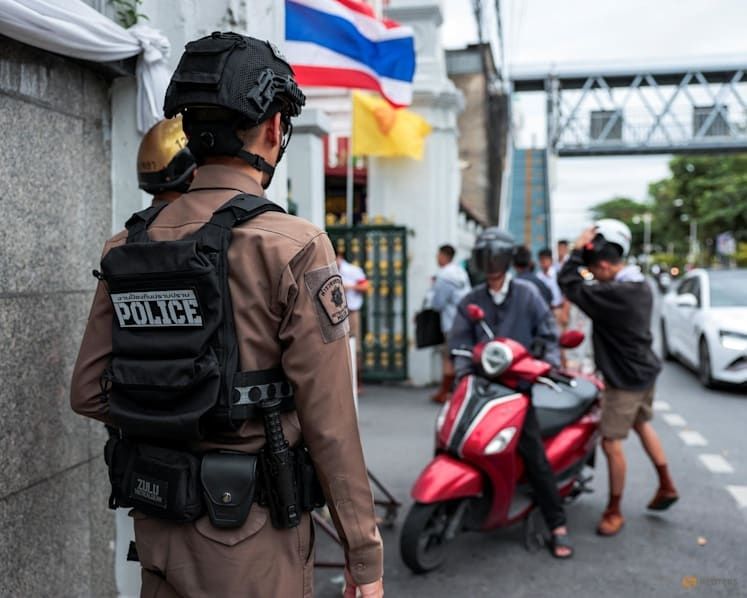
Police in Thailand's Nonthaburi province arrested a former member of parliament on Monday in connection with a shooting that left two people injured, according to authorities. The incident marks the second firearms incident to strike the region in as many days, underscoring deepening concerns about gun violence and loose regulations in Southeast Asia's gun-heavy nation.
Chalong Riewrang, who previously served as a local MP representing Prime Minister Anutin Charnvirakul's ruling party, was detained and brought in for questioning at Nonthaburi police headquarters. Police chief Dejrapee Kongdee confirmed the arrest and said investigators were working to establish the gunman's motivation for the alleged attack.
The targets of the alleged shooting included the chairman of the Nonthaburi local government administration, who sustained serious injuries requiring hospital treatment. A second victim, identified as the official's personal driver, was also hospitalised following the shooting, though details about the extent of his injuries were not disclosed by police at the time of the announcement.
The geographical and temporal proximity of this incident to Friday's school massacre has intensified scrutiny on Thailand's firearms environment. Just days before Chalong's arrest, a fourteen-year-old boy opened fire in the same Nonthaburi region, killing his elderly grandparents at their home before proceeding to a school campus where he fatally shot six additional people. The teenager subsequently took his own life, concluding the rampage that shocked the nation.
Reports from local Thai media outlets suggest the dispute that allegedly prompted Chalong to open fire may have originated from personal grievances rather than political motivations. The police chief, however, declined to elaborate on these preliminary assessments or provide additional context regarding what may have triggered the confrontation. The reluctance to discuss motive details at this early stage is standard procedure while the investigation remains active.
Thailand maintains one of the region's most permissive gun ownership frameworks, with approximately ten million firearms in private hands circulating throughout the country. This figure translates to roughly one weapon for every seven residents, a penetration rate significantly higher than neighbouring Southeast Asian nations and indicative of the structural challenges authorities face in regulating the firearms supply.
The succession of shooting incidents within days of each other has rekindled long-dormant policy discussions about tightening Thailand's gun laws. Government officials have publicly committed to implementing stricter regulations in the wake of Friday's tragedy, pledging comprehensive legislative action to curb access and establish more rigorous licensing requirements. However, Thai authorities have made similar commitments following previous mass shooting incidents without translating those promises into effective legislative change, a pattern that has frustrated public safety advocates.
The arrest of a former elected official on firearms-related charges carries particular symbolic weight in Thailand's political context. That Chalong previously represented Prime Minister Charnvirakul's party, which currently holds executive power, adds an additional layer of scrutiny to the incident and raises questions about accountability within political circles. The optics of an MP from the ruling coalition being detained on such serious charges may complicate the government's efforts to present a credible commitment to gun reform.
For Malaysian observers, Thailand's ongoing struggles with firearm regulation offer instructive parallels and contrasts with local conditions. While Malaysia maintains stricter gun ownership protocols than Thailand, the persistence of illegal firearms and occasional shooting incidents demonstrate that neighbouring countries' governance challenges can spill across borders through trafficking networks. The frequency of such incidents in Thailand underscores why cross-border cooperation on weapons trafficking and regional gun smuggling remains essential for Southeast Asian security.
The investigation into Chalong's alleged actions continues as police work to establish the precise circumstances and determine whether additional charges may apply. The case will likely consume significant media and political attention in Thailand over coming weeks, particularly if the investigation reveals connections to broader governance or political disputes. Officials have indicated they remain committed to pursuing the matter thoroughly.

