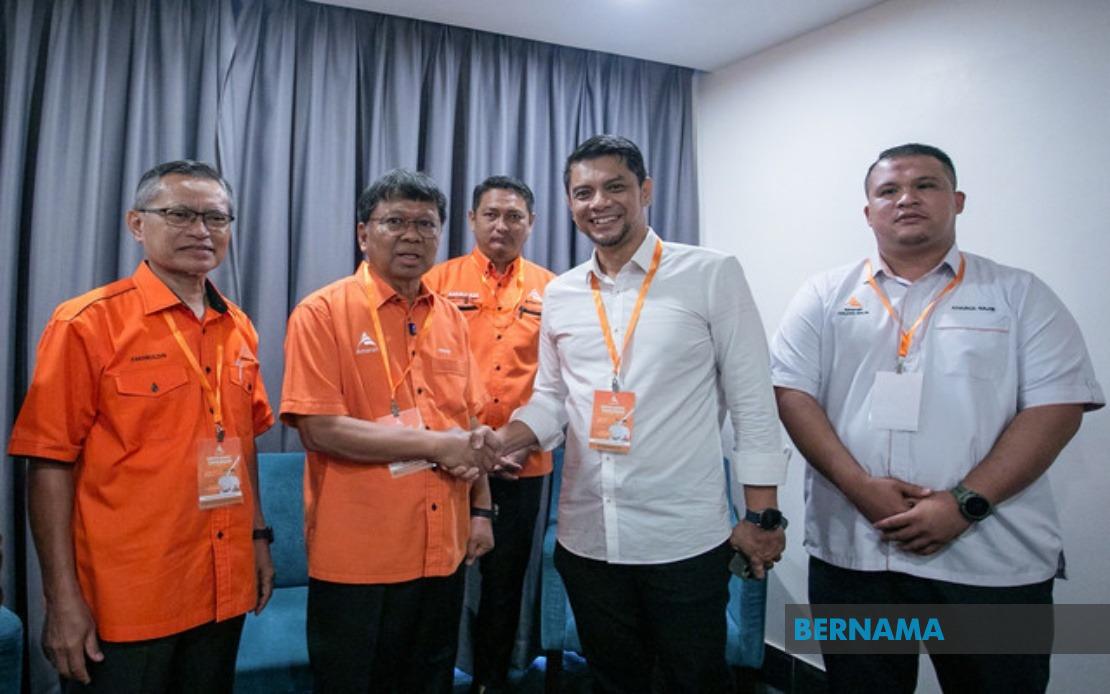
Hasnul Zulkarnain Abd Munaim, the former representative for the Titi Serong state constituency, has been formally readmitted to Parti Amanah Negara (Amanah) following approval from the party's senior decision-making bodies. The reinstatement came after the party's National Management Meeting and National Leadership Meeting held on June 18, marking a significant development in Perak's political landscape where factional realignments continue to reshape allegiances and party memberships.
According to Datuk Asmuni Awi, who chairs Amanah's Perak division, the decision to welcome back Hasnul Zulkarnain reflected a strategic shift in the party's approach toward former members seeking repatriation. The party leadership had previously hesitated to process such applications, but circumstances have now evolved sufficiently to make reconsidering these requests both feasible and beneficial. Asmuni observed that several established political organisations across Malaysia have similarly adopted permissive readmission policies in recent years, suggesting this reflects a broader trend among major parties.
Hasnul Zulkarnain's departure from Amanah occurred during an exceptionally turbulent period in Malaysian politics. In March 2020, he joined two other Perak state legislators—Yong Choo Kiong from the Tronoh seat and A. Sivasubramaniam representing Buntong—in declaring themselves independent. This move followed the dramatic collapse of the Pakatan Harapan government and the establishment of the Perikatan Nasional administration in Perak. The three legislators' simultaneous exit created significant uncertainty about Amanah's viability in the state, a concern that has gradually diminished as the party has regrouped and stabilised its membership.
After resigning from Amanah in early 2020, Hasnul Zulkarnain joined Bersatu in July of that year, aligning himself with the newly ascendant Perikatan Nasional coalition. His tenure with Bersatu lasted the entire interim period, during which Malaysian politics underwent several dramatic transformations, including the collapse of the PN government at the federal level in 2022 and the subsequent return of a Pakatan Harapan-led administration. These shifts in the broader political environment appear to have prompted Hasnul Zulkarnain to reconsider his position and explore the possibility of reconciliation with his original party.
The readmission of former members carries particular significance for Amanah at present, given that the party faces ongoing challenges in strengthening its presence across Malaysian states. Asmuni emphasised that many legislators and cadres who previously departed Amanah continue to harbour ideological alignment with the party's core principles and mission. The party's leadership calculates that readmitting such individuals can reinvigorate grassroots mobilisation and expand the party's electoral reach, particularly in constituencies where historical support remains latent but untapped.
Hasnul Zulkarnain himself responded positively to his reinstatement, interpreting the party's decision as a demonstration of confidence in his capacity to serve Amanah's interests moving forward. His statement reflected the diplomatic language typically employed in such reconciliations, emphasising loyalty and shared commitment to the party's fundamental objectives. As a former state youth leader within Amanah's organisational structure, his return also represents the recovery of experienced personnel who understand the party's internal mechanisms and electoral dynamics.
The Perak political context gives this development particular relevance for Malaysian observers tracking coalition dynamics in the states. Perak has emerged as a crucial testing ground for inter-party cooperation and coalition stability, with the state legislature frequently serving as a barometer for broader trends in Malaysian politics. Amanah's efforts to consolidate membership and rebuild party structures in Perak reflect its determination to maintain relevance in an intensely competitive political environment where party switching and factional realignments remain commonplace.
Hasnul Zulkarnain's journey through multiple parties over the past four years illustrates a pattern increasingly visible among Malaysian politicians at the state and federal levels. The ease with which politicians transition between organisations—from Amanah to independence to Bersatu and back to Amanah—raises persistent questions about the nature of party loyalty and ideological commitment in contemporary Malaysian politics. Whether such movements reflect substantive shifts in conviction or opportunistic responses to changing electoral calculations remains a matter of considerable debate among political analysts and observers.
The readmission also signals Amanah's confidence that the party has stabilised sufficiently to absorb returning members without triggering internal discord or factional disputes. Party leaders appear to have calculated that accepting former members strengthens rather than weakens organisational cohesion, particularly as Amanah prepares for the next cycle of elections. The endorsement of Hasnul Zulkarnain's return through formal national-level proceedings rather than through ad hoc decisions underscores the party's intention to establish clear, transparent protocols governing membership applications from those who previously departed.
Looking ahead, Amanah's readiness to readmit former members may encourage other politicians who left the party during the tumultuous 2020 period to explore their own reinstatement. The party's explicit framing of this change as a strategic recalibration rather than an abandonment of prior positions suggests that additional applications can be expected. Such developments will likely shape intra-party dynamics in Perak over the coming months and could influence the broader balance of forces in the state legislature as Malaysia moves toward electoral contests at both state and federal levels in the years ahead.