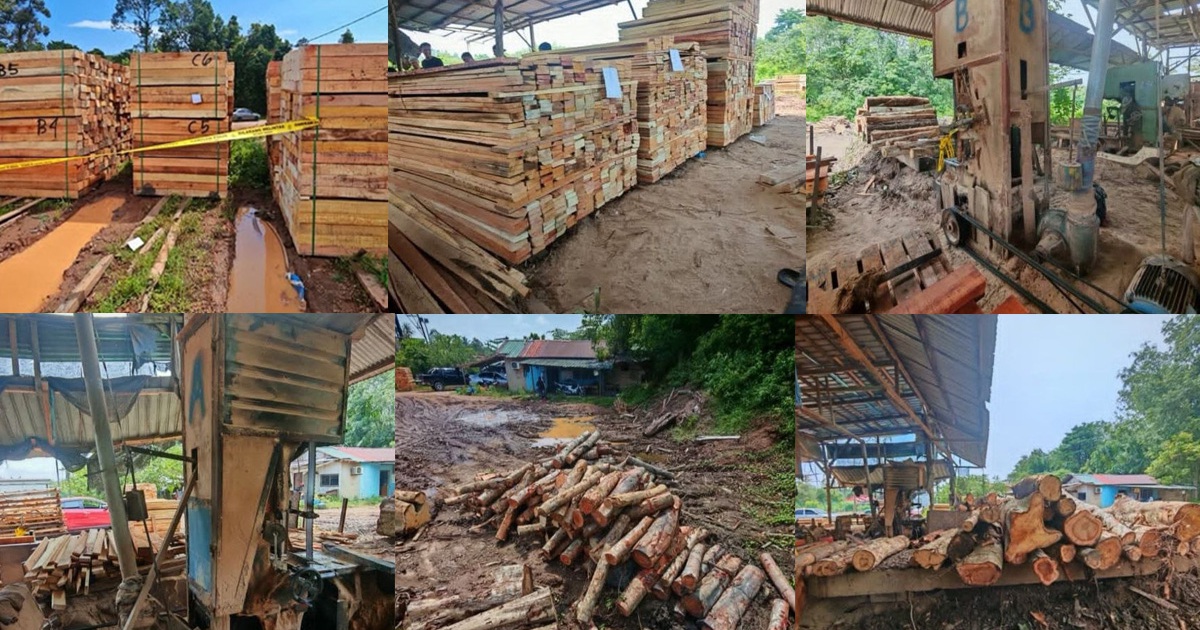
A coordinated enforcement operation in Kelantan's Tanah Merah district has resulted in the arrest of four individuals linked to illegal timber processing activities. The raid, conducted in Kampung Bukit Kechik, targeted an unlicensed sawmill operation that authorities say had been functioning without proper authorization. The main suspect, identified as the sawmill operator, was detained along with three workers found at the premises, marking another significant blow against unauthorized forestry operations in the state.
The scale of the seizure underscores the commercial significance of illegal timber processing networks in the region. Enforcement teams recovered equipment and processed timber materials totalling RM600,000 in estimated value, a haul that suggests the operation had been generating substantial revenue through unregulated channels. The combination of machinery and raw materials indicates an established operation rather than a small-scale or ad-hoc venture, pointing to potentially systematic violations of forestry regulations.
Kelantan has long been a focal point for timber-related enforcement activities across Malaysia. The state's extensive forest resources and historical reliance on timber industries create both economic opportunities and regulatory challenges for authorities. Illegal timber processing represents a significant concern not only from environmental conservation perspectives but also as a source of lost tax revenue and unfair competition for licensed operators who invest in compliance and regulatory adherence. The frequency of such raids reflects ongoing tension between informal economic activities and formalized regulatory frameworks.
The distinction between licensed and unlicensed operations carries substantial legal and economic weight. Licensed sawmill operators invest in infrastructure, obtain proper permits, pay applicable fees and taxes, and operate under strict environmental and safety guidelines. Unlicensed facilities bypass these costs entirely, creating significant competitive disadvantages for legitimate businesses while simultaneously depriving the state of legitimate revenue streams. This raid demonstrates that enforcement agencies continue to prioritize closing these operational gaps.
The arrested sawmill operator and workers now face questioning regarding the source of their timber supplies and the distribution channels for processed materials. Authorities typically investigate whether logs were obtained through illegal logging or whether materials from licensed sources were being processed without authorization. The supply chain angle is particularly important in understanding the broader ecosystem of timber-related violations, as unauthorized processing operations often exist to serve grey or black market demand from construction contractors, furniture makers, and other downstream industries.
From an environmental standpoint, unlicensed sawmill operations pose particular risks given their tendency to operate without adherence to sustainable forestry principles. Without proper oversight, these facilities may process timber from protected areas or endangered tree species, contributing to biodiversity loss and ecological degradation. The lack of environmental impact assessments and forestry management protocols means these operations function purely for short-term profit extraction without consideration for long-term resource sustainability.
The enforcement success reflects collaboration between various regulatory bodies responsible for forestry oversight in the state. Coordinated raids of this nature require intelligence gathering, inter-agency cooperation, and careful planning to ensure safe execution and comprehensive evidence collection. The timing and execution suggest that authorities had developed sufficient information about the operation's activities and location before conducting the enforcement action.
For legitimate timber industry participants in Malaysia, such enforcement actions carry important signalling value. The crackdown demonstrates governmental commitment to protecting the interests of licensed operators and maintaining fair competitive conditions. This is particularly significant for small and medium-sized enterprises that have invested substantially in obtaining proper licensing and meeting regulatory requirements. Each successful prosecution of illegal operators reduces unfair competition and strengthens the economic viability of compliant businesses.
The broader implications extend to Malaysia's international commitments regarding timber governance and environmental protection. Stricter enforcement against illegal timber processing supports the country's efforts to combat deforestation and forest-related environmental crimes. These commitments are increasingly important for market access, as consumers and trading partners in developed nations place greater emphasis on sustainably sourced timber and transparent supply chains. Reducing illegal timber processing helps Malaysia maintain its reputation in international timber trade.
The investigation phase following these arrests will likely reveal additional details about the operation's scope and network. Authorities typically examine records, financial transactions, delivery logs, and customer networks to understand the full extent of illegal processing activities. Such investigations often uncover connections to multiple locations or related operations, sometimes leading to additional enforcement actions in subsequent weeks or months.
Moving forward, the case underscores the need for sustained vigilance and resource allocation toward timber enforcement. While individual raids produce visible results, comprehensive reduction of illegal timber processing requires consistent monitoring, intelligence development, and prosecution of offenders. The RM600,000 seizure represents a single incident, but the broader pattern of enforcement activity suggests that authorities in Kelantan remain committed to protecting forest resources and maintaining regulatory integrity in the timber sector.

