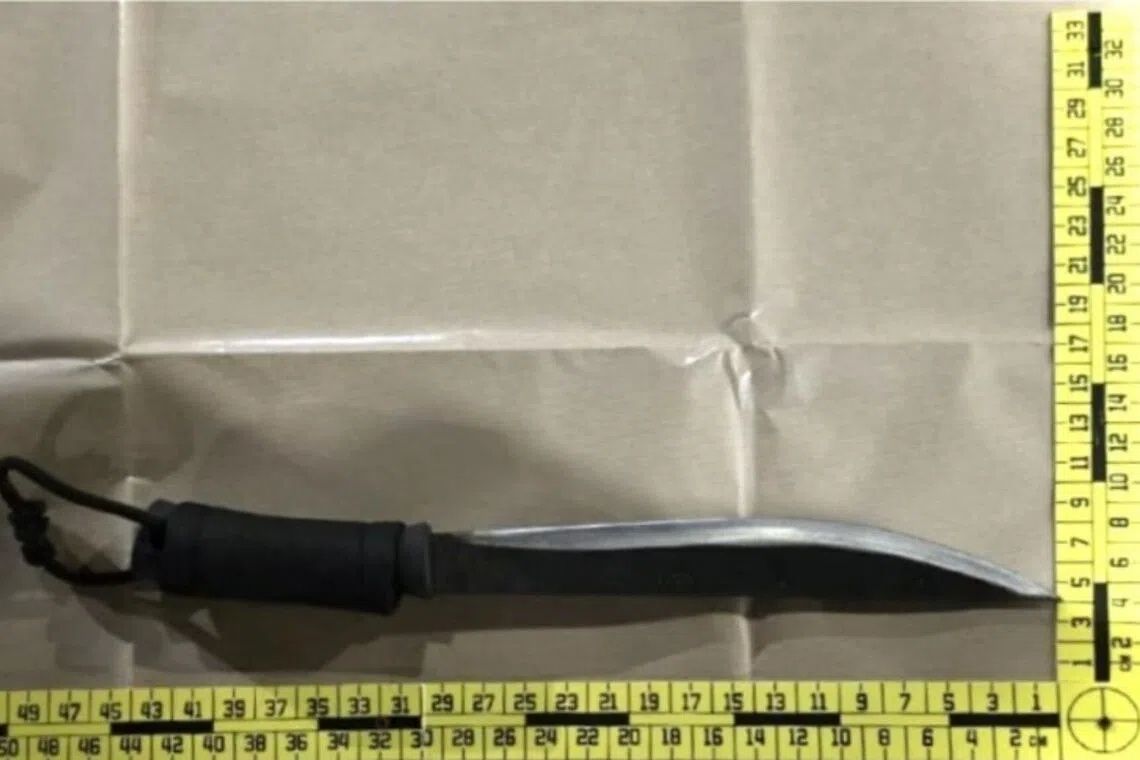
Singapore police have apprehended four individuals suspected of abducting a man and carrying an illegal weapon during an early morning incident in the city-state. The arrests followed an incident on August 4 at approximately 1.55am at a carpark on Canberra Street, where officers responded to reports of a man being threatened by a group wielding a parang, a traditional machete-like blade commonly used across Southeast Asia.
Initial police investigations revealed that the confrontation was rooted in a dispute centred on a car rental agreement between the victim and the suspects. The 38-year-old man from the group of four brandished the parang in a threatening manner and coerced the victim into his vehicle, forcing him into the front passenger seat. This escalated incident marks a troubling intersection of civil disputes turning violent—a phenomenon increasingly seen across Southeast Asian jurisdictions where contractual disagreements spill into criminal territory.
The abduction was not an isolated threat. The victim was then driven to an undisclosed second location, with a 36-year-old male accomplice occupying the rear seat of the vehicle. The involvement of two separate males in transporting and restraining the victim suggests a degree of premeditation and coordination, transforming what might initially appear as a heated altercation into a more serious criminal enterprise involving multiple actors with distinct roles.
Police operations intensified when officers from Woodlands Police Division located the victim's vehicle. Upon spotting the approaching officers, the 38-year-old driver made a desperate attempt to evade capture, accelerating the vehicle and triggering a pursuit through the residential streets of northern Singapore. The chase culminated when the vehicle collided with a lamp post at the intersection of Woodlands Avenue 7 and Woodlands Avenue 10, effectively immobilizing it and preventing further flight.
The collision created a critical moment during which the group fractured. The 36-year-old male suspect abandoned the vehicle and fled the scene on foot, initiating a secondary search operation for authorities. The 38-year-old driver, however, remained at the scene and was immediately arrested by officers. Police recovered the parang from him at the point of arrest, securing crucial physical evidence that corroborated the original complaint and substantiated the weapon possession charge.
Subsequent investigative work proved essential in apprehending the remaining suspects. Through follow-up inquiries and enforcement operations, police located and arrested the 36-year-old man who had initially escaped on foot, along with two women aged 30 and 38. The inclusion of female suspects in what appeared to be a primarily male-driven abduction raises questions about the organisational structure of the group and the roles women played in facilitating or executing the alleged crime.
The legal consequences for the primary suspect are severe. The 38-year-old man faced court proceedings on August 5 on charges encompassing both abduction and possession of a scheduled weapon—a classification under Singapore's arms legislation that designates certain bladed instruments as prohibited without proper authorization. Conviction on either charge carries substantial penalties, including imprisonment, fines, and caning, with the possibility of cumulative sentences for concurrent convictions. Singapore's criminal code maintains notably stringent sentencing frameworks for violent offences, particularly those involving weapons, reflecting the nation's zero-tolerance approach to armed crime.
Investigations into the 36-year-old man and the two women remain ongoing, indicating that police are still establishing the precise nature of each individual's involvement and culpability. The distinction between those who directly perpetrated violence and those who facilitated, planned, or provided material support will likely determine the trajectory and severity of charges they ultimately face. The extended investigation timeline also suggests police are exploring potential connections to organized networks or previous incidents involving these suspects.
This incident underscores a broader concern across Southeast Asia regarding how commercial disputes—particularly those involving the growing car rental and sharing economy sectors—occasionally escalate into violent confrontations. The accessibility of traditional weapons like parangs, combined with inadequate conflict resolution mechanisms, creates a volatile environment where financial disagreements transform into criminal conduct. For Malaysian observers, the case serves as a cautionary reminder of how neighbouring jurisdictions handle such offences with considerable severity, and the importance of pursuing civil remedies through proper legal channels rather than resorting to intimidation and force.
The Singapore Police Force's rapid response and investigation capabilities proved instrumental in resolving this case efficiently, preventing potential escalation and ensuring swift apprehension of suspects. The recovery of the weapon and swift arrest of the primary suspect likely prevented further victimization and demonstrated the effectiveness of coordinated enforcement operations in the city-state's densely populated urban environment.

