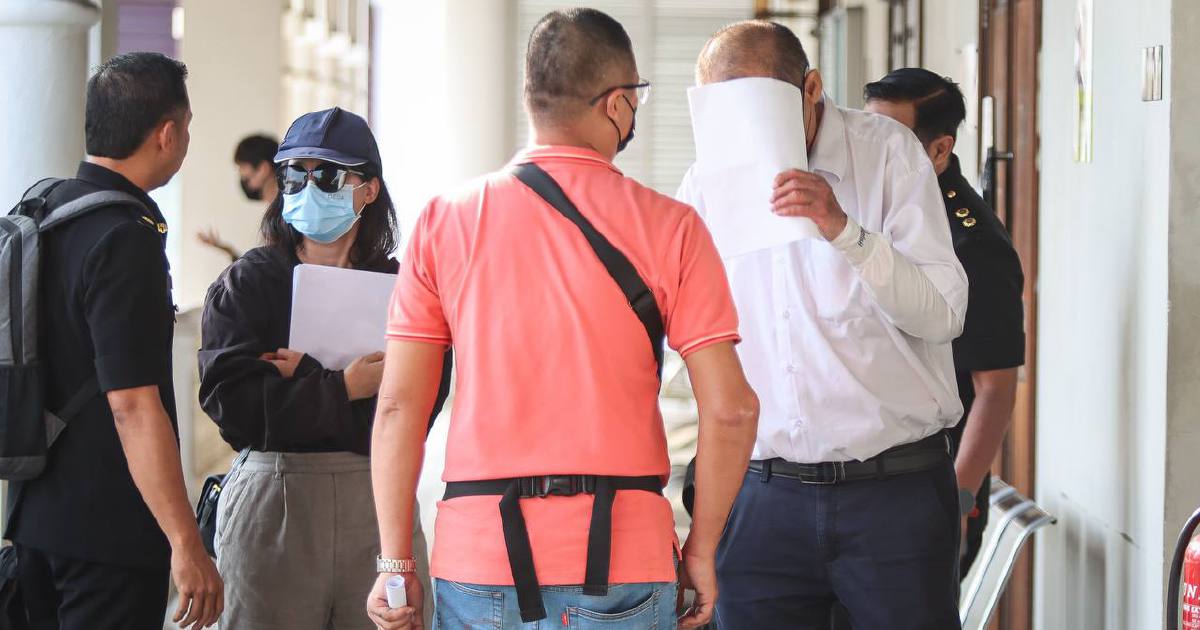
Four business owners appeared before the Sessions Court in George Town today, facing a combined 30 charges of filing fraudulent documents to secure government subsidies under the Daya Kerjaya 2.0 incentive scheme. The prosecution move marks a notable escalation in enforcement efforts against benefit fraud in Malaysia, where government assistance programmes continue to be targets for misappropriation despite heightened scrutiny in recent years.
The Daya Kerjaya 2.0 initiative, a federal assistance programme designed to support small and medium-sized enterprises and self-employed individuals during economic challenges, has become the focus of increased regulatory attention. The scheme operates under the purview of government agencies tasked with distributing economic relief to legitimate business operators, making it particularly vulnerable to coordinated attempts to extract funds through dishonest means.
Fraud involving government assistance schemes represents a persistent challenge for Malaysian authorities attempting to maximise the impact of public resources. When business owners file false documentation to claim incentives they are not entitled to receive, funds intended for genuinely struggling enterprises are diverted, undermining the programme's core objective and eroding public confidence in government support systems. The George Town case illustrates how fraudsters exploit administrative processes by submitting fabricated records and misleading information to bypass verification mechanisms.
The 30 charges distributed among the four defendants suggest a systematic approach rather than isolated infractions. Such patterns often indicate either coordinated schemes involving multiple parties or individual operators who have repeatedly attempted to exploit the system across multiple submissions. Authorities typically detect such schemes through cross-referencing applications, financial audits, and complaints from competing businesses, as legitimate operators have strong incentives to report unfair practices that disadvantage them.
Enforcement actions of this nature carry significant implications for legitimate enterprises attempting to access government support. Fraud cases can trigger tighter verification procedures, longer processing times, and more stringent documentation requirements for all applicants, creating compliance burdens that burden honest business owners seeking assistance they legitimately qualify for. Balancing robust fraud detection with accessible pathways for genuine claimants remains a persistent challenge for policy makers.
The prosecution's decision to pursue charges through the Sessions Court indicates the seriousness with which authorities regard these allegations. Multiple counts against individual defendants can result in substantial penalties including imprisonment and substantial fines, particularly when combined offences demonstrate deliberate intent to defraud public institutions. Such sanctions serve both as punishment and as deterrence messaging to the broader business community.
Penang, as Malaysia's second-largest economic hub and home to substantial manufacturing and services sectors, has experienced considerable demand for government assistance schemes. The concentration of business activity in the state creates both legitimate demand for economic support and opportunities for sophisticated fraud attempts by operators familiar with administrative procedures and verification weaknesses.
The incident underscores ongoing vulnerabilities within government disbursement systems, despite technological improvements in recent years. While agencies have implemented electronic application platforms and automated verification checks, determined fraudsters continue finding ways to circumvent controls through document falsification, false declarations, and misrepresentation of business circumstances. Closing remaining loopholes requires continuous adaptation and investment in detection capability.
For Malaysian entrepreneurs and the broader business community, the case serves as a stark reminder that government assistance programmes operate under strict legal frameworks, and deliberate misrepresentation carries serious criminal consequences. Beyond immediate legal penalties, individuals convicted of fraud involving government schemes face reputational damage, difficulty securing future financing, and potential exclusion from accessing legitimate government support in subsequent years.
The timing of these charges comes amid broader government efforts to combat fraud and corruption across public institutions. Economic relief schemes, which distribute substantial sums across large applicant pools with compressed timelines, inherently present elevated fraud risk compared to conventional government programmes with lengthier vetting procedures. Authorities must therefore maintain vigilant oversight to protect programme integrity.
Looking forward, this prosecution may prompt the administering agencies to review their verification protocols and strengthen documentation validation processes. Enhanced cross-checking with tax authorities, bank records, and employment registers could help prevent similar incidents, though sophisticated fraudsters continuously adapt techniques in response to tightened controls. Education campaigns targeting the business community about legal consequences may also discourage future attempts.
The case also highlights the importance of public awareness regarding fraud reporting mechanisms. Competitors and industry observers who notice suspicious claims or inconsistent representations have valuable roles to play in assisting authorities to maintain programme integrity. Confidential reporting channels that protect complainants from retaliation facilitate information flow to relevant agencies.
As Malaysia's economy continues navigating challenges requiring government support initiatives, maintaining the credibility and sustainability of assistance schemes depends critically on swift enforcement against fraudsters while ensuring legitimate businesses can access help without excessive procedural burdens. The George Town proceedings demonstrate official commitment to protecting public finances from misuse while serving as cautionary examples for would-be fraudsters.

