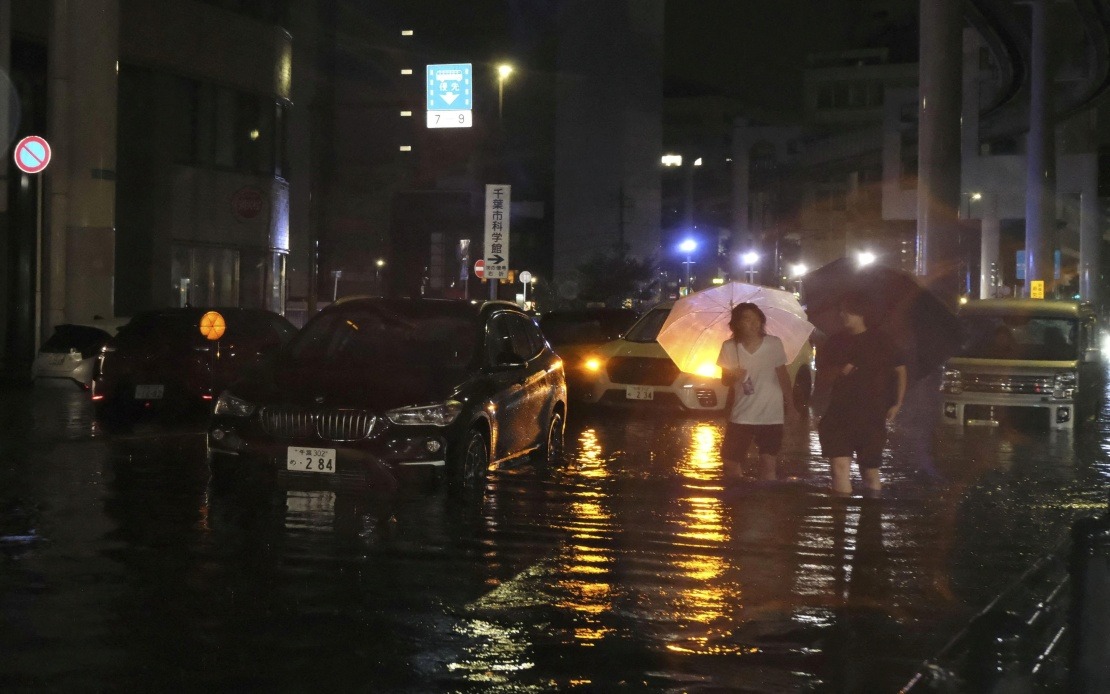
Four people have lost their lives and another remains in critical condition following an onslaught of exceptionally heavy rain that swept across Japan's Chiba Prefecture and surrounding regions on Thursday, continuing through Friday morning. The deluge proved severe enough to trigger the Japan Meteorological Agency's maximum alert classification—Level 5—for rainfall across more than one-third of municipalities within the prefecture situated immediately east of Tokyo. The unprecedented weather event overwhelmed local infrastructure and forced authorities to coordinate one of the region's largest emergency evacuation efforts in recent years.
The devastating storm emerged from a collision of atmospheric systems that created dangerously unstable conditions across eastern Japan. Warm, moisture-laden air masses flowed into the region from lower altitudes while cold air descended from above, generating the meteorological instability that unleashed the torrential downpours. This clash of air masses produced rainfall intensities that rapidly overwhelmed drainage systems and inundated roads throughout Chiba Prefecture. In the Chuo Ward district of Chiba city alone, hourly precipitation reached 115 millimetres on Thursday evening—nearly equivalent to the entire August monthly average for that locality in typical years. Such extreme concentration of rainfall in brief periods explains the rapid onset of flooding and the swift deterioration of conditions that forced emergency declarations.
The Japan Meteorological Agency simultaneously issued its highest-level landslide warning for numerous municipalities across Chiba Prefecture, with particular concern flagged for the cities of Chiba and Ichihara. These warnings reflected the agency's assessment that saturated soil conditions combined with the slope gradients common throughout the region created substantial risk of terrain collapse. Though all maximum-level warnings were subsequently downgraded by Friday morning, the precautionary approach reflected the genuine hazards posed by waterlogged ground throughout the affected areas. Officials in Chiba and Ichikawa cities urged residents to implement emergency protective measures immediately, recognizing that the situation could deteriorate rapidly if rainfall intensified further.
The evacuation response demonstrated both the scale of the emergency and the challenges inherent in relocating such large population groups on short notice. The Fire and Disaster Management Agency initially issued evacuation orders affecting more than 400,000 people across Chiba and neighbouring Ibaraki prefectures as the situation reached its peak severity. By early Friday morning, approximately 126,000 people remained under active evacuation orders across the two prefectures, indicating that while conditions had stabilized somewhat, substantial portions of the population could not safely return to their residences. The Cabinet Office coordinated the opening of more than 200 evacuation centres distributed across Chiba, Ibaraki, Saitama, and Gunma prefectures to accommodate displaced residents.
Urban infrastructure across the region sustained considerable damage during the onslaught. In Chiba city itself, the extreme pressure from accumulated floodwaters forced water to gush violently from underground sewer access points, creating hazardous conditions at street level. Residents waded through knee-deep flooding as they attempted to navigate the inundated streets, many struggling to reach their homes or evacuation centres during the worst of the precipitation. The Chiba prefectural government building itself became an impromptu shelter, accommodating approximately 1,800 stranded commuters who found themselves unable to reach their normal destinations due to transport disruptions and unsafe conditions throughout the city.
The electrical infrastructure serving the region also succumbed to the weather's destructive force. Tokyo Electric Power Company Holdings Inc., through one of its operational subsidiaries, reported that power outages at their peak magnitude affected around 45,000 households throughout Chiba Prefecture. Such widespread loss of electrical service compounded the emergency situation, disrupting communication systems, water pumping stations, and domestic lighting precisely when residents needed these utilities most acutely. Restoration of power proved complicated by the persistent rainfall and hazardous conditions that prevented utility workers from safely accessing and repairing damaged infrastructure.
For Malaysian observers, this event underscores the increasingly severe meteorological challenges confronting densely populated regions of East Asia, particularly as climate patterns continue their documented shifts. Japan's sophisticated early warning systems and established disaster response protocols, developed through centuries of managing typhoons and heavy precipitation events, represent the current gold standard for urban flood management. However, even these proven systems struggled to fully mitigate the damage from Thursday's extreme rainfall event. The concentration of critical infrastructure, transportation networks, and residential populations within vulnerable flood-prone zones creates inherent risks that expand alongside urbanization and development pressures.
The implications extend directly to Southeast Asian nations including Malaysia, which share similar tropical and subtropical climatic characteristics and face comparable urban flooding challenges. As rainfall intensity increases regionally, the experiences of Japanese cities confronted by extreme precipitation offer valuable operational lessons for Malaysian emergency management authorities. The speed with which evacuation orders must be issued, the capacity requirements for shelter facilities, and the necessity of pre-positioned emergency resources all provide relevant benchmarks for Malaysian planners contemplating regional flood preparedness.
Authorities indicated that heavy rainfall would likely persist throughout Friday within Chiba Prefecture and neighbouring areas, suggesting that the emergency phase could extend beyond the initial critical hours. The meteorological agency maintained weather monitoring stations throughout the region to provide updated guidance as conditions evolved. Such sustained attention to meteorological developments reflects recognition that secondary hazards including saturated slope failures and infrastructure failures could emerge in the storm's aftermath. Residents across eastern Japan faced the prospect of extended disruption to normal activities as roads dried, power systems were restored, and preliminary damage assessments began.

