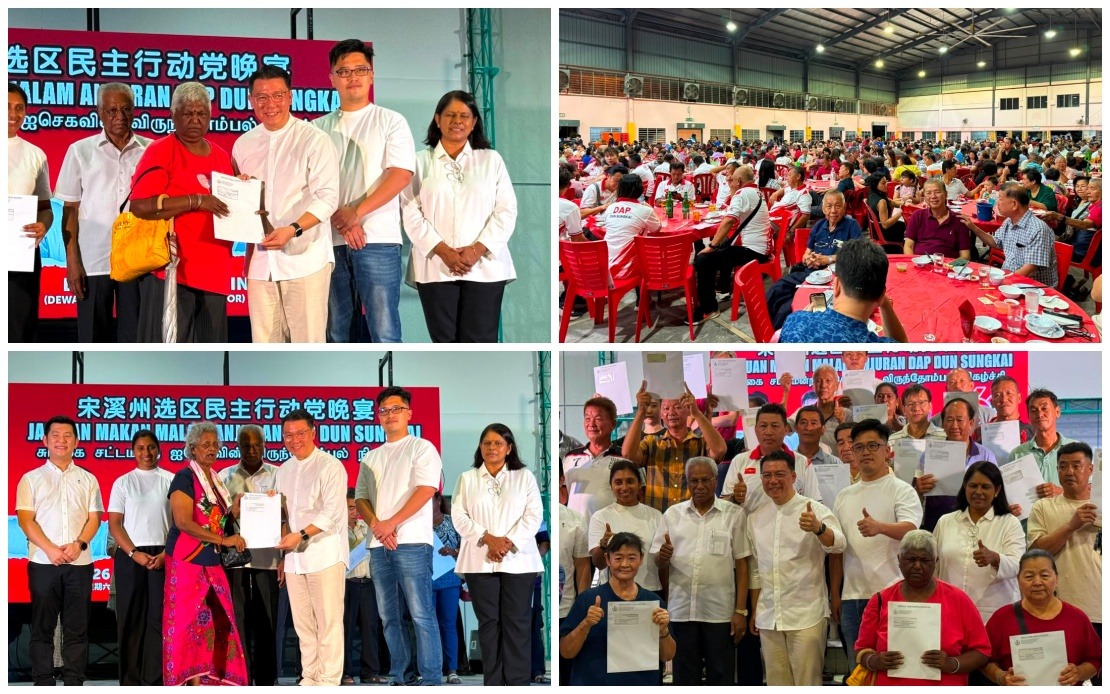
A protracted housing crisis affecting 120 families across the Sungkai and Kuala Bikam areas has finally reached resolution, with Housing and Local Government Minister Nga Kor Ming distributing land grants to the recipients at a community dinner. The settlement, which had languished unresolved for more than four decades, represents a significant milestone for residents who have long awaited formal recognition of their residential claims and security of tenure.
The resolution carries symbolic weight beyond its immediate beneficiaries. Nga characterised the achievement as emblematic of the MADANI Government's governing philosophy, which emphasises inclusive development that transcends ethnic and socioeconomic divisions. His remarks highlighted a deliberate policy orientation toward ensuring no segment of the Malaysian population experiences exclusion or marginalisation in the nation's development trajectory. This framing positions housing security not merely as a technical infrastructure issue but as a fundamental component of social cohesion and equal citizenship.
The land grant distribution occurred during the DAP Sungkai state constituency's 60th anniversary dinner, which drew more than 1,200 attendees from diverse community backgrounds. This choice of venue underscores the political significance attached to the resolution, linking the achievement to the ruling coalition's broader agenda of demonstrating responsiveness to grassroots concerns. The scale of attendance suggests the issue resonated across multiple constituencies and demographic groups within the Perak region.
Nga extended formal recognition to Sungkai assemblyman Datuk A. Sivanesan and the network of civil servants instrumental in navigating the resolution process. The acknowledgment reflects an understanding that such prolonged disputes typically require sustained bureaucratic effort and political will to overcome institutional inertia. The four-decade timeline implies that previous administrations either deprioritised the issue or lacked mechanisms to implement effective solutions, making the current resolution a point of differentiation for the incumbent government.
The minister contextualised the land grant initiative within a broader policy architecture targeted at the Indian community, a demographic group that has historically experienced disproportionate housing insecurity in Malaysia. The government has allocated RM20 million specifically for Indian settlement development and RM50 million for Tamil vernacular schools, while increasing funding for the Malaysian Indian Transformation Unit (MITRA) to RM150 million. These parallel investments suggest a comprehensive approach rather than ad-hoc interventions, potentially signalling a recalibration of resource distribution toward communities previously perceived as marginalised.
The cumulative investment figures—RM220 million when combined—represent a substantial fiscal commitment that extends beyond the immediate land grant recipients. This broader resource allocation framework addresses educational infrastructure, economic development, and community transformation, suggesting the government views housing security as one component within an integrated development strategy. For Malaysian observers tracking resource allocation patterns, this represents a notable shift in budgetary priorities compared to previous fiscal allocations.
Nga deployed language emphasising performance over perception, cautioning against the influence of what he termed racial sentiments in political evaluation. This rhetorical move attempts to reframe political assessment through a development-outcome lens rather than identity-based categories. He argued that Malaysian politics requires transition from what he characterised as destructive, outdated paradigms toward unity-focused, performance-driven governance. This argument carries particular resonance in the Malaysian context, where political discourse frequently bifurcates along ethnic and religious fault lines.
The minister's call for a politics rooted in development outcomes and collective wellbeing reflects an attempt to establish alternative vocabulary for assessing governmental legitimacy. Rather than relying on ethnic-based appeals or communal patronage networks, this framing positions policy implementation and measurable improvements in quality of life as primary legitimacy criteria. Whether such framing can shift Malaysian political discourse patterns remains uncertain, but its articulation indicates an awareness that earlier coalition governments operated under different legitimacy frameworks.
The attendance of multiple parliamentary and state representatives—including Ipoh Timur MP Howard Lee Chuan How, and various assemblypersons—demonstrates coordinated government presence across administrative tiers. This multilevel political engagement suggests the resolution carried sufficient political capital to warrant high-visibility celebration. The presence of DAP representatives, including national deputy chairman Nga himself, reflects the coalition's interest in consolidating support within constituencies where developmental grievances remain acute.
For Selangor, Perak, and other states housing substantial squatter populations, the Sungkai resolution may establish precedent expectations. If other communities perceive the land grant distribution as a replicable model, pressure may intensify on state and federal authorities to address analogous situations elsewhere. The 40-year timeframe is particularly instructive—it suggests that even with committed political will, resolving entrenched housing disputes requires extended effort and sustained resource commitment, potentially tempering expectations for rapid resolution of Malaysia's broader housing insecurity challenges.
The initiative also reflects evolving understandings of inclusive governance within Malaysia's coalition framework. Where earlier governments occasionally treated minority community development as discretionary supplementary policy, the MADANI Government's framing positions such initiatives as central to foundational governing principles. Whether this represents genuine philosophical reorientation or rhetorical repositioning designed to consolidate electoral support remains subject to interpretation, but the material allocation of land and resources demonstrates concrete outcomes regardless of underlying motivations.
Looking forward, the Sungkai case illustrates both the possibilities and limitations of addressing long-standing housing grievances within existing bureaucratic structures. The four-decade resolution timeline reveals institutional friction in processing settled communities' formal recognition, even under governments committed to addressing the issue. For Malaysian policymakers contemplating affordable housing expansion and squatter resettlement as components of broader social policy, the Sungkai experience suggests that legal clarity, dedicated political attention, and adequate resource allocation remain prerequisites for meaningful progress, rather than quick-fix solutions.

