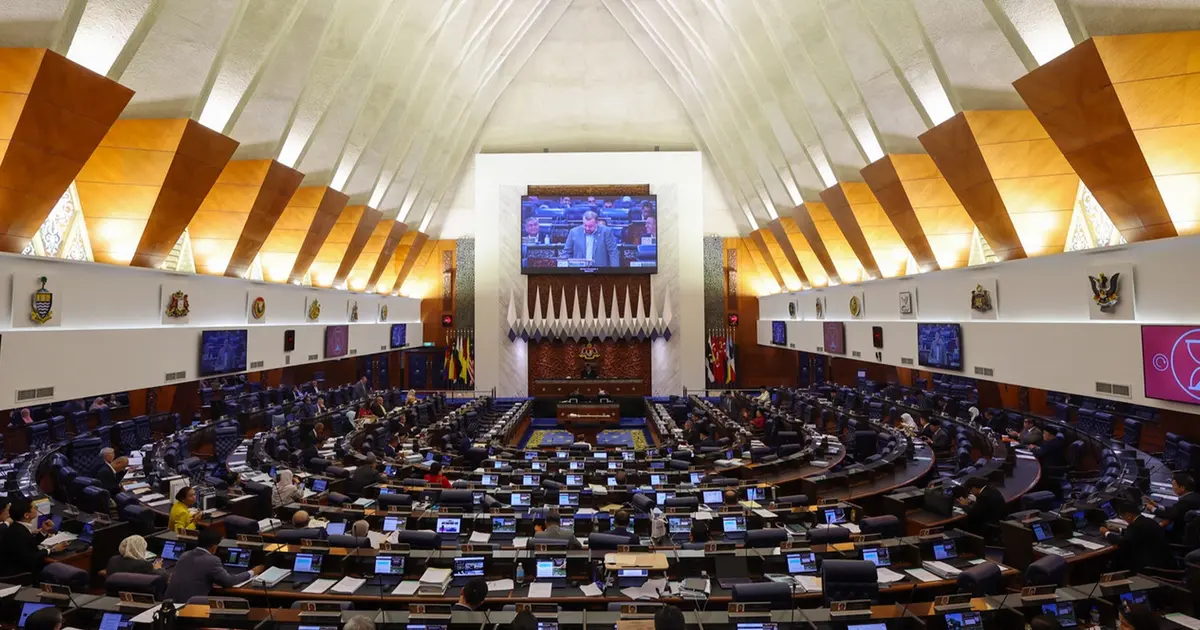
The Malaysian parliament enters a critical legislative session beginning Monday with four substantial bills commanding the attention of lawmakers, chief among them a constitutional proposal that would cap the prime ministerial tenure at a decade. The measure, which seeks to fundamentally reshape the mechanics of executive leadership in Malaysia, previously fell short of the supermajority threshold required for constitutional amendments during its most recent parliamentary sitting.
The prime minister term-limit bill has emerged as one of the most closely watched legislative initiatives in recent parliamentary proceedings. Constitutional changes in Malaysia require approval from two-thirds of members present in the Dewan Rakyat, a demanding threshold that reflects the country's cautious approach to altering foundational governmental structures. When the bill was initially presented, supporters acknowledged that securing sufficient backing represented a significant challenge, yet the measure proceeded to parliamentary debate.
The previous failure to achieve the necessary two-thirds majority underscores the deep divisions within the legislature regarding executive power constraints. Different political factions hold competing philosophies about whether formal tenure limitations would strengthen democratic institutions or potentially undermine executive effectiveness during critical periods. For Malaysian readers accustomed to the concentration of powers historically vested in the prime ministerial office, the debate touches fundamental questions about governance design and leadership succession.
International comparisons provide useful context for understanding the proposal's significance. Many Commonwealth nations and democracies worldwide impose term limits on chief executives, typically ranging from two to four consecutive terms. A ten-year cap would represent a moderate approach, allowing roughly two terms of a typical five-year government while preventing indefinite executive entrenchment. The arrangement seeks middle ground between unrestricted tenure and more restrictive limitations seen elsewhere in the region.
The timing of the bill's return to parliamentary consideration carries particular significance given Malaysia's recent political volatility. The nation has experienced multiple changes of government and shifting coalitions over the past several years, raising questions about stability and whether executive succession mechanisms require constitutional clarification. Proponents argue that codified term limits would prevent individual prime ministers from accumulating excessive personal power and provide greater predictability for long-term governance planning.
Opposition to the measure stems from various quarters with distinct concerns. Some lawmakers contend that constitutional caps on prime ministerial service could handicap governments during crises requiring continuity and experienced leadership, whether managing economic downturns, public health emergencies, or regional security challenges. Others question whether imposing rigid constitutional restrictions represents the most prudent approach compared to political convention and party mechanisms for leadership selection.
The three additional bills scheduled for debate alongside the term-limit proposal will compete for parliamentary time and attention, though their specific provisions remain subjects of focused interest among relevant stakeholder communities. The breadth of legislative matters queued for consideration reflects an ambitious parliamentary agenda, suggesting substantive governance questions extending beyond executive term constraints.
From a regional perspective, Malaysia's handling of constitutional amendments and executive power questions carries implications for Southeast Asia's broader governance narrative. The region encompasses varied approaches to prime ministerial authority and succession, from closely prescribed constitutional frameworks to more fluid political conventions. Malaysia's institutional choices influence how neighbouring democracies contemplate their own constitutional designs.
The upcoming parliamentary sitting will demand political capital from coalition partners and competing factions already navigating the complexities of multiethnic governance and coalition management. Securing supermajority support requires building consensus across ideological divides and geographic constituencies, a process complicated by Malaysia's constitutional structure giving special consideration to state-level concerns and Sabah and Sarawak representation. The mathematics of achieving two-thirds majority becomes significantly more complicated than simple partisan mathematics.
Observers will scrutinise not only whether the term-limit bill achieves passage but also what the voting patterns reveal about the current political alignments and coalition durability. Failed constitutional amendments can reshape perceptions of governmental stability and executive legitimacy, while successful passage would represent a landmark institutional reform with consequences extending decades into Malaysia's political future.
The four-bill parliamentary agenda arrives amid broader conversations about constitutional modernisation and institutional reform sweeping through Malaysian civil society and policy circles. Beyond the term-limit question, experts debate whether Malaysia's constitutional framework adequately addresses contemporary governance challenges, from digital-age transparency requirements to environmental accountability measures. The coming sitting thus represents not merely routine legislative business but a potential inflection point in how Malaysia approaches constitutional governance.
%22%2F%3E%3C%2Fpattern%3E%3C%2Fdefs%3E%3Crect%20width%3D%22100%25%22%20height%3D%22100%25%22%20fill%3D%22url(%23ph24rdpg)%22%2F%3E%3Crect%20width%3D%22100%25%22%20height%3D%22100%25%22%20fill%3D%22url(%23ph24rdpp)%22%2F%3E%3Ctext%20x%3D%2250%25%22%20y%3D%2250%25%22%20text-anchor%3D%22middle%22%20dominant-baseline%3D%22central%22%20fill%3D%22rgba(255%2C255%2C255%2C0.95)%22%20font-family%3D%22Georgia%2C%20'Times%20New%20Roman'%2C%20serif%22%20font-weight%3D%22700%22%20font-size%3D%22170%22%20letter-spacing%3D%22-0.02em%22%3EMalaysia%3C%2Ftext%3E%3C%2Fsvg%3E)
%22%2F%3E%3C%2Fpattern%3E%3C%2Fdefs%3E%3Crect%20width%3D%22100%25%22%20height%3D%22100%25%22%20fill%3D%22url(%23ph16szhg)%22%2F%3E%3Crect%20width%3D%22100%25%22%20height%3D%22100%25%22%20fill%3D%22url(%23ph16szhp)%22%2F%3E%3Ctext%20x%3D%2250%25%22%20y%3D%2250%25%22%20text-anchor%3D%22middle%22%20dominant-baseline%3D%22central%22%20fill%3D%22rgba(255%2C255%2C255%2C0.95)%22%20font-family%3D%22Georgia%2C%20'Times%20New%20Roman'%2C%20serif%22%20font-weight%3D%22700%22%20font-size%3D%22136%22%20letter-spacing%3D%22-0.02em%22%3ECourt-Ord%E2%80%A6%3C%2Ftext%3E%3C%2Fsvg%3E)